
Insights for work and life.
Hiring a Foreign Veterinarian in Singapore: Licensing and Employment Pass Strategy
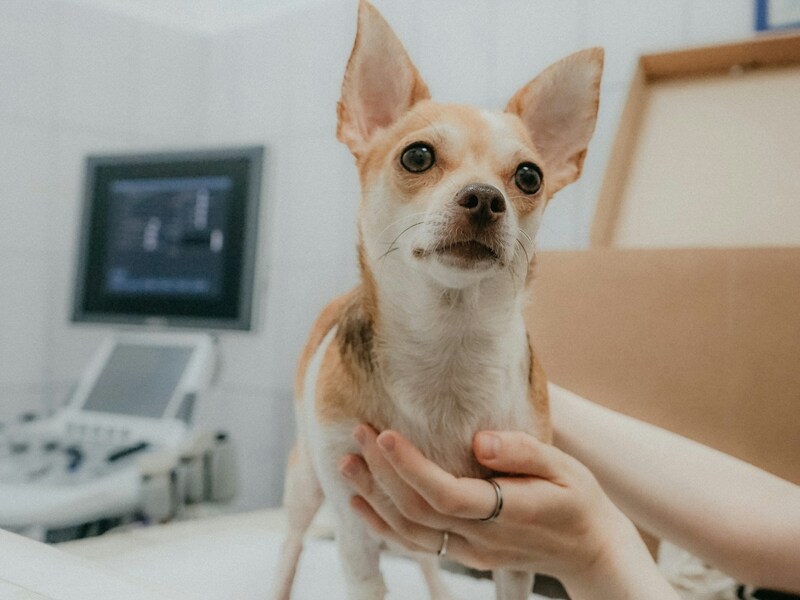
Singapore’s population of licensed veterinarians has nearly quadrupled since 2006, rising from 121 practitioners to 542 by May 2023, according to figures published by the National Parks Board (NParks). On 8 April 2026, Parliament passed the Veterinary Practice Bill, creating a new statutory Veterinary Council that will reshape how every veterinarian in Singapore, local or foreign, is registered and disciplined. For clinic owners and veterinary groups, hiring a foreign veterinarian in Singapore has therefore become a two-track exercise: satisfy the professional licensing regime first, then structure the right work pass.
Most sector hiring guides treat this as a straightforward Employment Pass exercise. It is not. A foreign veterinarian cannot legally treat a single animal in Singapore, regardless of how strong their Employment Pass application looks, until they hold a veterinary licence issued by the Animal and Veterinary Service (AVS), a cluster of NParks. Get the sequence backwards and a clinic can end up with an approved work pass and a candidate who still cannot start work, or worse, a licensing delay that causes the work pass application to lapse.
This guide sets out the licensing route, the incoming Veterinary Council changes, and the Employment Pass and S Pass mechanics that apply specifically to veterinary hires, current as at 5 September 2026.
The Sequence for Hiring a Foreign Veterinarian in Singapore: Licence Before Pass
The regulatory logic is the same one that governs doctors, nurses and allied health professionals, as set out in our guide to healthcare sector hiring in Singapore for 2026: the Ministry of Manpower (MOM) defers to the professional licensing body, and a work pass will not be approved for regulated clinical work without the matching registration in hand.
For veterinarians, that means the practical order is: confirm the candidate’s qualification is recognised, apply for and obtain the AVS veterinary licence, then file the Employment Pass or S Pass application referencing that licence. Clinics that file the work pass application first frequently find it held by MOM pending proof of licensing, adding weeks to an already tight hiring timeline.
AVS Veterinary Licence Singapore: Which Foreign Qualifications Qualify
Under Section 53 of the Animals and Birds Act, anyone practising veterinary medicine in Singapore must hold a veterinary licence from AVS. Per AVS’s published guidance, current as at the 2026 review, this is the starting point for any AVS veterinary licence Singapore application.
Recognised veterinary schools
Veterinary degrees from schools fully accredited by the American Veterinary Medical Association (AVMA), the Royal College of Veterinary Surgeons (RCVS) or the Australasian Veterinary Boards Council (AVBC) are generally accepted. In practice, this covers most veterinary graduates from the United Kingdom, Australia, New Zealand and AVMA-accredited schools in the United States and Canada.
The examination pathway for other qualifications
Graduates of universities outside this list are not automatically excluded. AVS will still consider licensing for candidates who have passed one of the following: the RCVS Statutory Examination for Membership, the North American Veterinary Licensing Examination (NAVLE) through Education Commission for Foreign Veterinary Graduates (ECFVG) certification, or the Australasian Veterinary Examination (AVE). Employers sourcing talent from a wider pool, such as continental Europe or parts of Asia, should budget for this examination route and the additional lead time it adds.
Cost, timeline and first-year conditions
The Licence to Treat Animals and Birds costs SGD 80 and is valid for up to two years. AVS states that a complete, in-order application takes approximately 25 working days to process, and successful applicants must attend an AVS Veterinary Licensing Briefing within one year of licensure, presenting the original qualification certificate for verification. A condition attached to every new licence requires the veterinarian to work with an existing, licensed veterinary centre in Singapore during their first year, to gain supervised local experience before any move to independent or locum practice.
Veterinary Council Singapore: What Changes from Late 2026
The licensing picture above is about to shift. Parliament passed the Veterinary Practice Bill on 8 April 2026, published as Bill No. 7/2026 on the Singapore Statutes Online register, which provides the legal foundation for a new Veterinary Council. Per NParks, the Veterinary Council will be established as a professional body under NParks, taking over registration, education accreditation and disciplinary functions for veterinarians and veterinary paraprofessionals, a role distinct from AVS, which will continue to regulate veterinary clinics and animal-related businesses.
The Council is expected to begin operating in the second half of 2026 and will introduce a three-tier registration system, classifying veterinarians as full, restricted or specialist. The maximum fine for unlawful veterinary practice by an unregistered individual rises to SGD 50,000 under the new law, up from SGD 10,000 under the Animals and Birds Act. For employers with a foreign veterinarian hire in progress, or a renewal due, in the second half of 2026, this is a live transition: expect AVS’s current Licence to Treat Animals and Birds regime to be progressively folded into Veterinary Council registration, and build a buffer into onboarding timelines while the handover beds in.
Employment Pass Strategy for Hiring a Foreign Veterinarian in Singapore
Once the AVS licence (or, from late 2026, Veterinary Council registration) is confirmed, an Employment Pass for veterinarians follows standard MOM rules, with one veterinary-specific wrinkle: unlike registered nurses, physiotherapists and several other healthcare roles, veterinarians do not currently appear on MOM’s Shortage Occupation List, so the 20-point C5 skills bonus is not available to lift a marginal COMPASS score.
EP qualifying salary and COMPASS without a shortage-occupation bonus
Per MOM’s Employment Pass eligibility page, current as at 28 April 2026, the EP qualifying salary for most sectors, including veterinary practice, is SGD 5,600 a month, rising progressively with age to SGD 10,700 for candidates aged 45 and above. This is Stage 1 of a two-stage test; the candidate must then clear Stage 2, the point-based Complementarity Assessment Framework (COMPASS), scoring at least 40 points across salary, qualifications, diversity and support for local employment. Without a Shortage Occupation List bonus to fall back on, veterinary employers should position the offered salary comfortably above the sector’s 65th percentile benchmark to protect the C1 salary score, rather than filing at the bare SGD 5,600 floor. From 1 January 2027 the general-sector EP floor rises again to SGD 6,000, a change our Work Pass Salary Thresholds 2027 guide covers in full.
When the S Pass is the realistic route
Junior or associate veterinarians, and licensed veterinary technicians and nurses, will often sit below the EP qualifying salary. In that scenario, per MOM’s S Pass eligibility criteria, the S Pass qualifying salary of SGD 3,300 a month for most sectors may apply, subject to the clinic’s Dependency Ratio Ceiling headroom and the monthly foreign worker levy. Clinics weighing EP against S Pass for a veterinary hire should work through the full comparison in our Employment Pass vs S Pass vs EntrePass guide, since the licensing obligation to AVS or the Veterinary Council applies to the individual regardless of which work pass sponsors them.
Worked Example: Sequencing and Cost for a Senior Foreign Veterinarian Hire
Consider a Singapore group practice hiring a 32-year-old RCVS-accredited veterinarian from the United Kingdom at a monthly salary of SGD 6,500, comfortably above the age-adjusted EP floor of roughly SGD 7,686 to 8,491 that applies once the practice’s sector and age band are factored in, or structured with a lower starting salary if the practice instead opts for a mid-career S Pass route. Assume the EP path:
| Step | Typical duration | Cost (SGD) |
|---|---|---|
| AVS veterinary licence application | Approx. 25 working days | 80 |
| AVS licensing briefing attendance | Within 1 year of licensure | Nil |
| Employment Pass application and issuance | Filed once licence confirmed; approx. 3 to 8 weeks | 330 |
| Skills Development Levy (0.25%, capped) | Monthly, ongoing | ~11.25/month |
| First-year supervised local practice condition | 12 months from licensure | No direct fee |
As our Real Cost of Hiring a Foreign Professional in Singapore guide sets out, EP holders attract no CPF employer contribution and no foreign worker levy, so the licensing fee and briefing attendance are the practice-specific additions on top of the standard EP cost model. The main planning risk is timing: because the licence must be confirmed before the EP application is filed, a clinic that starts both processes on the same day should expect the AVS step to set the critical path, not the MOM step.
Common Pitfalls When Hiring a Foreign Veterinarian in Singapore
- Filing the Employment Pass before the AVS licence is confirmed. MOM will typically hold the application, and the delay compounds if the candidate’s qualification requires the examination pathway rather than direct recognition.
- Assuming the Shortage Occupation List bonus applies. It does not currently cover veterinarians, so COMPASS positioning has to rely on salary, qualifications and the employer’s own diversity and local-employment scores.
- Treating the first-year supervised-practice condition as a formality. AVS ties this to the licence itself, not the work pass, so it survives a change of employer within that first year and should be built into onboarding plans.
- Missing the Veterinary Council transition window. Licences and renewals falling due around the Council’s expected launch in the second half of 2026 should be tracked closely against AVS and NParks announcements.
Family Relocation, Dependant’s Pass and Clinic Set-Up Considerations
Foreign veterinarians relocating with family should note that Dependant’s Pass sponsorship is only available to Employment Pass holders earning at least SGD 6,000 a month, along with EntrePass and Personalised Employment Pass holders; our Singapore Dependant’s Pass 2026 guide sets out the eligibility rules, the Letter of Consent process for a working spouse, and school enrolment options for children in detail.
Veterinarians who plan to eventually set up their own practice should also be aware that veterinary clinics and pharmacies are explicitly excluded from both the Home Office Scheme and the Home-Based Business Scheme, so a residential address can never substitute for a proper commercial premises licensed with AVS; the distinction between the two schemes is explained by our partner firm in Raffles Corporate Services’ guide to the Home Office and Home-Based Business Schemes. Clinic groups planning to bring in more than one foreign veterinarian or veterinary nurse should also work through their Dependency Ratio Ceiling headroom, covered in Singapore Secretary Services’ guide to S Pass and Work Permit quotas, before assuming every hire can go on an Employment Pass.
Personal Income Tax for the Incoming Veterinarian
A foreign veterinarian’s personal tax position depends on Singapore tax residency, which under IRAS rules generally turns on spending 183 days or more in Singapore in the relevant calendar year. Tax residents are taxed at progressive resident rates after reliefs, while non-residents are generally taxed on employment income at a flat rate or the resident progressive rates, whichever produces the higher tax. Clinics extending a relocation package should factor this into net-salary discussions with the candidate, particularly in the first calendar year of employment when residency status may not yet be settled.
Conclusion
Hiring a foreign veterinarian in Singapore rewards a clinic that treats licensing and immigration as one sequenced process rather than two parallel ones. Confirm the AVS veterinary licence route, watch the Veterinary Council transition through the second half of 2026, and only then structure the Employment Pass or S Pass application around a COMPASS-aware salary. Little Big Employment Agency Pte Ltd (MOM Licence 19C9790) assists veterinary practices, animal hospitals and pet-care groups with pass strategy and COMPASS positioning for clinical hires; get in touch through Singapore Employment Agency. Where the engagement also touches new clinic incorporation, corporate secretarial support or family relocation planning, Raffles Corporate Services can assist alongside us.
The Editorial Team, Little Big Employment Agency
Real people. Right here in Singapore.