
Insights for work and life.
Hiring a Foreign Personal Trainer in Singapore: Work Pass Strategy and Salary Benchmarks (2026)
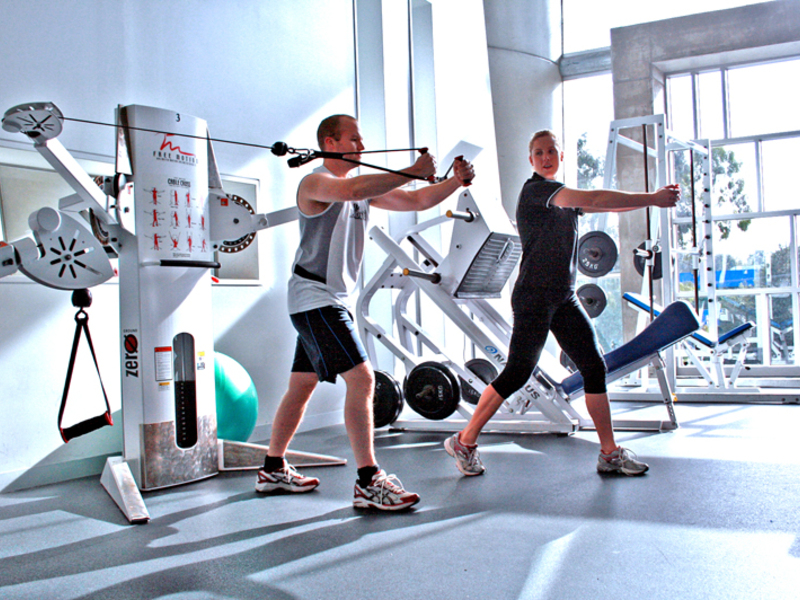
Singapore’s fitness industry has grown well past the neighbourhood gym. Boutique studios, executive wellness programmes and specialist rehabilitation-adjacent training now compete for talent globally, and many operators want to bring in an experienced coach from overseas rather than build a bench of qualifications locally. The trouble is that hiring a foreign personal trainer in Singapore does not fit neatly into either the traditional PMET mould or the manual-labour Work Permit track, which leaves employers unsure which pass applies, what salary to offer, and how the Ministry of Manpower actually views the role. This guide sets out the work pass tiering, the COMPASS framework mechanics for a non-traditional PMET role, certification recognition, and current salary benchmarks, so an employer can build a defensible application from the outset.
Why Fitness Roles Sit Outside the Traditional PMET Track
A corporate lawyer or a software engineer has an obvious paper trail: a degree, a professional qualification, a salary band that sits comfortably inside MOM’s published PMET benchmarks. A personal trainer usually has neither a degree nor a locally recognised professional licence. Certifications from bodies such as ACE, NASM or ACSM carry real weight with clients and studio operators, but MOM does not maintain a statutory register for personal trainers the way it does for veterinarians under the Animals and Birds Act or ship captains under certificates of competency issued through the Maritime and Port Authority. That absence of a licensing gate is actually the central planning point: unlike the foreign veterinarian hiring process, there is no separate regulator to satisfy before the work pass application, but there is also no external body whose approval can substitute for a strong COMPASS score. The whole case has to be built on salary, qualifications and the studio’s own hiring diversity profile.
Work Pass Tiering for a Foreign Personal Trainer: EP, S Pass or Work Permit
Three passes theoretically cover foreign employment in Singapore, but only two are realistic for this role.
Employment Pass Route
An Employment Pass suits a senior trainer, a head coach managing a studio’s programming, or a specialist brought in to run a corporate wellness contract. Per the Ministry of Manpower, the Employment Pass qualifying salary is at least S$5,600 a month for most sectors, rising with age and experience, as at 29 September 2026. Beyond the salary floor, every EP applicant must also clear COMPASS, the points-based framework covered in detail below. A trainer earning at the lower end of this range, without a degree and without a shortage-occupation classification, will need the salary and diversity criteria to do most of the work.
S Pass Route
Most foreign personal trainers realistically sit in S Pass territory, since studio pay for even senior coaches often lands below the EP salary floor. Per the Ministry of Manpower, the current S Pass qualifying salary is at least S$3,300 a month for most sectors (rising progressively with age to S$4,800 at age 45 and above), with a higher band for financial services, as at 29 September 2026. From 1 January 2027, new applications will need at least S$3,600 a month on the same age-graduated scale. The S Pass is not scored under COMPASS; it instead runs against a sub-Dependency Ratio Ceiling quota specific to the employer’s sector and a monthly foreign worker levy, so the constraint is less about the candidate’s individual profile and more about how much quota the studio or gym operator already has committed to other S Pass and Work Permit holders. Employers should check their local qualifying salary and quota position before committing to an offer, and budget for the foreign worker levy that applies to every S Pass holder on the books.
Why Work Permit Is Not the Answer
The Work Permit for Foreign Workers is restricted to a defined list of sectors and occupations, principally construction, marine shipyard, process, manufacturing and a narrow services list. Personal training and fitness instruction do not appear on that approved occupation list, so a Work Permit is not an available route for this role regardless of the salary offered. Employers who assume any foreign hire can simply go on a Work Permit if the pay is low enough will find the application rejected outright.
COMPASS Framework Considerations for a Non-Traditional PMET Role
Every Employment Pass application, including a personal trainer’s, is scored against COMPASS across salary, qualifications, workforce diversity and support for local employment, with two bonus criteria for shortage occupations and strategic economic priorities. Per the Ministry of Manpower, an applicant needs at least 40 points to pass, as at 29 September 2026. This is where a fitness hire genuinely differs from the sommelier or wine director profile covered elsewhere on this site: a sommelier can often point to a formal qualification such as a WSET diploma that maps onto MOM’s recognised institution list, while most personal training certifications do not appear on that list at all. That typically means zero points on the qualifications criterion, which pushes the entire case onto salary (worth up to 20 points at the 90th percentile of local PMET pay in the sector), workforce diversity, and the shortage occupation list bonus if the role happens to be listed for the relevant period. Employers should run the candidate through MOM’s self-assessment tool before committing to an offer, because a marginal salary combined with a missing qualifications score is a common cause of EP rejection for this profile, and the appeal process described in the site’s guide to why work pass appeals fail rarely reverses a COMPASS shortfall after the fact.
Certification Recognition: What Actually Matters to MOM
MOM does not maintain a statutory licence for personal trainers, so certifications from ACE, NASM, ACSM, ISSA or similar bodies are not formally assessed the way AVS assesses veterinary registration or MPA assesses a captain’s certificate of competency. That does not make them irrelevant. Declaring a candidate’s qualification on the work pass application is optional, but where an employer chooses to declare one, it must be authentic and issued by an institution on MOM’s approved drop-down list, and unrecognised fitness certifications typically will not appear there. The more useful evidence in practice is a documented track record: client rosters, gym or studio employment letters, competition or coaching credentials, and, where the studio operates in a specialist niche such as rehabilitation-adjacent training or elite athlete conditioning, letters from previous employers describing the scope of work. This evidence supports the workforce diversity and complementarity narrative even where it cannot add formal COMPASS qualification points.
Salary Benchmarks for Personal Trainers and Fitness Instructors in Singapore
Average personal trainer salary Singapore figures move every year as boutique studios compete for talent, so employers should treat the ranges below as a starting point for negotiation rather than a fixed number.
Local market data as at September 2026 shows personal trainer pay in Singapore typically ranging from roughly S$3,100 to S$4,300 a month, with entry-level trainers nearer the bottom of that band and senior trainers with eight or more years of experience earning materially more, often exceeding S$5,000 once private client sessions are factored in. General fitness instructor roles, which tend to involve group classes rather than one-to-one coaching, typically sit lower, averaging roughly S$2,900 a month with a wide range depending on the employer and class load. These figures matter for two reasons. First, they show why most foreign personal trainer hires land on the S Pass rather than the EP: a S$3,100 to S$4,300 offer clears the S Pass qualifying salary comfortably but falls well short of the S$5,600 EP floor. Second, an employer that wants to bring in a senior coach on an EP needs to offer a salary that is not just above S$5,600, but genuinely competitive against the local senior-trainer band, since COMPASS rewards salaries at the 65th and 90th percentile of local PMET pay in the sector rather than the bare statutory minimum.
Practical Steps for Employers
Start by mapping the role against the salary bands above and deciding realistically whether it is an S Pass or EP case; do not default to EP simply because the candidate is senior. Check the studio’s existing S Pass and Work Permit headcount against its quota before making an offer, since a quota breach will block the application regardless of the candidate’s individual merits. Where an EP is the right route, run the self-assessment tool early and be prepared for a lower qualifications score than a typical PMET hire, compensating with a strong salary offer and clear documentation of the candidate’s coaching record. Budget for the monthly foreign worker levy on any S Pass hire, and factor in the standard costs of hiring set out in the site’s guide to the real cost of hiring a foreign professional. Finally, if the incoming trainer will also be relocating a family, the Dependant’s Pass guide sets out the S$6,000 fixed salary threshold that determines whether family members can be sponsored.
Getting the Application Right the First Time
A foreign personal trainer hire is not complicated by regulation in the way a veterinarian or ship captain hire is, but it is complicated by the absence of an obvious qualifications pathway inside COMPASS. Employers who treat the salary offer and documentation strategy seriously from the outset, rather than submitting a bare-minimum application and hoping for the best, see materially better outcomes. Studios that are also incorporating a new Singapore entity to sponsor the hire, or restructuring an existing one, should read the company incorporation sequence guide from our sister firm Raffles Corporate Services, since the work pass application cannot proceed until the sponsoring entity itself is properly set up.
Work with a Licensed Agency
Little Big Employment Agency is a MOM-licensed employment agency that structures work pass applications for niche and non-traditional hires, including fitness and wellness professionals, so that salary, COMPASS scoring and documentation are aligned before submission rather than fixed after a rejection. Speak to our team before you make an offer to a foreign personal trainer or fitness instructor, and if the hire also involves setting up or restructuring the sponsoring Singapore company, our colleagues at Raffles Corporate Services can handle the corporate side in parallel.
The Editorial Team, Little Big Employment Agency
Real people. Right here in Singapore.