
Insights for work and life.
Hiring a Foreign Ship Captain in Singapore: MPA Licensing and Employment Pass Strategy
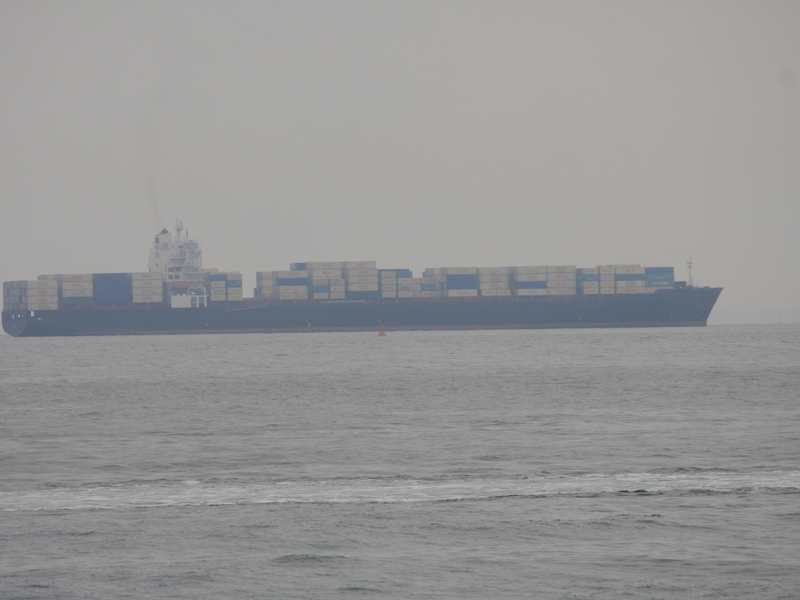
Can a foreign ship captain actually work in Singapore on an Employment Pass? For most seagoing masters, the answer is no, not because Singapore bars them, but because MOM’s work pass framework was never built to reach a mariner navigating international waters under a foreign or Singapore flag. Hiring a foreign ship captain in Singapore is instead a two-track question: one track runs through the Maritime and Port Authority of Singapore’s certification regime, the other through MOM’s Employment Pass or S Pass framework, and the two only overlap when the captain comes ashore.
That overlap matters more than it used to. Singapore’s shipping and ship management clusters, from bulk carrier operators to LNG shipowners headquartered along Robinson Road and Keppel Bay, increasingly need shore-based captains, fleet superintendents and marine managers who hold a valid Certificate of Competency but are no longer sailing full time. Getting the distinction wrong, treating a seagoing master as if he needs an Employment Pass, or assuming a shore-based fleet captain is exempt because his original career was at sea, creates real compliance exposure for the employer.
This guide sets out how MPA licenses deck officers and masters, when a foreign ship captain genuinely needs a Singapore work pass, and how Employment Pass and S Pass qualifying salary and COMPASS rules apply to the shore-based maritime roles that licensed employment agencies are actually asked to fill.
MPA Licensing: How Singapore Certifies Ship Captains and Deck Officers
The Maritime and Port Authority of Singapore is the statutory body responsible for certifying seafarers who serve on Singapore-registered ships, in line with the International Convention on Standards of Training, Certification and Watchkeeping for Seafarers (STCW). A ship captain’s underlying qualification is the Certificate of Competency (CoC), issued in classes, with Class 1 (Master Mariner) and Class 2 covering the most senior deck officer functions. Holders must keep these current through revalidation training in areas such as emergency response, bridge resource management, ECDIS and GMDSS operation, alongside a valid seafarer medical certificate.
Hiring a foreign naval architect or marine engineer in Singapore involves a parallel but distinct certification track for engine-room officers; deck officers and masters sit under their own CoC classes and functions, and it is worth reading both if a shipping employer is building out a full complement of licensed sea staff. See our related guide, Hiring a Foreign Naval Architect or Marine Engineer in Singapore, for the engineering side of that picture.
Recognition of Foreign Certificates of Competency
Most captains and deck officers working the international shipping trade were never trained in Singapore. MPA addresses this through recognition arrangements with foreign maritime administrations: before a certificate issued overseas can be relied on for service on a Singapore-flagged ship, MPA must have evaluated that country’s training and certification system and concluded a formal undertaking with its administration. MPA presently recognises certificates from dozens of flag states on this basis, and reciprocally, Singapore-issued CoCs are recognised by a comparable number of foreign administrations, which is part of why Singapore-trained officers are employable worldwide.
For an employer, the practical takeaway is that MPA licensing is a seafaring credential, not an immigration credential. A foreign captain can hold a fully valid, MPA-recognised CoC and still have no connection whatsoever to MOM’s work pass system, because CoC recognition governs who may serve on the bridge of a ship, not who may live and work onshore in Singapore.
Hiring a Foreign Ship Captain in Singapore: When an Employment Pass Is Actually Required
This is the point most guides get wrong, and it is the single most important distinction for any employer or agency handling maritime hires: whether a work pass is needed turns on where the captain is actually working, not on his rank or his certificate.
Seagoing Crew: Generally Outside the Work Pass Framework
A foreign captain or officer signed on to serve aboard a vessel on international voyages, whether the ship flies the Singapore flag or a foreign one, is ordinarily not “working in Singapore” in the sense that triggers the Employment of Foreign Manpower Act. Singapore’s foreign manpower legislation carries a specific, long-standing notification exempting seamen from the standard work pass requirement, reflecting the reality that a mariner’s place of work is the ship itself, wherever it happens to be, rather than a fixed location onshore. Crew changes and immigration clearance for such seafarers are handled through separate maritime and checkpoint procedures, not through an Employment Pass or S Pass application. Employers should not read this as a blanket rule for every maritime-adjacent role; it applies specifically to genuine seagoing service, and it is a narrower carve-out than employers often assume.
Shore-Based Maritime Roles: Where the Employment Pass Applies
The picture flips entirely once a captain or former captain moves ashore into a role based at a Singapore employer’s office. A fleet captain overseeing vessel operations from a Singapore headquarters, a marine superintendent supervising technical management, a designated person ashore (DPA) under the ISM Code, or a ship management executive drawing on sea-going experience but working from a desk in Singapore, is in Singapore for work pass purposes in the ordinary sense, and needs an Employment Pass or S Pass like any other foreign professional. MPA’s certification is often a hiring prerequisite for these positions because the employer wants a credentialed mariner’s judgement, but MPA licensing does not substitute for, or exempt anyone from, MOM’s Employment Pass or S Pass process. The two regimes are answering different questions and an employer needs to clear both.
This shore-based versus seagoing line is also the most defensible angle for any Singapore employer to plan around, because it maps directly onto how MOM actually enforces the Employment of Foreign Manpower Act, rather than onto informal industry assumptions about “maritime workers” as a single category.
Employment Pass and S Pass Qualifying Salary for Maritime Shore Roles
Once a role is confirmed as shore-based, ordinary MOM rules apply in full, and the maritime employer gets no special carve-out on salary or assessment.
Current EP and S Pass Thresholds
As at 27 August 2026, the Employment Pass qualifying salary is a minimum of S$5,600 a month for most sectors, rising progressively with the candidate’s age, with a higher S$6,200 floor for financial services roles. A further increase to S$6,000 (general) takes effect for new applications from 1 January 2027. Employment Pass candidates must also clear MOM’s points-based Complementarity Assessment Framework (COMPASS) at Stage 2, on top of meeting the Stage 1 salary bar. Full current detail sits on MOM’s Employment Pass eligibility page and the Employment Pass overview page.
For a more junior or mid-tier shore-based hire, such as a marine operations executive rather than a fleet captain, the S Pass may be the better fit. The S Pass qualifying salary currently stands at S$3,300 a month for most sectors (S$3,800 for financial services), a threshold that applies from 1 September 2025 and rises further to S$3,600 and S$4,000 respectively for new applications from 1 January 2027. See MOM’s S Pass eligibility page for the current age-graduated table, and our Complete S Pass Guide 2026 for the quota, levy and documentation requirements.
Salary Benchmarks: Fleet Captain, Marine Superintendent and Ship Management Roles
Shore-based maritime salaries in Singapore vary widely by seniority and vessel type, but as a general benchmark, a marine superintendent or DPA typically clears well above the EP salary floor once age-graduation is applied, given the seniority MOM expects for such positions. A fleet captain or head of marine operations at a shipowner or ship manager, overseeing a multi-vessel fleet, commands salaries materially above the minimum threshold, reflecting both COMPASS’s foundational salary criterion (which benchmarks against local PMET pay for the role and sector) and the market rate for a licensed Master Mariner with fleet-level responsibility. Employers should not anchor an offer purely to the statutory minimum; COMPASS scoring rewards a salary that sits credibly above the local PMET benchmark for the occupation, and a below-market offer for a genuinely senior maritime role can itself weaken the application.
A Practical Hiring Pathway for Shipping and Ship Management Employers
For an employer bringing a foreign captain ashore, the sequence that avoids delay is straightforward: first confirm the role is genuinely shore-based and falls within the Employment of Foreign Manpower Act rather than the seamen exemption; second, verify the candidate’s MPA-recognised Certificate of Competency and revalidation status as a hiring credential, even though it plays no formal role in the MOM application itself; third, benchmark the offered salary against the applicable EP or S Pass qualifying salary and, for EP candidates, model the COMPASS score before submission; and fourth, prepare the supporting documentation MOM expects for a professional, managerial or technical hire, including the candidate’s sea service record and qualifications as evidence of genuine seniority.
Employers who underestimate the total cost of this kind of senior maritime hire, factoring in the Employment Pass’s absence of levy and CPF against relocation, dependent passes and benchmarking risk, should also review our Real Cost of Hiring a Foreign Professional in Singapore guide before extending an offer. Shipping and ship management sit close to Singapore’s broader trading and logistics ecosystem, and employers active across commodity trading, chartering or maritime finance may also find it useful to understand how that ecosystem is structured; our sister site’s Singapore as a Regional Commodity Trading Hub FAQ sets out the broader commercial context that often sits alongside a shore-based maritime hire.
Conclusion
A foreign ship captain’s MPA-recognised Certificate of Competency answers the question of who may command a vessel; it does not answer the separate question of who needs a Singapore work pass. Get the shore-based versus seagoing distinction right at the outset, benchmark shore-based salaries properly against current EP and S Pass thresholds and COMPASS, and the hiring pathway for a fleet captain, marine superintendent or ship management executive is no different from any other senior professional hire in Singapore.
If your organisation is bringing a captain, marine superintendent or fleet management hire ashore in Singapore, the team at Singapore Employment Agency can assess the Employment Pass or S Pass strategy for the role, and our colleagues at Raffles Corporate Services can advise on the corporate and tax structuring for shipping and ship management entities operating out of Singapore.
The Editorial Team, Little Big Employment Agency
Real people. Right here in Singapore.