
Insights for work and life.
Hiring a Foreign Commercial Diver in Singapore: MPA and WSH Licensing, and Work Pass Strategy (2026)
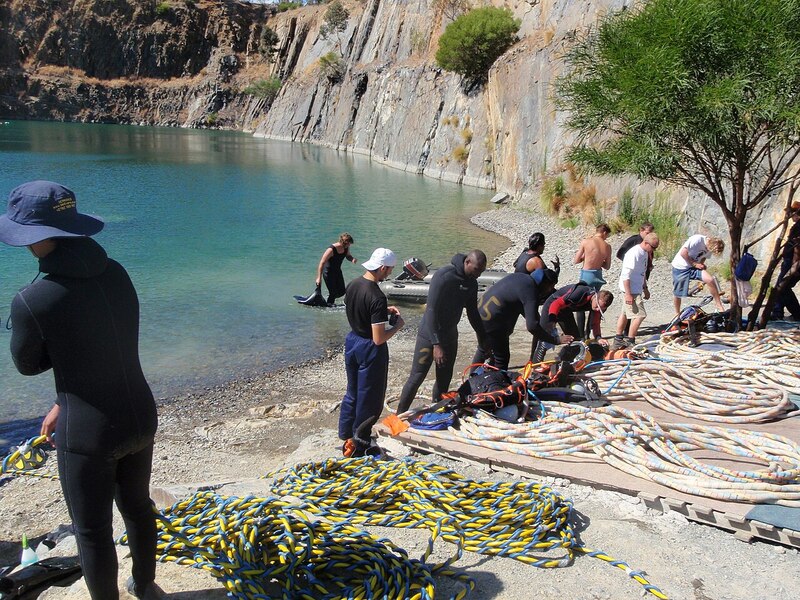
Singapore’s port waters and offshore support fleet employ commercial divers for hull inspection, underwater repair, salvage, and pipeline and cable work, yet hiring a foreign commercial diver in Singapore is governed by two regulators at once, not one. A shipyard or marine services firm that treats a diving safety certification as if it were a work pass qualification, or assumes any dive ticket clears a candidate for offshore work here, will find the application rejected or the operation exposed to a Workplace Safety and Health Act 2006 breach. This guide sets out the dual regulatory picture, the certification standards that actually matter, and which work pass fits which seniority level, so an employer can plan the hire correctly from the outset.
The demand context is real. Singapore’s port calls, ship repair yards, offshore wind support work, and harbour infrastructure maintenance all rely on underwater inspection and repair capacity that local supply cannot fully meet. But because diving is inherently hazardous, the hiring decision cannot be separated from the safety and licensing framework, and getting the sequence wrong (recruit first, sort out compliance later) is the single most common and costly mistake employers make in this niche.
The dual regulatory picture: MPA and MOM/WSH
Commercial diving in Singapore sits under two distinct regimes that an employer must satisfy concurrently.
MPA: port waters and diving support vessels
The Maritime and Port Authority of Singapore (MPA) regulates activity in port waters and on vessels operating there, including diving support vessels, under the Maritime and Port Authority of Singapore Act 1996 and its subsidiary Port Regulations. Any diving operation conducted from a vessel in Singapore port limits, or that affects navigation, anchorage, or restricted areas, needs to be notified to and cleared through MPA’s Marine Environment and Safety Department. An employer bringing in a diving support vessel or contracting one for a project should confirm the vessel-side clearances with MPA before the diver’s own work pass application is lodged, because a diver with no vessel to work from is not a viable hire.
MOM and WSH: diving safety and competency
Separately, the Ministry of Manpower (MOM), through the Workplace Safety and Health Act 2006 (WSHA 2006, sso.agc.gov.sg) and its subsidiary framework, governs the safety and competency side of commercial diving as a workplace activity. In practice this is administered through the Code of Practice for Diving at Work (Singapore Standard SS511) and the Technical Advisory for Inland/Inshore Commercial Diving Safety and Health, developed by the Workplace Safety and Health Council (WSHC) in consultation with the Commercial Diving Association Singapore (CDAS). These set out who may supervise a dive, what medical fitness is required, and what training standard a diver must hold before being deployed on a Singapore worksite. This is the layer employers most often underestimate: it exists independently of, and in addition to, whichever work pass MOM eventually issues the individual.
Recognised commercial diving certification standards
A foreign candidate’s diving qualification needs to be checked against the accepted standard before an employer commits to the hire. Locally, divers and diving supervisors are expected to hold, or be working towards, courses aligned to the Commercial Diving Competency Standards, such as the Commercial Self Contained Underwater Breathing Apparatus (CSCUBA) Diver or Supervisor course, or the Surface Supplied Diving Equipment (SSDE) Diver course, delivered by accredited local training providers. Foreign candidates commonly hold certifications from bodies such as the UK Health and Safety Executive (HSE), the International Marine Contractors Association (IMCA), or Australia’s ADAS; these are not automatically interchangeable with the Singapore standard, and MOM/WSHC maintain a list of acceptable commercial diving certifications against which a foreign qualification should be checked before the candidate is deployed. An employer should ask the candidate for the specific certificate, issuing body, and issue date, and verify it rather than accepting a general claim of commercial diver experience.
Two further requirements sit alongside the training certificate. First, a diving medical certificate, valid for 12 months from date of issue and issued by a diving doctor registered with the Singapore Medical Council, is required before a diver goes into the water on a Singapore worksite; a foreign medical clearance from the home country is not a substitute. Second, where the role involves supervising other divers, a distinct diving supervisor qualification and, typically, a longer track record is expected; treating a diver-grade certificate as sufficient for a supervisory hire is a frequent and avoidable error.
Which work pass fits a commercial diver in Singapore
Because a commercial diver role spans a wide seniority and salary range, in this sector there is no single default pass. The right route depends on the individual’s role and pay, not the job title on the contract.
Work Permit: basic and higher-skilled divers on the marine shipyard quota
A working diver performing routine underwater inspection, hull cleaning, or repair support, without supervisory responsibility, is typically hired on a Work Permit under the marine shipyard sector rules, subject to the sector’s dependency ratio ceiling and levy tiers. Employers should read this alongside our Work Permit employer guide and our foreign worker levy by sector guide, since marine shipyard levy rates and the dependency ratio ceiling differ materially from the general manufacturing or services rates and are frequently underestimated at the budgeting stage. Age limits also apply; see our note on the Work Permit age limit for older, experienced tradesmen.
S Pass: mid-level divers and dive technicians
A more experienced diver, dive technician, or junior supervisor drawing a salary at or above the prevailing S Pass qualifying threshold may instead sit on an S Pass. As at 1 September 2026, the S Pass qualifying salary is SGD 3,300 a month in most sectors for the youngest applicants, rising with age, with a separate higher band for financial services; this scales upward for older, more experienced candidates. Employers should confirm the current figure against MOM’s published table before filing, since this threshold is reviewed periodically. Our S Pass guide sets out the quota and levy mechanics in full.
Employment Pass: dive supervisors and diving superintendents
A dive supervisor, offshore project manager, or diving superintendent role, commanding a genuinely managerial or specialist salary, can be EP-eligible. The EP qualifying salary is SGD 5,600 a month in most sectors (SGD 6,200 in financial services) for the youngest applicants as at 2026, rising with age to SGD 10,700 and SGD 11,800 respectively at age 45 and above, with further increases to SGD 6,000 and SGD 6,600 at the youngest band taking effect from 1 January 2027. An EP application for this role also needs to clear the COMPASS framework, so the candidate’s qualifications, diversity contribution, and the firm’s local hiring profile all matter, not just the certification and the salary figure. For the underlying framework, see our Employment Pass guide and the comparable regulator-plus-pass structure in our foreign marine engineer hiring guide.
Realistic salary benchmarks
Employers should budget realistically. A basic-skilled diver on a Work Permit typically sits at or near sector norms for skilled trade roles, well below EP or S Pass thresholds, and the levy (not the wage) is often the larger true cost once the marine shipyard sector’s higher levy tiers are applied. A working diver or dive technician on an S Pass generally needs to be paid from SGD 3,300 upward depending on age, with genuine mid-career divers commanding meaningfully more once inclusive of allowances for offshore or hazard work. A dive supervisor or diving superintendent on an EP should expect a starting point at or above SGD 5,600, climbing quickly with age and experience, and an employer proposing a salary near the statutory floor for a genuinely senior supervisory role should expect COMPASS friction.
A practical hiring sequence and checklist
Employers hiring a foreign commercial diver in Singapore should work through the following sequence, in order:
1. Confirm the actual role and seniority (diver, technician, or supervisor) and set a realistic salary before deciding on a pass type.
2. Verify the candidate’s diving certification against the MOM/WSHC list of acceptable commercial diving certifications, and confirm it is current, not lapsed.
3. Confirm the candidate can obtain or already holds a valid diving medical certificate from a Singapore Medical Council-registered diving doctor.
4. If the work involves a diving support vessel operating in port waters, clear the vessel-side notifications with MPA before finalising the hire.
5. Select the pass type against current MOM thresholds (Work Permit marine shipyard quota, S Pass, or EP with COMPASS) and file accordingly.
6. Budget for the marine shipyard sector’s levy tier separately from the wage, since this is usually the larger recurring cost for Work Permit hires.
7. Build in lead time for both the diving certification verification and the work pass processing; running these in sequence rather than in parallel is the most common cause of project delay.
Common pitfalls
The most frequent and costly error is treating a foreign diving safety certification as if it were, by itself, sufficient for both worksite deployment and work pass approval; it addresses the WSH safety layer only, and a separate pass application still has to clear MOM’s salary and (for EP) COMPASS criteria on its own merits. A second common pitfall is underestimating the marine shipyard sector’s distinct levy and dependency ratio ceiling rules when the employer’s usual hiring experience is in general services or manufacturing, leading to a budget shortfall discovered only after the quota is exhausted. A third is assuming a dive supervisor role automatically qualifies for an Employment Pass; without a genuinely supervisory salary and scope, MOM may direct the applicant toward an S Pass instead. Finally, employers sometimes skip the MPA vessel-side clearance entirely, assuming it is the vessel operator’s problem alone; where the employer is also the vessel charterer or operator, this exposure sits with them directly.
Getting the hire right from day one
Hiring a foreign commercial diver in Singapore rewards employers who sequence the regulatory steps correctly: verify the certification and medical clearance, confirm the MPA position if a vessel is involved, then match the role’s genuine seniority to the correct work pass rather than reaching for whichever pass seems administratively simplest. Singapore Employment Agency assists employers end to end with work pass strategy, application preparation, and PR planning for marine and offshore sector hires. Where the hiring entity itself still needs to be incorporated or its corporate secretarial function set up before recruitment can begin, such as a new marine services subsidiary entering the Singapore market, Raffles Corporate Services handles company incorporation and ongoing corporate secretarial support.
The Editorial Team, Little Big Employment Agency
Real people. Right here in Singapore.