
Insights for work and life.
Hiring a Foreign Naval Architect or Marine Engineer in Singapore: MPA Registration and Pass Strategy
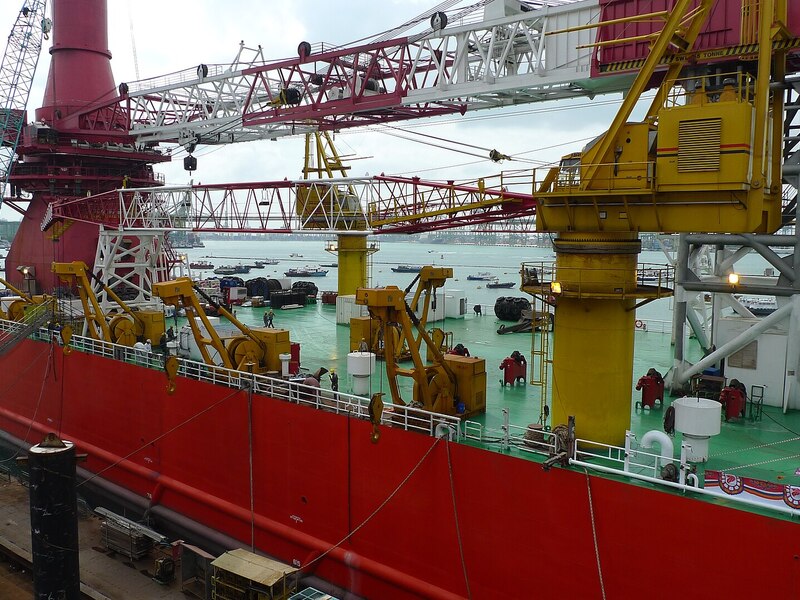
Does a naval architect need a professional licence to practise in Singapore the way a structural engineer does? The honest answer, verified against the Board of Architects and the Architects Act 1991, is no: naval architecture sits entirely outside that statutory scheme. For any shipyard, ship manager or offshore engineering firm looking to hire a foreign marine engineer in Singapore, that distinction matters, because it changes what “compliance” actually means for this hire. It is not a licensing-board question at all; it is a Certificate of Competency question for seagoing engineers, and an Employment Pass and COMPASS scoring question for everyone else.
Singapore’s position as a maritime hub is not in dispute. The Maritime and Port Authority of Singapore (MPA) recorded 3.22 billion gross tonnage of vessel arrivals in 2025, and the port has been the world’s busiest by shipping tonnage since 1986, connecting some 200 shipping lines to more than 600 ports worldwide. That density of shipowners, ship managers, classification societies and offshore engineering firms based here is precisely why demand for qualified naval architects and marine engineers keeps outpacing the local talent pool, and why so many of these hires are foreign nationals brought in on an Employment Pass.
This guide sets out what genuinely needs to be checked before you make an offer: what MPA does and does not regulate for this role, how the Employment Pass qualifying salary and COMPASS framework apply to a specialist technical hire, indicative salary benchmarks, and why the Maritime Sector Incentive shapes where maritime companies choose to base themselves in the first place.
Registration and Certification: What Actually Applies to This Role
The starting mistake employers make is assuming naval architecture must sit under some Singapore equivalent of the Professional Engineers Board or the Board of Architects, the way hiring a foreign structural engineer requires PEB registration. It does not. The Architects Act 1991 expressly excludes naval architects from its scope, and there is no separate mandatory Singapore licensing board for naval architecture as a profession. In practice, naval architects working in Singapore shipyards and design offices carry professional recognition through bodies such as the Royal Institution of Naval Architects (RINA) or the Institute of Marine Engineering, Science and Technology (IMarEST), which are respected qualifications for employers to check at hiring stage, but they are not a Singapore statutory requirement to hold a job title or sign off design work here.
Marine engineers are a genuinely different case, but only for a specific subset of the role. If the marine engineer will actually serve on board a Singapore-flagged vessel as an engineer officer, MPA requires a valid Certificate of Competency (CoC) issued or recognised under the International Convention on Standards of Training, Certification and Watchkeeping for Seafarers (STCW). MPA’s Seafarers Skills Upgrading, Certification and Accreditation Department administers Marine Engineer Officer (MEO) examinations, which combine a written paper, oral assessment and simulator assessment, and a CoC is valid for five years before it must be revalidated against sea service and medical requirements. This is a real, checkable requirement, and it applies to the seagoing function, not to every shore-based engineering role that carries the job title “marine engineer.”
Most marine engineers and naval architects hired by Singapore employers today, however, are shore-based: design engineers, technical superintendents, project engineers in a shipyard or ship management office. For these roles, there is no CoC and no professional licensing board to satisfy. The compliance question that actually governs the hire is the work pass question, which is where COMPASS and the qualifying salary come in.
Employment Pass Strategy for a Foreign Marine Engineer in Singapore
For a professional or management-level naval architect or marine engineer, the Employment Pass (EP) is the relevant pass, not the S Pass or Work Permit, which are structured around mid-skilled and work-permit-sector roles. As confirmed on mom.gov.sg (Ministry of Manpower), and current as at 9 September 2026, an EP candidate must earn a fixed monthly salary of at least S$5,600 in the general category, or S$6,200 if the hiring entity is classified in financial services, and the qualifying salary rises progressively with age, reaching roughly S$10,700 for candidates in their mid-40s.
Meeting the qualifying salary is only Stage 1. Since 1 September 2023, every EP application must also clear Stage 2, the points-based Complementarity Assessment Framework (COMPASS), scoring at least 40 points across four core criteria plus two bonus criteria:
- C1 Salary: benchmarked against local PMET pay for the candidate’s age and sector.
- C2 Qualifications: degree-equivalent or better, with top-tier institutions scoring higher.
- C3 Diversity: the candidate’s nationality as a share of the firm’s PMET workforce.
- C4 Support for Local Employment: the firm’s share of local PMETs within its subsector.
- C5 Skills Bonus: an additional 20 points if the role sits on MOM’s Shortage Occupation List.
- C6 Strategic Economic Priorities Bonus: for firms meeting specific criteria on investment, innovation or internationalisation.
Employers should check the current Shortage Occupation List directly rather than assume a naval architect or marine engineer role qualifies for the C5 bonus by default; MOM’s published list identifies specific maritime shore-based occupations, such as marine superintendent roles, and the exact title on the application should be matched against it rather than assumed. For a walkthrough of how these six criteria interact for a comparable specialist hire, see our COMPASS scoring breakdown for a family office CIO, which illustrates the same points logic applied to a different niche role.
Because naval architecture and marine engineering are technical, credential-heavy fields, most genuine candidates score reasonably on C2 (qualifications), and a market-appropriate salary offer does the heavy lifting on C1. The practical risk sits in C3 and C4: firms that lean heavily on one nationality, or that have a thin bench of local PMETs in the same subsector, need a stronger salary or qualifications position to compensate. This is comparable to the dynamic we set out for hiring a foreign actuary in Singapore, another specialist field where the pass strategy, not a licensing hurdle, is the real gating factor.
Salary Benchmarking for Naval Architects and Marine Engineers
Maritime salary data is thinner and more fragmented than for mainstream professions, since roles span shipyards, classification societies, ship managers and offshore engineering firms with different pay scales. The ranges below are indicative planning bands for EP-level hires, not a substitute for the specific salary survey your firm should commission before an offer is made.
| Role | Indicative monthly salary (SGD) | Typical EP consideration |
|---|---|---|
| Naval architect, junior to mid-level design | S$5,600 to S$8,500 | Must clear general qualifying salary; COMPASS C1/C2 usually favourable given degree requirement |
| Naval architect, senior/lead design | S$9,000 to S$14,000 | Strong C1 salary score; supports C6 if firm meets strategic priority criteria |
| Marine engineer, shore-based (technical/project) | S$5,600 to S$9,000 | Standard EP route; no CoC required for shore-based function |
| Marine Engineer Officer, seagoing (CoC holder) | S$6,500 to S$12,000+ depending on rank and vessel type | EP for shore-administered contracts; MPA CoC required for the seagoing function itself |
| Technical/marine superintendent | S$7,000 to S$11,000 | Check current Shortage Occupation List for possible C5 bonus |
All figures are SGD, gross fixed monthly salary, and should be validated against your own market data before an offer letter is drafted; MOM assesses the actual declared salary against COMPASS benchmarks at application, not against these indicative ranges.
Why the Maritime Sector Incentive Matters to This Hiring Decision
The reason so many ship owners, ship managers and maritime service firms base their Singapore entity here in the first place is not incidental to the hiring question, it is the context for it. MPA’s Maritime Sector Incentive (MSI) offers tax concessions across several award categories, including MSI-AIS (Approved International Shipping Enterprise), which exempts or concessionally taxes qualifying shipping income for approved international ship owners and operators, and MSI-SSS (Shipping Support Services), which applies a concessionary 10% tax rate to qualifying shipping-related support income. A firm that has structured its Singapore entity to hold an MSI award is, by definition, committing to a genuine Singapore operating presence, which is also exactly the kind of firm profile that tends to score well on COMPASS C4 and C6. If your business is still deciding whether to set up the Singapore entity that will eventually sponsor this Employment Pass, our sister site has a detailed breakdown of the Maritime Sector Incentive tax concessions for shipping and maritime companies, which is worth reading alongside this guide.
Practical Pass Strategy for Employers
A few points of judgement, drawn from how these applications actually play out, are worth setting out plainly.
First, do not over-document a licensing requirement that does not exist. If your HR or compliance team is asking a naval architect candidate for a “Singapore practising licence,” you are very likely conflating this with the Board of Architects scheme for building architects, which explicitly does not cover naval architecture. Ask instead for RINA or IMarEST membership evidence, academic transcripts and prior employer references, which is what the qualifications criterion under COMPASS actually rewards.
Second, confirm early whether the role is genuinely seagoing. If the candidate will serve as an engineer officer on a Singapore-flagged vessel, build the MPA Certificate of Competency timeline into your hiring plan alongside the EP application; a CoC assessment and examination process takes real lead time and runs on a separate track from the work pass itself.
Third, treat the EP as a renewable instrument, not a one-off hurdle. Once the pass is issued, salary uplifts at renewal and dependency ratio planning become the next compliance checkpoint, particularly if the company is scaling its foreign headcount in a maritime-heavy function. Our guide to EP renewal, salary uplift and dependency ratios covers what documentation to prepare ahead of that renewal cycle. For very senior naval architects or marine engineers who may also value spouse work rights or long-term flexibility, it is worth comparing the EP against the Personalised Employment Pass costs and fees, though the PEP’s own higher qualifying salary threshold means it will only suit a minority of candidates in this sector.
Finally, keep the paper trail honest. COMPASS assessments and MOM audits look for consistency between the declared job scope, the salary paid and the qualifications held. A naval architect hired at a salary that only clears the general qualifying threshold, with no shortage-occupation bonus and a thin qualifications file, is a marginal COMPASS case; the same candidate with verified RINA credentials and a salary benchmarked against the upper end of the table above is a straightforward one.
Get the Pass Strategy Right From the Start
Hiring a foreign naval architect or marine engineer in Singapore is not a licensing problem to solve, it is a pass strategy and salary benchmarking exercise, with one genuine certification carve-out for seagoing engineer officers under MPA’s STCW-based Certificate of Competency regime. Getting the COMPASS scoring, qualifying salary and documentation right from the first application saves months of avoidable back-and-forth with MOM.
If you are preparing to sponsor this kind of hire, Singapore Employment Agency is a MOM-licensed employment agency (Licence No. 19C9790) that can assess the pass strategy, benchmark the salary and prepare the application end to end. If you are still setting up or restructuring the Singapore entity that will sponsor the pass, particularly where a Maritime Sector Incentive award is part of the plan, Raffles Corporate Services can advise on the corporate and tax structuring side.
The Editorial Team, Little Big Employment Agency
Real people. Right here in Singapore.