
Insights for work and life.
Hiring a Foreign Flight Instructor or Commercial Pilot in Singapore: CAAS Licensing and Work Pass Strategy (2026)
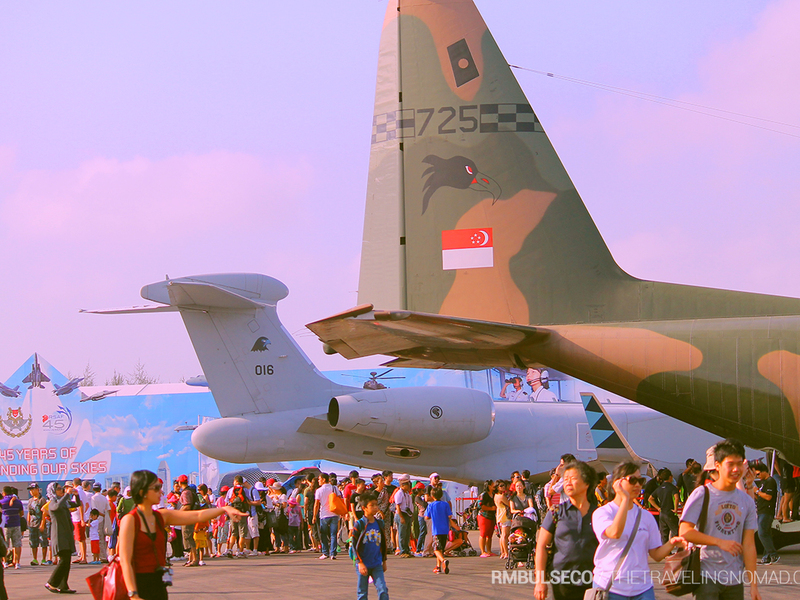
Singapore’s aviation sector keeps growing faster than its training pipeline. Flying schools, air charter operators and corporate flight departments based at Seletar Aerospace Park regularly find themselves short of qualified flight instructors and commercial pilots, particularly on niche type ratings and multi-crew aircraft. Hiring a foreign pilot in Singapore to fill that gap is not a simple work pass exercise: it is a two-track compliance project that runs Civil Aviation Authority of Singapore (CAAS) licensing alongside the Ministry of Manpower’s Employment Pass or S Pass process, and both tracks have to clear before the individual can legally fly or instruct here.
This mirrors the pattern licensed employment agencies already see with other regulated aviation and maritime roles, from drone operators to ship captains: a professional licensing body gates who may perform the work, while MOM separately gates who may be employed to perform it in Singapore. Getting the sequencing wrong, for example assuming a foreign captain’s overseas type rating is automatically valid here, or applying for an Employment Pass before CAAS has assessed the candidate’s licence conversion eligibility, can delay a hire by months.
This guide sets out how CAAS licenses foreign flight crew and instructors, when a foreign national needs a Singapore work pass to fly or teach here, and how Employment Pass and S Pass qualifying salary and COMPASS rules apply to a role this specialised, as at 29 September 2026. Employers unfamiliar with the wider pass system may also want to bookmark the complete Singapore Employment Pass guide as background before working through the aviation-specific detail below.
CAAS Licensing: What a Foreign Pilot or Flight Instructor Needs Before Flying in Singapore
The Civil Aviation Authority of Singapore is the statutory body responsible for licensing flight crew who operate Singapore-registered aircraft. A foreign pilot cannot fly a Singapore-registered aircraft, whether for public transport, aerial work or flight instruction, on a foreign licence alone. Per the Civil Aviation Authority of Singapore, the individual must convert a foreign pilot licence to a Singapore licence through a two-step process: first an assessment of eligibility to convert, which for a professional pilot licence requires evidence of prospective employment in a flying capacity with a Singapore operator, an approved aviation training organisation or a flying club, and then completion of CAAS examinations, a medical assessment, an English language proficiency assessment, further flight training if required, and CAAS flight tests, as at 29 September 2026.
The underlying licence for most commercial roles is the Commercial Pilot Licence (CPL), or the Airline Transport Pilot Licence (ATPL) for the most senior airline captains. Per CAAS, a CPL is required to pilot a Singapore-registered aircraft for public transport, aerial work or flight instruction, and the holder must be at least 18 years old, meet Class 1 medical requirements, pass theoretical knowledge examinations, complete an approved course of flight training and pass flight tests, as at 29 September 2026.
Flight instruction is licensed separately again. To give flying instruction that leads to a Singapore licence or rating, the individual needs a Flying Instructor (FI) rating layered on top of a CPL or ATPL, split into single-pilot and multi-crew categories, each with its own qualification criteria under the Singapore Air Safety Publication. In practice this means a flying school or corporate flight department hiring a foreign instructor is really running two parallel approvals: CAAS assessing and converting the individual’s professional competence, and MOM assessing the employer’s case for bringing that individual in on a work pass. Neither authority substitutes for the other, and an Employment Pass approval does not itself confer any CAAS licensing status.
Hiring a Foreign Pilot Singapore: Employment Pass and S Pass Routes
Once the CAAS licensing pathway is confirmed, the employer’s work pass strategy for hiring a foreign pilot in Singapore follows the same structure as any other regulated PMET role: pass type depends on qualifying salary, and salary depends on age and sector. For new Employment Pass applications and renewals from 1 September 2025, the minimum qualifying salary is S$5,600 a month for most sectors, rising progressively by age. Per the Ministry of Manpower, from 1 January 2027 this rises further to S$6,000 a month for non-financial sectors, with age-graduated bands reaching S$11,500 a month at age 45 and above, as at 29 September 2026.
Employers weighing up the full cost of a specialist expatriate hire, not just the headline salary, may find it useful to review the real cost of hiring a foreign professional in Singapore alongside the figures below. Most experienced commercial pilots, and certainly airline captains and senior flying instructors, clear the Employment Pass salary bar comfortably. A newly type-rated first officer or a junior flying instructor closer to the qualifying salary floor, however, may sit in S Pass territory instead. Per the Ministry of Manpower’s S Pass page, the S Pass qualifying salary for new applications from 1 September 2025 is S$3,300 a month, rising progressively with age to S$4,800 at age 45 and above, and this increases again to S$3,600 from 1 January 2027, as at 29 September 2026. An employer sponsoring an S Pass hire must also manage the S Pass quota and levy within its Work Permit and S Pass headcount, which matters for a flying school or charter operator that is otherwise a small headcount business.
COMPASS Considerations for a Niche High-Skill Aviation Role
For Employment Pass applications, the candidate must also clear the COMPASS framework unless exempted. Per MOM, applicants need at least 40 points across salary relative to sector benchmark, qualifications, workforce diversity and support for local employment, though those earning above S$22,500 a month, a threshold many senior captains and expatriate chief flying instructors clear, are exempt from COMPASS assessment entirely, as at 29 September 2026. For roles that sit below that exemption line, a flight instructor or first officer candidacy benefits from the same COMPASS logic that applies to other scarce technical specialists: a recognised aviation qualification, a salary that sits well above the sector’s 65th-percentile local benchmark, and a genuine skills shortage narrative all help offset a small employer’s relatively thin local PMET headcount on the diversity criterion.
This is also where documentation discipline matters. MOM assessors reviewing a pilot or flight instructor Employment Pass case will expect to see the CAAS licence conversion status, or at minimum the CAAS assessment outcome, referenced alongside the work pass application, since an EP approval on its own does not let the individual instruct or fly commercially without the matching CAAS licence in hand.
Salary Benchmarks for Pilots and Flight Instructors in Singapore
Aviation is consistently one of Singapore’s highest-paid professions, which is part of why the Employment Pass route dominates for this niche. Second officers fresh off type rating typically start in the S$24,000 to S$75,000 annual range, first officers move into the S$95,000 to S$195,000 band depending on seniority and allowances, and captains at major carriers commonly earn between S$260,000 and S$400,000 a year depending on aircraft type and seniority. Flying instructors sit at the very top of Singapore’s wage distribution on a monthly basis: per MOM’s Occupational Wage Survey, flying instructors recorded a median gross monthly salary of around S$20,000, among the highest of any occupation tracked in the survey, as at 29 September 2026. Employers should treat these figures as a starting benchmark, then adjust for aircraft type, employer sector (airline, charter, corporate flight department or flying school) and whether the role is purely instructional or combines instruction with active line flying.
For a smaller flying school or a corporate flight department bringing in a single foreign instructor or pilot, these salary levels usually clear the Employment Pass bar without difficulty, which simplifies the work pass side of the hire considerably. The harder part of the timeline is almost always the CAAS licence conversion, not the MOM application, so employers should start the CAAS assessment of eligibility to convert in parallel with, or even ahead of, the Employment Pass application rather than treating it as a formality to sort out after the work pass is approved.
Sequencing the Two-Track Hire
The practical sequence that works best mirrors what licensed employment agencies already recommend for other CAAS-regulated hires, such as the drone pilot niche, and for MPA-regulated maritime hires such as a foreign ship captain moving into a shore-based Singapore role. Start by confirming the candidate’s eligibility for CAAS licence conversion, since a positive verification from the foreign licensing authority is a prerequisite CAAS cannot waive. In parallel, prepare the Employment Pass or S Pass application with the salary benchmark and COMPASS documentation in hand. Only once both tracks are progressing should the employer commit to a start date, because a CAAS examination and flight test slot, or a medical assessment appointment, can add weeks to the timeline independently of MOM’s processing time.
Employers new to sponsoring foreign PMETs in a regulated profession should also budget time for the foreign worker levy and quota implications if the hire ultimately sits on an S Pass rather than an Employment Pass, and should factor local qualifying salary requirements into any related local hiring the flying school or operator is doing at the same time, since MOM assesses an employer’s overall local workforce profile as part of the broader Employment Pass and S Pass ecosystem, not just the individual application in isolation.
Structuring the Employer Entity Around a Specialist Aviation Hire
Many flying schools, charter operators and corporate flight departments hiring their first foreign instructor or pilot are also, at the same time, setting up or restructuring the Singapore entity that will sponsor the pass. Getting the company incorporation sequence right before the work pass application goes in avoids a common delay, since MOM will not process an Employment Pass or S Pass application for an entity that is not yet properly incorporated and registered. Employers bringing in an overseas aviation group’s Singapore subsidiary should also review the requirements for a foreign subsidiary set up in Singapore, since the entity structure affects both the work pass sponsorship and the ongoing corporate secretarial obligations.
Related Reading on Niche and Regulated Hiring
The pilot and flight instructor hire sits alongside a small cluster of Singapore niche-hiring cases where a professional licensing body and MOM’s work pass framework operate as two separate tracks. Employers evaluating a similar hire may find it useful to compare notes with the approach taken for a foreign drone pilot hire under CAAS licensing, or for a foreign ship captain moving into a shore-based role under MPA licensing, both of which follow the same dual-track compliance logic. Employers should also check current S Pass guide requirements if the candidate’s salary sits closer to the S Pass qualifying floor than the Employment Pass floor, and review the local qualifying salary and quota rules if the hire will affect the employer’s broader Work Permit and S Pass headcount.
Getting the Hire Right the First Time
Hiring a foreign pilot or flight instructor in Singapore rewards employers who treat CAAS licence conversion and the MOM work pass application as two parallel workstreams that both need active management, not a single linear process. The salary benchmarks for this profession clear the Employment Pass bar comfortably in most cases, and many senior candidates are COMPASS-exempt outright, but the licensing conversion timeline is usually the longer pole in the tent and deserves to start early.
Little Big Employment Agency is a MOM-licensed employment agency that helps Singapore employers structure Employment Pass and S Pass applications for regulated, high-skill niche roles, including aviation hires that require parallel CAAS licensing. If your flying school, charter operator or corporate flight department needs to bring in a foreign pilot or flight instructor, speak with our team at Singapore Employment Agency to sequence the CAAS and MOM tracks correctly from the outset. If you are also incorporating or restructuring the sponsoring entity, our colleagues at Raffles Corporate Services can support the company incorporation and secretarial side of the same hire.
The Editorial Team, Little Big Employment Agency
Real people. Right here in Singapore.