
Insights for work and life.
A Work Permit Holder Is Pregnant: The Employer’s MOM Compliance Sequence
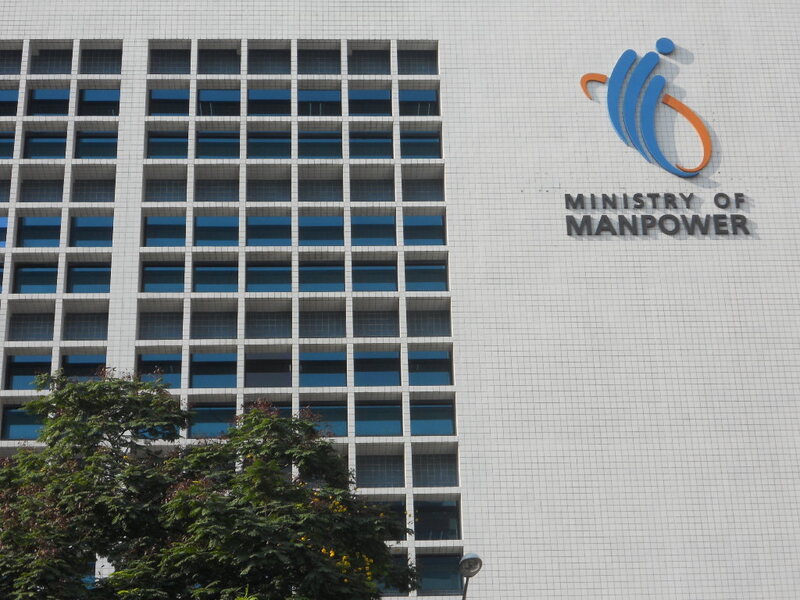
Every female Work Permit holder in Singapore is sent for a medical screening every six months, and one of the conditions that screening checks for is pregnancy. When a work permit holder is pregnant, the Ministry of Manpower treats it as a regulated event with its own notification form, its own documentation requirements, and, in an unmarried case, a mandatory work permit cancellation. Most employers only discover this the first time it happens on their watch, usually when a six-monthly medical examination (6ME) comes back with an unexpected result.
The rules are scattered across several Ministry of Manpower (MOM) pages, and they interact with the Employment Act 1968 in a way most in-house HR teams have never had reason to work through. Get the sequence wrong and an employer risks a forfeited security bond, an overstaying worker, or an avoidable dispute over dismissal during pregnancy.
This article sets out, in order, what a Singapore employer must do once a Work Permit holder’s pregnancy is confirmed: what to notify MOM of, what changes depending on her marital status, how cancellation and repatriation work, and where the Employment Act’s maternity protection still applies even as the work pass ends.
The Legal Starting Point: Marriage and Pregnancy Under the Work Permit Conditions
Under the Conditions of Work Permit (MOM, as at 28 August 2025), a Work Permit holder must not marry a Singapore Citizen (SC) or Permanent Resident (PR), in Singapore or overseas, without MOM’s prior approval. The same condition extends to pregnancy: a Work Permit holder is only allowed to become pregnant and give birth in Singapore if she is already married, with MOM’s approval, to an SC or PR. Both restrictions apply even after the Work Permit has expired, been cancelled, or been revoked.
This is the piece employers most often miss during onboarding. If a worker later marries and becomes pregnant without having sought approval first, the employer is the one left managing the fallout, even though the marriage or pregnancy itself was never something the employer could have prevented.
Why the Marriage Approval Comes First
Per MOM’s marriage and pregnancy FAQ (as at 29 May 2025), a current or former Work Permit holder needs approval before marrying an SC or PR, regardless of whether the marriage is civil, religious, or customary, and regardless of where it takes place. The application requires a signed declaration form, passport particulars, six months of payslips, and, where the couple is already expecting, a doctor’s memo confirming the pregnancy. MOM aims to email the outcome to the SC or PR partner within four weeks of receiving all required documents. Employers who are aware that an employee is planning to marry a Singaporean or PR partner should flag this approval step early. A Work Permit holder who marries first and applies for approval later, or who becomes pregnant before either step is done, has already put both her stay and her employer’s compliance record at risk. Our companion article, A Work Permit Holder Marries a Singapore Citizen: The MOM Approval Employers Cannot Ignore, sets out that approval process in full and is worth reading alongside this one.
How Employers Actually Discover a Work Permit Holder Is Pregnant
In practice, the pregnancy usually surfaces through routine compliance machinery rather than through the worker volunteering the information first. Female Work Permit holders under 50 must attend a six-monthly medical examination (6ME) (MOM, as at 25 June 2026), which screens for pregnancy and syphilis every six months, HIV every two years, and tuberculosis once after two years of stay. The employer bears the cost and must check via WP Online that results are submitted within two weeks of the clinic visit.
A 6ME is not the only route. A worker may disclose the pregnancy directly, or a spouse’s own immigration application may surface it first. Whichever route it comes through, the employer’s obligation starts the moment it has actual knowledge, not the moment MOM’s systems confirm it.
The Notification Duty Employers Often Miss
Under MOM’s Notify MOM of updates: Work Permit guidance (as at 16 July 2026), an employer must notify MOM through the dedicated pregnancy notification form once a Work Permit holder is known to be pregnant. If the worker is married, the notification must also include her spouse’s full name and NRIC and a copy of the marriage certificate (where the spouse is an SC or PR), or the spouse’s full name and FIN or Work Permit number (where the spouse holds an Employment Pass or S Pass). This is a distinct notification duty, separate from the marriage approval application, and it applies whether or not the marriage was previously approved. Employers who are used to the parallel seven-day notification pattern for a missing worker, described in our article A Work Permit Holder Is Missing: The Employer’s Seven-Day File, will recognise the same principle here: MOM expects the employer to notify promptly once it becomes aware, not to wait for the situation to resolve itself.
Two Outcomes When a Work Permit Holder Is Pregnant
Once notification is made, the path forward depends entirely on whether the marriage to an SC or PR was already approved by MOM before conception.
Where the Marriage Was Already Approved
If the Work Permit holder is already married, with MOM’s approval, to an SC or PR, the pregnancy itself does not breach the Work Permit conditions. The employer’s obligations are limited to the notification described above, continuing to meet the standard Work Permit conditions (fixed monthly salary, housing, medical insurance, the Primary Care Plan), and being ready to manage her eventual transition, since her long-term immigration status will typically shift toward a Long-Term Visit Pass tied to the marriage rather than continued Work Permit employment.
Where the Pregnancy Is Not Authorised
Where the Work Permit holder is not married with MOM’s approval to an SC or PR, the pregnancy places her in breach of the Work Permit conditions. The practical consequence is that the Work Permit must be cancelled and the worker repatriated. The employer must then follow the standard Work Permit cancellation process (MOM, as at 5 August 2026): give reasonable notice of repatriation, seek IRAS tax clearance at least one month before her last day where applicable, settle outstanding salary and employment matters, and buy a one-way ticket with checked baggage allowance for a departure within 14 days of cancellation. Once cancelled, the worker cannot continue working, even while awaiting departure.
There is one point of relief. Under MOM’s security bond conditions (MOM, as at 2 February 2026), an employer will not be held liable for a worker’s violation of the pregnancy condition if it can show it informed the worker of the Work Permit conditions at the outset and reported the violation as soon as it became aware. Employers who skip the induction briefing, or who sit on the information once they learn of it, forfeit that protection and expose the SGD 5,000 security bond to a claim.
The Employment Act Complication Employers Overlook
Non-domestic Work Permit holders (construction, manufacturing, marine shipyard, process, and services sector workers) are covered by the Employment Act 1968 in the same way as any local employee; MOM’s own guidance confirms the Act does not distinguish between local and foreign employees and excludes only domestic workers, seamen, and government employees. That matters here because Part 9 of the Act contains specific maternity protections that continue to apply even though the same worker’s pregnancy may be triggering a mandatory Work Permit cancellation.
Section 81 of the Employment Act 1968 makes it unlawful for an employer to give a female employee notice of dismissal while she is absent on maternity leave, or on a day such that the notice would expire during that absence. Section 84 separately provides that a notice of dismissal given without sufficient cause at any time during a certified pregnancy does not deprive the employee of her maternity benefit entitlement, and allows her to bring a claim for reinstatement or compensation. Neither provision is disapplied simply because MOM’s Work Permit conditions require the pass to be cancelled.
Reconciling the Two Regimes in Practice
In practice, this means an employer handling an unauthorised pregnancy under a Work Permit should treat the cancellation as a regulatory consequence of the pass ceasing to be valid, not as a disciplinary dismissal, and should document it that way from the outset: the notification to MOM, the cancellation record, and the repatriation arrangements should make clear that employment is ending because the Work Permit can no longer lawfully be held, not because of conduct or performance. Employers should still settle accrued salary, notice-in-lieu, and other entitlements due under the contract of service and the Employment Act before repatriation. This mirrors the documentation discipline required when terminating a foreign employee on medical grounds: the underlying regulatory fact must be clearly separated from the reason recorded for ending employment. As the interaction between Work Permit cancellation and Part 9 protections is not spelled out in a single MOM or statutory source, employers facing a live case should treat this section as a starting point for legal advice, not a substitute for it.
A Practical Compliance Checklist
| Step | Action | Timing |
|---|---|---|
| 1 | Confirm the pregnancy (6ME result, disclosure, or medical event) and check the worker’s marriage approval status on file | Immediately on becoming aware |
| 2 | Notify MOM of the pregnancy via the dedicated form, including spouse details if married | Promptly, without waiting for the situation to resolve |
| 3 | If married with approval: continue standard Work Permit conditions and plan for the LTVP transition | Ongoing |
| 4 | If unauthorised: prepare tax clearance, settle outstanding salary, arrange repatriation ticket | Tax clearance at least 1 month before last day; departure within 14 days of cancellation |
| 5 | Cancel the Work Permit and issue the Special Pass if the worker is still in Singapore | Before the agreed departure date |
| 6 | Retain evidence that the worker was briefed on Work Permit conditions at onboarding and that the violation was reported promptly | Ongoing, for security bond protection |
Getting the Documentation Right the First Time
The single biggest risk in these cases is sequencing: notifying MOM late, cancelling the Work Permit before repatriation logistics are settled, or failing to keep evidence of the original conditions briefing. Employers who maintain a standard onboarding pack, the kind referenced in our guide to Work Permit documents required and templates, are in a far stronger position to demonstrate compliance if a security bond claim is raised. The same discipline applies to childcare-related entitlements a worker’s family may later claim once her status changes, an area our article on the 2026 childcare leave changes covers in more detail. For the broader security bond and insurance obligations behind every Work Permit, Raffles Corporate Services’ guide to Work Permit security bond and insurance requirements is a useful companion reference, and Singapore Secretary Services’ complete Work Permit employer guide is a good refresher on the surrounding quota and levy framework.
A Work Permit holder becoming pregnant is a foreseeable event across any workforce of a meaningful size. An employer with the notification form, the marriage approval status, and the cancellation checklist already on file will move through it in days, not weeks.
Conclusion
When a work permit holder is pregnant, the employer’s task is to work through a defined sequence: verify her marriage approval status, notify MOM promptly, and then follow either the standard conditions or the cancellation and repatriation process, while keeping the Employment Act’s maternity protections in view throughout. Employers who prepare for this scenario before it arises, rather than discovering the rules for the first time mid-crisis, protect both the worker’s rights and their own security bond.
If your business needs help building a compliant Work Permit onboarding and incident-response process, the team at Singapore Employment Agency can guide you through it. For related corporate and HR administrative support, including payroll and statutory filings, Raffles Corporate Services can assist.
The Editorial Team, Little Big Employment Agency
Real people. Right here in Singapore.