
Insights for work and life.
Importing a Car to Singapore: LTA and Customs Rules for New Employment Pass Holders
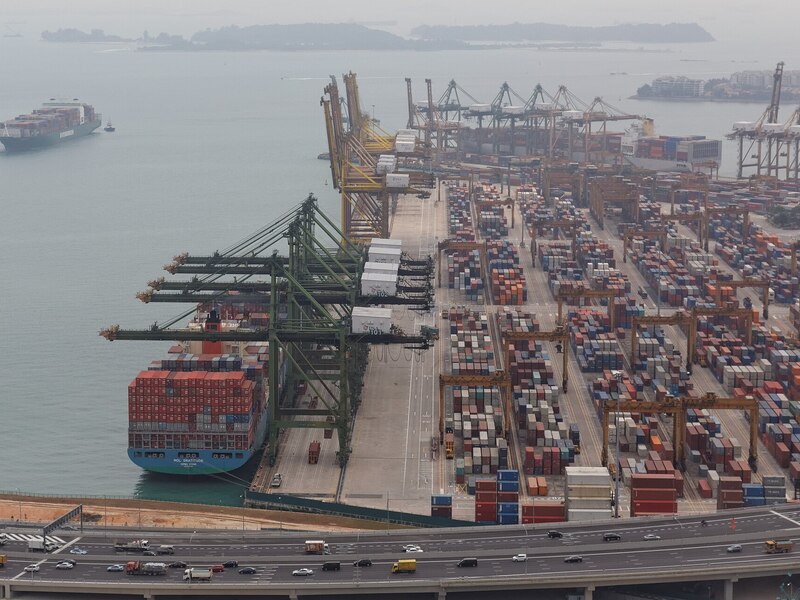
Before an imported car in Singapore even qualifies for a Certificate of Entitlement, its owner may already owe an Additional Registration Fee (ARF) worth up to 320 per cent of the vehicle’s Open Market Value (OMV) on the top tier, a fee structure many new Employment Pass holders discover only after the shipping quote has already been paid. Importing a car to Singapore is legal and reasonably well documented by the Land Transport Authority (LTA) and Singapore Customs, but it is one of the least understood parts of a relocation, because the tax stack, the eligibility rules and the paperwork sequence rarely appear in one place.
This matters more than it used to. Since 1 January 2025, new registrations of diesel and diesel-natural gas cars, including imported used cars, are no longer permitted in Singapore, and from 2030 all new car registrations must be cleaner-energy models, as confirmed by LTA’s Standard Registration guidance (as at 2 September 2026). For a new Employment Pass, S Pass or Dependant’s Pass holder weighing whether to bring a car from their home country or simply buy one locally, the decision now hinges on a handful of figures that are easy to get wrong.
This guide sets out exactly who can import a vehicle when relocating to Singapore, what Singapore Customs and LTA charge at each stage, and the realistic sequence of steps from securing your pass to driving on Singapore roads.
Who Can Import a Car When Relocating to Singapore
You do not need to be a Singapore citizen or permanent resident to import and register a vehicle. LTA’s self-registration process explicitly accepts an “Employment/Immigration pass card issued by MOM/ICA” in place of an NRIC for foreigners, alongside the vehicle’s Vehicle Approval Code (VAC), a Temporary Certificate of Entitlement (TCOE) and proof of motor insurance, according to LTA’s Standard Registration page (as at 2 September 2026). In practice, this means you generally need your Employment Pass, S Pass or Dependant’s Pass already issued, or at least an In-Principle Approval you can show Customs, before the registration paperwork can be completed.
Not every car qualifies. LTA permits import of a brand new car bought directly from the manufacturer, or from a country whose safety and emissions standards are equivalent to or higher than Singapore’s, and a used car that is less than three years old at the point of registration, plus classic and vintage cars under their own schemes, per LTA’s Vehicle Import and Registration guidance (as at 2 September 2026). A used car imported after the three-year mark cannot be registered at all, which rules out shipping an older family car simply because it is paid off.
Understanding Singapore’s Vehicle Tax Stack Before You Ship Anything
The figure that catches most new arrivals off guard is not the sticker price of the car; it is the combined effect of excise duty, the Additional Registration Fee, Goods and Services Tax (GST) and the Certificate of Entitlement (COE) quota premium, all levied on the Open Market Value (OMV) that Singapore Customs assesses from your purchase, freight and insurance costs, not the price you originally paid overseas.
| Cost component | Rate or fee (cars) | Source |
|---|---|---|
| Excise duty | 20% of OMV | Singapore Customs, Duty Rates (as at 24 February 2026) |
| GST | 9% of the total cost of importing the vehicle (vehicle cost, freight, insurance and duty) | Singapore Customs, GST on Motor Vehicles (as at 27 February 2026) |
| Additional Registration Fee (ARF), COEs from Feb 2023 onwards | 100% of first S$20,000 of OMV; 140% of next S$20,000; 190% of next S$20,000; 250% of next S$20,000; 320% above S$80,000 | LTA, Vehicle Tax Structure (as at 2 September 2026) |
| Registration Fee | S$350 | LTA, Standard Registration (as at 2 September 2026) |
| Vehicle Approval Code (VAC) application | S$274.68 for cars (S$109 for motorcycles/scooters) | LTA, Standard Registration (as at 2 September 2026) |
| Used car surcharge | S$10,000 flat, on top of the above, for any imported used car | LTA, Vehicle Tax Structure (as at 2 September 2026) |
| COE quota premium | Prevailing bid price for the relevant category (A, B or E for cars) | LTA, Certificate of Entitlement |
Because ARF is tiered and compounding, a car with an OMV of S$60,000 does not attract a flat percentage; it attracts 100 per cent on the first S$20,000, 140 per cent on the next S$20,000 and 190 per cent on the remaining S$20,000, an ARF bill of roughly S$86,000 before excise duty, GST, registration fees or the COE premium are even added. Singapore Customs values dutiable motor vehicles as a distinct exercise from ordinary personal-effects relief; the GST relief available for household goods under a separate scheme does not extend to vehicles, which is a common point of confusion for anyone who has already read about GST import relief for shipping household goods and assumes the same relief applies to a car.
Are Any Vehicles Duty-Exempt?
A narrow set of vehicles can qualify for excise duty exemption, though GST still applies: vintage cars manufactured before 1940, vehicles for persons approved under the Disabled Persons Scheme, vehicles for registered voluntary welfare organisations, hearses operated by licensed funeral service providers, and off-road racing cars, each subject to LTA approval and additional conditions, according to Singapore Customs’ guidance on bringing in vehicles and boats with tax relief (as at 28 August 2026). None of these categories covers an ordinary family car brought over on relocation, so most new arrivals should assume the full tax stack applies.
Importing a Car to Singapore: The Step-by-Step Process
Once you have decided to proceed, importing a car to Singapore follows a defined sequence rather than a single application.
1. Apply for a Vehicle Approval Code (VAC) through VITAS
Before the vehicle arrives, you submit a request through LTA’s Vehicle Inspection and Type Approval System (VITAS) for a VAC, supported by the vehicle’s technical specifications, safety and emissions evidence. LTA charges S$274.68 for this application for cars. Once in-principle approval is given, the vehicle is sent for inspection at an LTA-Authorised Inspection Centre before the VAC is issued, per LTA’s Standard Registration guidance (as at 2 September 2026).
2. Clear the shipment with Singapore Customs
Separately from LTA’s approval, the vehicle must be cleared through Singapore Customs, which assesses its Open Market Value and issues the Customs In-Payment permit for duty and GST via TradeNet. Full procedural detail is in Singapore Customs’ Guide to Importing Dutiable Motor Vehicles (as at 26 February 2026). This is also the stage at which you would apply for any duty exemption, if your vehicle falls into one of the narrow categories above.
3. Submit your registration documents to LTA
With the VAC approval notice, a Temporary COE, proof of motor insurance and your identification in hand, you book an appointment at the LTA Customer Service Centre to submit Form R01 (or R01A for off-peak cars). For a foreign national, the accepted identification is the Employment Pass, S Pass or Dependant’s Pass card issued by MOM or ICA; a photograph or scan of the pass is not accepted, only the original physical card or the Digital Identity Card in the Singpass app.
4. Pay registration fees and affix your plates
At the appointment you pay the Registration Fee (S$350), the ARF, the COE quota premium if a Temporary COE has not already been converted, road tax and the used car surcharge if applicable, plus a S$28.34 processing fee. Once registration is confirmed, you have three days to affix your number plates.
Why Most New Arrivals Choose Not to Import, and What They Do Instead
Given the combined weight of excise duty, GST, ARF and the COE premium, the majority of new Employment Pass holders who relocate to Singapore find it materially cheaper to sell their car before leaving and buy locally once they have converted their overseas driving licence, a process covered in detail in our guide on Singapore driving licence conversion documents and templates. Buying locally also avoids the shipping cost, the VITAS inspection timeline, and the risk that your vehicle’s specifications do not meet Singapore’s type-approval requirements at all, in which case the VAC application is refused and the shipping cost is sunk regardless.
That said, importing genuinely makes sense for a small number of relocating families: those with a vintage or classic car that qualifies for a dedicated scheme, those relocating a specialist or modified vehicle unavailable in the Singapore market, or those for whom the emotional or practical value of keeping a specific car outweighs the tax cost. If that describes your situation, budget the full tax stack above before committing to shipping, not after.
Where Vehicle Import Fits Into Your Wider Relocation Budget
Vehicle import decisions rarely happen in isolation. Most new arrivals are simultaneously working out where to live before their pass is approved, a question we cover in Renting in Singapore Before Your Employment Pass Is Approved, and setting up the banking relationships needed to pay for everything from a security deposit to a Customs In-Payment permit, covered in Banking for New Arrivals: Accounts, Credit Cards and FX and Opening a Bank Account in Singapore as an EP Holder. A Customs In-Payment permit and an LTA registration appointment both typically require funds to already be sitting in a Singapore bank account, which is one more reason to sequence banking ahead of shipping a vehicle rather than after.
It is also worth understanding customs duty as a concept in its own right, since motor vehicles sit alongside alcohol, tobacco and petroleum products as one of the few categories of dutiable goods in Singapore; Singapore Secretary Services’ explainer on what customs duty is is a useful primer if this is your first encounter with Singapore’s duty regime, whether for a personal vehicle or, later, for a business you go on to set up here.
A Practical Timeline for New Employment Pass Holders
If you do decide to import, sequence the process against your pass timeline rather than your shipping company’s schedule. Apply for your VAC through VITAS as soon as you have an In-Principle Approval letter for your pass, since the inspection and approval cycle can run several weeks. Only release the shipment from your country of origin once the VAC is in hand, since Singapore Customs will not clear a dutiable vehicle without the supporting approvals in place. Complete your LTA registration appointment once your pass card has been issued, since the original physical card, not a photograph, is required at the counter. Families relocating together should also check the separate requirements for a spouse or child who will hold a Dependant’s Pass or Long-Term Visit Pass, set out in our guide to Dependant’s Pass and Long-Term Visit Pass documents and templates, particularly if the vehicle will be registered in a spouse’s name.
Treat the tax stack in this guide as a budgeting exercise before you commit, not a checklist to work through after your car has already left port. Excise duty, GST, ARF and the COE premium are all payable regardless of whether you later decide the import was worth it, and none of them is refundable if you change your mind mid-shipment.
Conclusion
Importing a car to Singapore is a legitimate option for a new Employment Pass holder, but it is rarely the cheapest one, and the rules that determine eligibility, cost and timing sit across LTA and Singapore Customs rather than in a single source. Work through the tax stack before you ship anything, confirm your vehicle meets LTA’s age and standards requirements, and sequence the VAC application against your own pass timeline.
For help planning the wider move, from pass strategy to settling-in logistics, speak to Singapore Employment Agency. If your relocation also involves setting up a business presence, corporate structuring or tax planning in Singapore, Raffles Corporate Services can advise on the corporate side of the move.
The Editorial Team, Little Big Employment Agency
Real people. Right here in Singapore.