
Insights for work and life.
Why Professional Development is Your Best Retention Tool
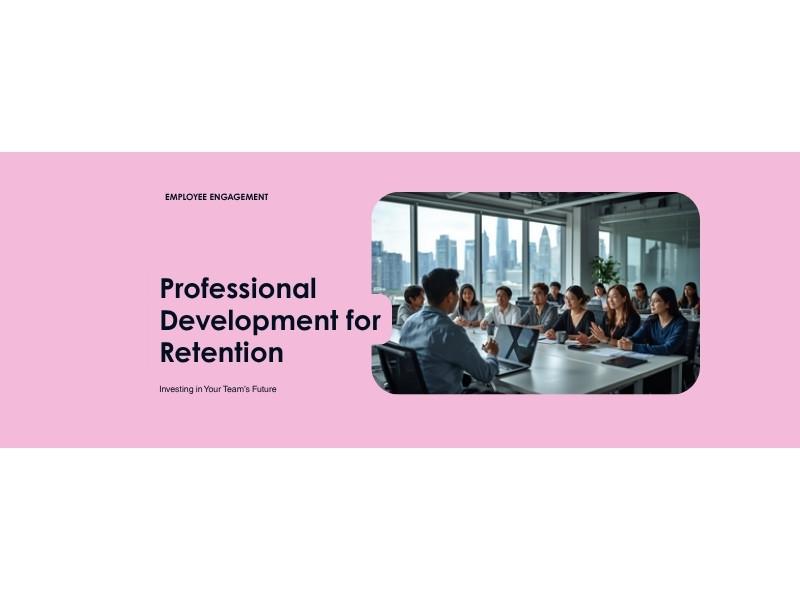
Introduction
Organisations in Singapore increasingly recognise the link between training and retention. Why Professional Development is Your Best Retention Tool explains how employers can design development programmes that strengthen engagement, reduce turnover and meet regulatory expectations.
This article outlines who should consider professional development, the key rules and requirements in Singapore, a step-by-step process to implement effective learning initiatives, common mistakes to avoid, practical examples and how an experienced consultant can help.
Who this applies to
This guidance is relevant to:
- Employers across sectors who wish to retain and upskill local and foreign employees;
- HR teams and business leaders developing training budgets and career pathways;
- Employment agencies and training providers working with employers to comply with statutory obligations;
- Organisations hiring Employment Pass, S Pass or Work Permit holders where training supports productivity and capability development.
Key rules and requirements in Singapore
Professional development sits alongside several legislative and regulatory frameworks. Understanding these helps you design compliant programmes that also deliver retention benefits.
- Employment Act , sets out basic employment terms and conditions for covered employees; training-related leave and contract terms should respect the Act.
- CPF Act , employers must continue CPF contributions for eligible Singapore Citizen and PR employees even when arranging training and PD-related allowances.
- Skills Development Levy (SDL) , employers pay SDL for eligible local employees; SDL funds are used to support training, and employers should consider claims and reimbursable schemes under SkillsFuture when planning programmes.
- Employment of Foreign Manpower Act and MOM rules , for foreign employees (Employment Pass, S Pass, Work Permit), workplace training should align with work pass conditions and any productivity commitments; MOM guidance on fair employment practices is also relevant.
- Employment Agencies Act , where agencies arrange training as part of recruitment or placement, they must comply with agency regulations and fee disclosures.
- PDPA and POHA , personal data handled during training (e.g. assessments, profiles) must comply with PDPA; workplace harassment policies apply during training under POHA and the Workplace Safety and Health Act.
- Work Injury Compensation Act , consider safety and insurance coverage for on-site or practical training activities that involve physical risk.
- IRAS considerations , tax treatment of training benefits, course fees and reimbursements should be considered; use IRAS myTax Portal guidance when reviewing tax deductibility or employee benefits treatment.
Step-by-step process
Implementing professional development as a retention tool requires an organised approach. Follow these steps to build an effective programme.
- Define objectives , align training with business goals, productivity improvements and employee career pathways.
- Assess skills gaps , use performance reviews, skills audits and feedback to prioritise high-impact training areas.
- Design training pathways , combine on-the-job learning, classroom modules, e-learning and mentoring. Link outcomes to clear career progression.
- Budget and funding , account for course fees, time-off, CPF and SDL implications. Check SkillsFuture and other grants to offset costs.
- Document policies , set clear policies on eligibility, training agreements, repayment clauses (if any), and data handling under PDPA.
- Deliver and monitor , schedule training to minimise disruption, track participation, and evaluate impact through KPIs such as retention rates, productivity and engagement scores.
- Review and adapt , use ACRA BizFile+ or internal HR records to update organisational data, and adjust programmes for regulatory changes or shifting skill needs.
Common mistakes to avoid
Many employers intend well but make errors that reduce the effectiveness of professional development.
- Missing alignment , training that is not clearly tied to role progression or business needs often fails to retain staff.
- Poor communication , lack of transparency about eligibility, career outcomes and cost-sharing can create dissatisfaction.
- Ignoring compliance , failing to factor CPF, SDL, MOM rules or PDPA obligations into programme design risks penalties and disputes.
- Overlooking foreign worker conditions , neglecting work pass conditions or failing to secure MOM approvals where needed can jeopardise foreign employees’ eligibility.
- No measurement , without KPIs, it is difficult to assess return on investment or make evidence-based changes.
Practical examples
Here are practical, Singapore-specific examples showing how professional development supports retention.
- Structured progression for service staff: A retail employer links modular training to wage bands and promotion criteria. Staff who complete modules become eligible for salary increments administered via payroll and recorded on ACRA/HR systems.
- Technical upskilling for manufacturing: An employer invests in accredited courses, claiming SDL-supported training where applicable and tracking productivity improvements to justify training spend to stakeholders and IRAS.
- Leadership development for mid-managers: A multisession leadership programme is scheduled around peak seasons and integrated into performance appraisal cycles to reward promotion-ready staff.
- Cross-border compliance: For teams with Employment Pass holders, an employer ensures training hours comply with MOM conditions, documents outcomes and avoids using training to circumvent immigration controls.
How an experienced consultant can help
Engaging an experienced consultant like Little Big Employment Agency can streamline each stage: from policy drafting to compliance checks. Consultants provide practical support in areas such as SDL claim navigation, CPF and payroll alignment, work pass considerations and documentation required under the Employment Agencies Act.
Little Big Employment Agency can assist with programme design, grant applications, compliance reviews and advisory support to ensure training investments translate into measurable retention gains.
Frequently Asked Questions
Does training time count as working hours under the Employment Act?
Generally, if training is mandatory and relates to the employee’s job, it may be treated as working time. Employers should consider the Employment Act obligations when scheduling training and consult HR or legal advisers for specific cases.
Can employers recover training costs if an employee leaves soon after completing a course?
Employers sometimes use repayment or bond clauses. These must be reasonable, transparent, and documented in written agreements. Consider Employment Act requirements and any applicable MOM or tax implications before implementing such clauses.
Are there grants to offset training costs in Singapore?
Yes. SkillsFuture credits, Workforce Skills Qualifications (WSQ) subsidies and other sector-specific grants can reduce employer costs. Employers should check current schemes and eligibility criteria on government portals and through advisers.
How does training affect foreign employees on work passes?
Training must not contravene conditions of the employee’s work pass. For example, employers should avoid arrangements that could be seen as unauthorised work or changes in duties. Check MOM guidance and document programmes carefully.
Key takeaways
- Professional development, when aligned with business needs, is one of the most effective staff retention tools in Singapore.
- Programmes must be designed with reference to the Employment Act, CPF Act, SDL rules, MOM guidance and PDPA obligations.
- Measurement, clear policies and transparent communication are essential to success.
- Grants and schemes such as SkillsFuture can offset costs; consult IRAS and MOM guidance for tax and immigration considerations.
- Little Big Employment Agency can provide advisory support, compliance checks and practical assistance with implementation.
Requirements may change, so always check the latest guidance from MOM, or consult a professional adviser.
If you would like to find out more about how Little Big Employment Agency can assist with your employment and immigration requirements, please get in touch with the team at [email protected].
Yours sincerely,
The editorial team at Little Big Employment Agency
Disclaimer: This does not constitute legal advice. If you require legal advice, please contact a lawyer.
Real people. Right here in Singapore.