
Insights for work and life.
Singapore vs other hubs: HK, Dubai, London, NY, Sydney: Documents required and templates
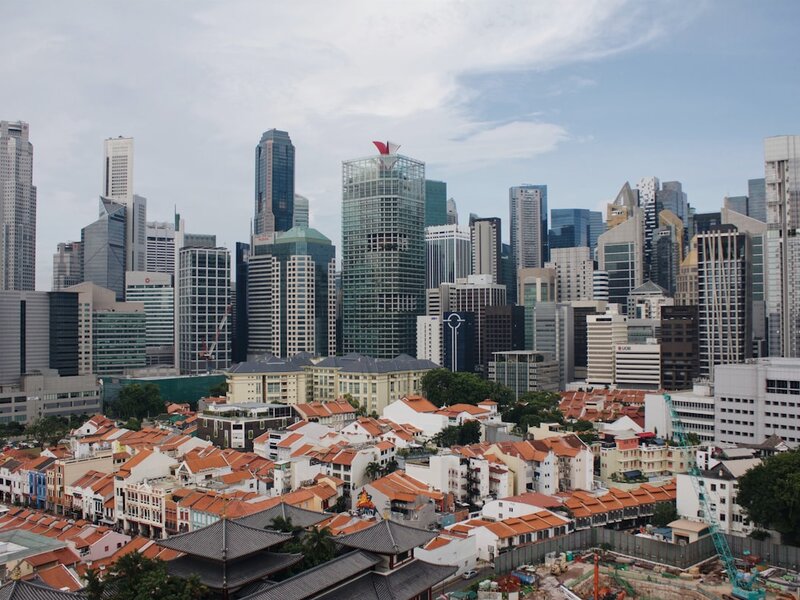
A singapore vs other hubs comparison for a relocating professional, founder or mobility manager comes down to five practical questions: which work visa is fastest, what it costs, what documents each government wants, how long a family takes to settle, and what happens to tax residency along the way. Of the five hubs compared here, Singapore is generally the fastest and least document-heavy for a mid-to-senior hire.
Raffles Corporate Services works with a panel of corporate and employment law firms; this article is general information, not legal advice. Little Big Employment Agency (EA Licence 19C9790) prepares work pass documentation as a licensed employment agency, not as a law firm, and nothing in this guide should be treated as legal or tax advice for an individual’s specific circumstances.
What a Singapore vs other hubs comparison actually involves
When HR teams and relocating executives run a singapore vs other hubs comparison, they are usually not comparing lifestyle alone. They are comparing five concrete variables: the work pass or visa category, the minimum salary or investment threshold, the supporting documents each immigration authority requires, the statutory contributions an employer must make (CPF in Singapore, National Insurance in the UK, superannuation in Australia), and the tax residency rules that determine where an individual’s global income gets taxed. Singapore, Hong Kong, Dubai (UAE), London (UK) and Sydney (Australia) each run a points-based or salary-based sponsored work visa system, but the paperwork burden and processing speed differ substantially, and that difference is what usually decides where a company places a role when the choice is genuinely open.
Who this comparison is for
This guide is written for three groups. First, relocating professionals who have offers from more than one hub and need to compare net cost and processing time before accepting. Second, HR and global mobility managers deciding where to base a new regional role. Third, founders and small business owners weighing up where to incorporate and hire, particularly where the entity structure (sole proprietorship, LLP or private limited company) affects which work passes the business can even sponsor. On that last point, founders comparing jurisdictions often also need to get the underlying entity right first: see Sole Proprietorship vs LLP vs Pte Ltd: Common Mistakes and Rejection Reasons, since a Singapore Pte Ltd is generally what MOM expects to see before it will sponsor an Employment Pass for a foreign owner-director.
Eligibility and document requirements by hub
Every hub asks for a version of the same core document set: passport, educational certificates, employment contract or offer letter, proof of relevant experience, and a clean criminal record where the role involves regulated work. Beyond that baseline, requirements diverge:
- Singapore (Employment Pass): a job offer meeting the qualifying salary (from S$5,600 a month for most sectors, higher for financial services and for older, more experienced candidates), a points assessment under the Complementarity Assessment Framework (COMPASS), the employer’s ACRA business profile, and, where the Fair Consideration Framework applies, proof the role was advertised on MyCareersFuture for at least 14 days.
- Hong Kong (General Employment Policy): proof the role cannot be readily filled locally, the candidate’s academic and professional qualifications, a detailed job description, and the sponsoring company’s business registration and audited accounts.
- Dubai/UAE (employment visa): an offer letter from a mainland or free zone entity, attested academic certificates, a medical fitness test taken in the UAE, and Emirates ID biometrics after arrival.
- London/UK (Skilled Worker visa): a Certificate of Sponsorship from a licensed sponsor, proof of English language ability, a job that meets the going rate for its occupation code, and a criminal record certificate for certain sectors.
- New York/US (typically H-1B or L-1): a labour condition application, a bachelor’s degree or equivalent tied to a specialty occupation, and, for H-1B, entry into an annual lottery that most other hubs in this comparison do not use at all.
- Sydney/Australia (Temporary Skill Shortage, subclass 482): sponsorship approval, a nomination for an occupation on the relevant skills list, skills assessment for some occupations, and English language test results.
Anyone deciding between Singapore and another hub on a work-visa basis should first understand what each Singapore pass actually covers; a fuller side-by-side is in Employment Pass vs ONE Pass vs PEP 2026: Which Singapore Work Visa Do You Need?, which is the natural next read before comparing Singapore against Hong Kong, Dubai, London or Sydney.
Cost and timeline: numbers across the five hubs
Government fees alone rarely decide a relocation, but they set a useful floor for comparison. At the time of writing:
- Singapore: Employment Pass application fee S$105, issuance fee S$225 (total S$330 in MOM fees), plus S$30 for a Multiple Journey Visa where required. Typical processing time is two to eight weeks, commonly around three weeks for a straightforward application.
- Hong Kong: visa fee of roughly HK$1,200 to HK$1,900 (approximately S$205 to S$325), with processing typically taking four to six weeks.
- Dubai/UAE: employment visa costs of roughly AED 3,000 to AED 7,000 (approximately S$1,100 to S$2,550) covering processing, medical testing and the Emirates ID, usually completed within two to four weeks once the offer letter is in hand.
- London/UK: Skilled Worker visa application fee from £819 outside the UK, plus a Certificate of Sponsorship fee of £525, an Immigration Skills Charge that can exceed £1,320, and the annual Immigration Health Surcharge on top, together often exceeding S$5,000 in total employer and employee cost for a three-year visa. Processing is typically three to eight weeks.
- New York/US: H-1B filing fees for the employer alone commonly exceed US$4,000 once premium processing and required charges are included, and the process is gated by an annual lottery, so timeline is effectively “next intake window”, not weeks.
- Sydney/Australia: TSS subclass 482 visa fee of roughly AUD 3,210 (approximately S$2,800) for the main applicant, plus employer sponsorship and nomination fees and an annual Skilling Australians Fund levy, with processing commonly taking one to four months depending on occupation.
On fees and speed, Singapore is consistently the cheapest and one of the fastest of the five, which is a large part of why it remains a preferred hub for regional roles that could plausibly sit in any of these five cities.
Step-by-step: preparing a relocation document pack for Singapore
1. Confirm the correct pass category (Employment Pass, S Pass, EntrePass, ONE Pass or Personalised Employment Pass) against the role and salary.
2. Assemble the core document set: passport bio-page, highest qualification certificate and transcript, latest employment testimonial or reference letters, and a signed employment contract stating the fixed monthly salary.
3. Confirm the employer’s ACRA business profile is current and that the company’s hiring ratio and levy obligations (where a Work Permit or S Pass is also involved) are in order.
4. Where the Fair Consideration Framework applies, complete the MyCareersFuture job advertisement for at least 14 calendar days before submitting the pass application.
5. Submit through the myMOM Portal and track the application; most straightforward cases clear within three weeks, though COMPASS-related queries can extend this.
6. On approval, arrange the In-Principle Approval letter, complete entry formalities, and register the pass before starting work.
7. Separately, plan the practical relocation: housing (most newly arrived professionals rent private housing, since foreigners generally cannot buy HDB flats), schooling, and converting a foreign driving licence.
Common mistakes when comparing hubs or preparing documents
The most common error is comparing headline visa fees without factoring in dependent passes, annual renewal costs, and statutory levies, which materially change the true cost ranking between hubs. A second common mistake is assuming Singapore’s fast processing means light-touch scrutiny; COMPASS in fact scores each Employment Pass application against salary, qualifications, diversity and support for local employment, and a poorly framed application can stall even where the applicant is objectively qualified. A third mistake, common among founders, is registering the wrong entity type before applying for a pass, which then requires unwinding and refiling; this is exactly the failure mode covered in the sole proprietorship versus Pte Ltd comparison linked above. Finally, many relocating families under-budget for housing deposits and school placement timelines, both of which move faster in Singapore than in London or Sydney but require documents (tenancy agreement, proof of income) to be ready in advance.
Because pass conditions, housing rules and vehicle registration requirements change periodically, always verify current requirements at source rather than relying on a comparison article alone. For entry and immigration formalities, including arrival cards and long-term pass registration, the Immigration and Checkpoints Authority at https://www.ica.gov.sg is the primary reference. For rental eligibility rules affecting foreigners and Singapore Permanent Residents, the Housing and Development Board at https://www.hdb.gov.sg sets out what non-citizens can and cannot rent or buy. For converting a foreign driving licence or registering a vehicle after relocating, the Land Transport Authority at https://www.lta.gov.sg publishes the current conversion list and Certificate of Entitlement rules.
Statutory framework behind the Singapore comparison
Two statutes sit behind every Singapore figure quoted above. Section 5 of the Employment of Foreign Manpower Act 1990 makes it an offence to employ a foreigner without a valid work pass, which is why the pass application step cannot be skipped or shortcut regardless of urgency. Section 11 of the same Act provides for the foreign worker levy payable in respect of Work Permit and S Pass holders, which is a separate cost from the Employment Pass fees quoted above and applies only where the business also sponsors lower-tier passes. On the tax side, Section 2 of the Income Tax Act 1947 sets out the definition of a person “resident in Singapore” for a year of assessment, which is the provision underlying the commonly cited 183-day rule that determines whether a relocating professional’s Singapore employment income is taxed at resident or non-resident rates.
Beyond the work pass itself, most relocation delays trace back to a handful of family and lifestyle documents that are easy to leave until the last minute. Dependant’s Pass or Long-Term Visit Pass applications for a spouse and children require the principal pass holder’s approval letter first, so they cannot be filed in parallel from day one. School placement in Singapore’s more sought-after international schools often has a waiting list measured in months, not weeks, which is longer than the visa process itself and should be started as soon as an offer is accepted, not after arrival. Proof of income and a signed tenancy agreement are usually required before a landlord will hand over keys, and banks generally want a valid pass, not just an in-principle approval letter, before opening a full local account. None of this is unique to Singapore, HK, Dubai, London or Sydney individually, but the relative speed of each step differs enough between hubs that a family comparing two offers should map the full relocation timeline, not just the visa timeline, before deciding.
Related guides
For a deeper look at eligibility across the specific hubs and the exact document checklist for each, see the companion checklist page Singapore vs other hubs, HK, Dubai, London, NY, Sydney, Eligibility and requirements checklist. Readers deciding between Singapore work pass categories should also read the Employment Pass vs ONE Pass vs PEP comparison linked earlier in this guide, and founders should confirm their entity structure using the sole proprietorship versus LLP versus Pte Ltd guide before applying for any pass.
FAQs
Is Singapore genuinely faster than Hong Kong, Dubai, London, New York and Sydney for a work visa? In most straightforward professional cases, yes. Singapore’s typical Employment Pass processing time of around three weeks compares favourably with the UK’s three to eight weeks, Australia’s one to four months, and the US H-1B’s annual lottery cycle, though Dubai can match or beat Singapore on raw speed for simple cases.
Which hub is cheapest for government fees alone? Singapore and Hong Kong are typically the cheapest of the five on government fees, with Singapore’s Employment Pass at S$330 in total MOM fees and Hong Kong’s employment visa in a broadly similar range once converted.
Does a company need a local entity in every hub before it can sponsor a visa? Generally yes; each of the five hubs requires a locally registered or licensed sponsoring entity, though the exact form (branch, subsidiary, free zone entity) varies by hub and by industry.
Can a relocating professional buy property immediately in Singapore? No. Most foreigners and even most Permanent Residents face restrictions on buying HDB flats and, for private landed property, require government approval; renting private housing is the standard first step and is unrestricted for most nationalities.
Does tax residency change automatically once someone relocates? No. Singapore tax residency depends on the number of days physically present or employed in Singapore in a calendar year under the Income Tax Act 1947, not simply on holding a valid work pass, so the two should not be assumed to align.
Need help with this? Call, SMS or WhatsApp +65 8501 7133, or email [email protected]. Little Big Employment Agency (EA Licence 19C9790) works with a panel of corporate and employment law firms; this article is general information, not legal advice.
Real people. Right here in Singapore.