
Insights for work and life.
Singapore vs other hubs , HK, Dubai, London, NY, Sydney , Complete 2026 guide
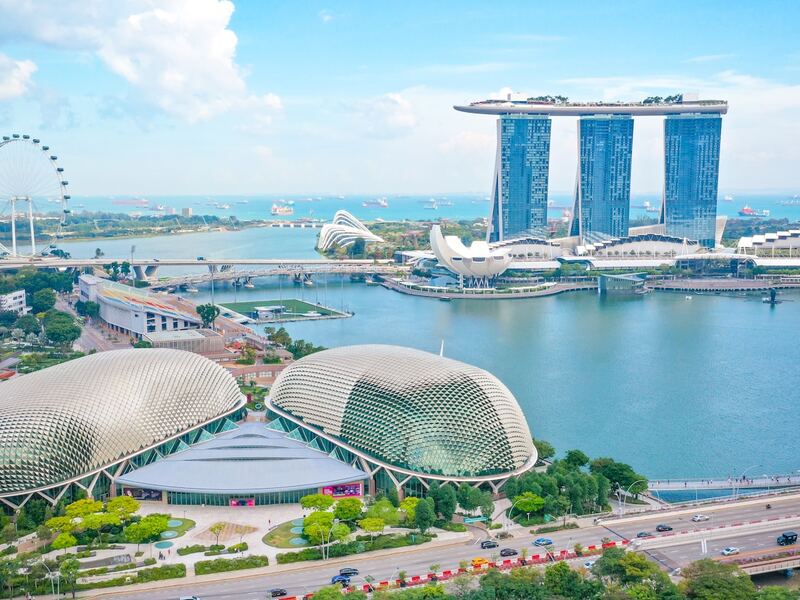
Comparing Singapore vs other hubs , Hong Kong, Dubai, London, New York and Sydney , Singapore wins on personal tax (top rate 24%, no capital gains tax), safety and regional access; Dubai wins on zero income tax; London and New York on market depth; Sydney on space and lifestyle. This guide compares the numbers that matter for relocating professionals and families in 2026.
Tax , the first filter
- Singapore: progressive 0–24%; no capital gains tax, no dividend tax for individuals, no inheritance tax. Section 10(1) of the Income Tax Act 1947 charges tax on income accrued in or derived from Singapore , a territorial starting point that exempts most foreign personal investment income received by residents.
- Hong Kong: salaries tax capped around 15–16%; also no CGT , marginally lighter than Singapore at high incomes.
- Dubai: 0% personal income tax; 9% corporate tax introduced 2023; visa tied to employment or property.
- London: up to 45% income tax plus NICs; CGT and inheritance tax apply; the abolition of the non-dom regime from April 2025 removed the classic expat shelter.
- New York: federal up to 37% plus state and city taxes pushing combined rates near 50%; worldwide taxation for US persons.
- Sydney: up to 45% plus 2% Medicare levy; CGT with discounts.
On a S$500,000 package, take-home differences between Singapore and London/New York/Sydney commonly exceed S$100,000 a year.
Housing and schooling , where Singapore costs bite
Singapore rents (3BR family condo: S$5,500–S$9,000 a month city-fringe) sit near Hong Kong levels and above London, Dubai and Sydney for equivalent space. International schooling is expensive everywhere: Singapore S$25,000–S$50,000 a year; Hong Kong similar with debenture schemes on top; Dubai S$15,000–S$40,000; London day schools S$30,000–S$50,000 equivalent; New York privates often above S$70,000 equivalent; Sydney privates S$25,000–S$45,000 equivalent. Singapore’s differentiator is that the school run, the office and the airport are all within 30–45 minutes.
Immigration certainty
Singapore’s work pass system is points-based and transparent , Employment Pass qualifying salaries (S$5,600 general, S$6,200 financial services for new applications, with renewals aligned from 1 January 2026) plus the COMPASS framework. Section 5(1) of the Employment of Foreign Manpower Act 1990 makes a valid pass a precondition to working. Hong Kong’s admission schemes remain employer-driven; Dubai ties residence to employment or property with golden-visa options; the UK and US run costlier, slower sponsorship systems (H-1B lotteries; UK skilled-worker visa costs of several thousand pounds); Australia’s points system is transparent but capped. For executives weighing the corporate angle , where regional headquarters locate , see the analysis of Singapore as a regional commodity trading hub.
Safety, healthcare and daily life
- Safety: Singapore consistently ranks among the lowest-crime major cities globally , a decisive factor for families with teenagers; Dubai also scores highly; London, New York and Sydney trail.
- Healthcare: Singapore and Sydney offer top-tier systems; Singapore is private-insurance-driven for expats (family plans S$8,000–S$20,000 a year); London’s NHS is free but stretched; New York is the costliest worldwide.
- Climate and space: the honest trade-off , Singapore is hot and compact; Sydney offers beaches and gardens; London and New York offer seasons and culture at scale.
- Connectivity: Changi serves 150+ cities; Singapore is 6–7 hours from half of Asia’s major markets, the core reason regional roles concentrate here.
Singapore vs other hubs , the decision matrix
- Asia-facing career, family in tow: Singapore first, Hong Kong second (China-centric roles flip this).
- Pure tax minimisation, single or young couple: Dubai.
- Capital markets depth and career ceiling: New York, then London.
- Lifestyle-led with Anglophone schooling: Sydney, accepting the tax cost.
- Wealth structuring with succession planning: Singapore’s trust, fund and family office ecosystem is the regional default.
Common relocation mistakes
- Comparing gross salaries across hubs instead of net-of-tax, net-of-rent, net-of-school arithmetic.
- Underestimating the partner’s right to work , Singapore’s Letter of Consent route and Dubai’s spousal sponsorship differ materially from US H-4 restrictions.
- Ignoring exit taxes and home-country tail liabilities (US citizenship-based taxation, UK temporary non-residence rules, Australian CGT events on departure).
- Choosing the hub before checking school waitlists , places, not visas, are often the binding constraint; see international schools and curricula in Singapore.
- Forgetting incorporation and banking lead times when the move includes a business , the walkthrough on Singapore Pte Ltd company registration for foreigners covers the Singapore side.
Authoritative references: the Immigration & Checkpoints Authority for entry and residence formalities, the Ministry of Manpower for work pass criteria, and the Land Transport Authority for vehicle cost benchmarks unique to Singapore.
FAQs
Is Singapore cheaper than Hong Kong overall?
Costs are comparable; Singapore’s slightly higher top tax rate is offset by cheaper domestic help, lower housing volatility and no debenture-style school premiums in most cases.
Which hub is easiest for a trailing spouse to work in?
Singapore (Letter of Consent for ONE Pass spouses, or own work pass) and Dubai are most workable; the US is hardest under H-4 unless separately sponsored.
How does Dubai’s 0% tax really compare?
For pure salary, Dubai wins. Factor schooling quality variance, summer climate, and the absence of Singapore-style PR pathways before deciding on a 5-year horizon.
Can I keep investments offshore while resident in Singapore?
Generally yes , most foreign-sourced personal investment income received by individuals is exempt, and there is no CGT , but home-country rules (especially for US persons) may still bite.
Which hub for eventual permanent residence?
Singapore and Australia offer credible PR pathways; Dubai offers long-term visas rather than citizenship; the US and UK routes are slower and costlier.
Need help with this? Call, SMS or WhatsApp +65 8501 7133, or email [email protected]. Little Big Employment Agency (EA Licence 19C9790) works with a panel of corporate and employment law firms; this article is general information, not legal advice.
Real people. Right here in Singapore.