
Insights for work and life.
Singapore vs other hubs , HK, Dubai, London, NY, Sydney , Step-by-step walkthrough
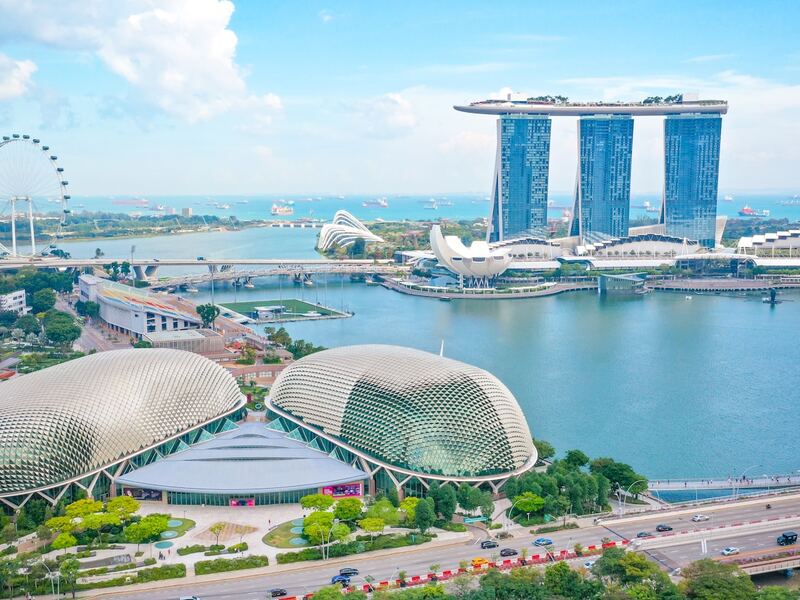
A Singapore vs other hubs comparison , weighing Singapore against Hong Kong, Dubai, London, New York and Sydney , usually ends in Singapore’s favour for relocating families and businesses. In a Singapore vs other hubs analysis, Singapore scores on safety, schooling, tax simplicity and connectivity, while the trade-offs are high housing costs and a competitive talent market.
Raffles Corporate Services works with a panel of corporate and employment law firms; this article is general information, not legal advice.
How the major hubs compare
Each hub has a distinct profile. Hong Kong offers proximity to mainland China and a low, simple tax regime; Dubai offers zero personal income tax and fast set-up; London and New York offer the deepest capital markets but high tax and cost; Sydney offers lifestyle but higher personal tax. Singapore blends a 17% corporate rate, progressive personal tax capped well below its Western peers, political stability and a strong rule of law in English.
For families moving for both lifestyle and structure, the decision is rarely about a single factor. It is the combination of tax, schooling, safety and connectivity that tends to favour Singapore. Those building a family office alongside the move should read our Single Family Office (SFO) Singapore setup , Costs and fees breakdown on family-office set-up.
Singapore vs other hubs , tax and cost of doing business
Singapore’s headline corporate tax is 17% with generous start-up exemptions, and there is no general capital gains tax. Dubai’s free zones offer 0% in many cases but with substance conditions; Hong Kong sits near 16.5%; London and New York are materially higher once all layers are counted. Personal tax in Singapore tops out far below the United Kingdom and United States.
The trade-off is cost of living, especially housing and international schooling, which we cover in detail in our Singapore vs other hubs , HK, Dubai, London, NY, Sydney , Complete 2026 guide. For most relocating businesses, the predictability of Singapore’s tax system is as valuable as the headline rate itself.
Immigration and family relocation
Singapore’s pass and residency routes are predictable and merit-based, administered through the Ministry of Manpower and the Immigration & Checkpoints Authority at Immigration & Checkpoints Authority. Housing options through the public and private market are documented at Housing & Development Board, and transport planning through the Land Transport Authority at Land Transport Authority.
Compared with the points systems of Australia or the lottery elements of the United States, Singapore’s framework is comparatively transparent for skilled families, which lowers the planning risk of a move. Those incorporating on arrival should review the Singapore Pte Ltd company registration for foreigners , Costs and fees breakdown for the company side.
Lifestyle, safety and connectivity
Singapore consistently ranks among the safest cities globally, with an international airport connecting to most major hubs within a day’s flight. Schooling depth, healthcare quality and a common-law legal system in English lower the friction of relocation for many families relative to Dubai or non-English jurisdictions.
These softer factors are often what tip a decision once the tax and cost numbers are close, because they determine how quickly a family settles and how easily senior staff can be persuaded to move.
Cost and timeline , the numerical breakdown
The figures below give an order-of-magnitude comparison; exact positions shift with policy and exchange rates, so they should be treated as a planning guide rather than precise quotations.
Indicative 2026 hub comparison
- Corporate tax (headline): Singapore 17%; Hong Kong 16.5%; Dubai 0–9%; London 25%; New York ~21% federal plus state; Sydney 30%.
- Capital gains tax: Singapore none; most peers levy it.
- Top personal income tax: Singapore 24%; UK 45%; US 37% federal plus state; Australia 45%.
- Company set-up time: Singapore 1–3 days; Dubai days to weeks; London 1–2 days.
- Family housing (3-bed, central): S$5,000–S$10,000 per month in Singapore.
FAQs
Is Singapore cheaper than Hong Kong or London?
Tax is competitive and often lower, but housing and schooling are high; total cost depends heavily on lifestyle and district.
Why do families choose Singapore over Dubai?
Singapore offers an English common-law system, deep schooling, healthcare and safety, while Dubai leads on zero personal income tax.
How fast can I set up a company in Singapore?
Incorporation is often complete within 1 to 3 working days once KYC and documents are ready.
Does Singapore tax capital gains?
No. Singapore does not levy a general capital gains tax, unlike most of the other hubs in this comparison.
Need help with this? Call, SMS or WhatsApp +65 8501 7133, or email [email protected]. Little Big Employment Agency (EA Licence 19C9790) works with a panel of corporate and employment law firms; this article is general information, not legal advice.
Real people. Right here in Singapore.