
Insights for work and life.
Singapore vs other hubs: HK, Dubai, London, NY, Sydney: Common mistakes and rejection reasons
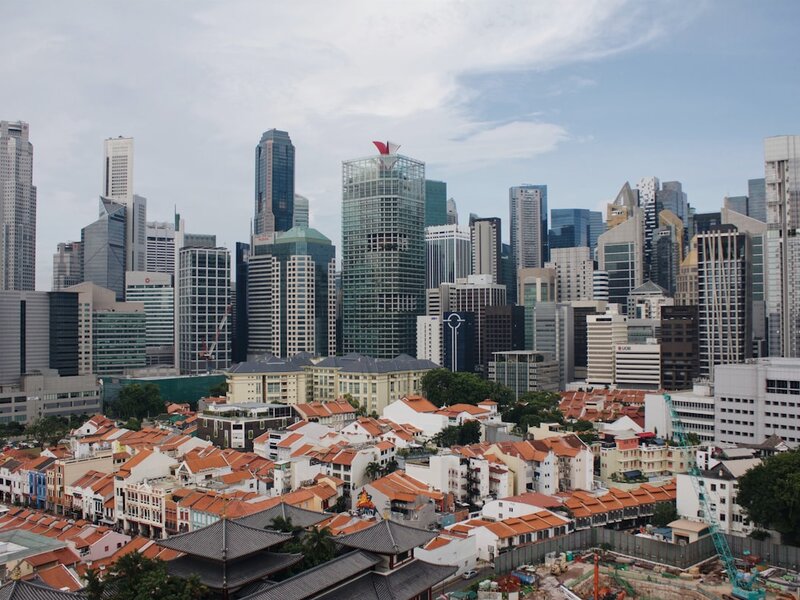
Comparing Singapore vs other hubs (HK, Dubai, London, NY, Sydney) is where relocating families most often make an avoidable mistake: choosing a destination on tax headlines alone, then discovering the visa route, school system or housing market does not fit the family’s actual circumstances. This guide sets out the practical comparison points and the rejection reasons families run into when a hub is chosen for the wrong reason.
What this comparison actually needs to cover
Families relocating for work rarely choose a hub on a single factor. The five destinations most commonly compared against Singapore, Hong Kong, Dubai, London, New York and Sydney, differ materially on personal tax, visa accessibility for a family (not just the working spouse), the international school landscape, and the practicalities of housing and getting around. A hub that looks attractive on tax alone can turn out to be the wrong choice once a family adds a spouse’s work rights, two children’s school places and daily commuting into the comparison.
Who this comparison is for
This guide is for families weighing a work-driven relocation to Singapore against an offer or option in one of the other four hubs, typically a senior professional or business owner with a spouse and school-age children, where the decision needs to account for the whole family’s visa status, not just the primary applicant’s.
Tax and visa comparison
- Singapore. Operates a territorial personal tax system with rates up to 24% at the top band; the Employment Pass qualifying salary for 2026 is generally S$5,600 a month for most sectors and S$6,200 a month for financial services, with an application fee of around S$330 in total and typical processing of two to eight weeks (commonly around three).
- Hong Kong. A broadly comparable territorial tax system with a top rate around 15% in many scenarios, unmatched access into mainland China, and a visa fee of roughly HK$1,200 to HK$1,900 with processing typically four to six weeks.
- Dubai (UAE). No personal income tax, and at a gross income of around US$500,000 a high earner retains close to 100% in the UAE against roughly 85% in Singapore and 80% in Hong Kong on the same headline figure; the trade-off families weigh against this is a materially different regulatory, legal and schooling environment.
- London (UK) and New York (US/NY State). Both carry materially higher effective personal tax at senior professional income levels than Singapore, Hong Kong or Dubai, and the gap compounds over a multi-year assignment; families comparing a Singapore offer against a UK or US offer often find the take-home difference alone changes the decision once housing and schooling costs are also factored in.
- Sydney (Australia). Comparable to the UK and US on effective personal tax at senior income levels, with the added complication for many nationalities of Australia’s residency-based worldwide income tax treatment, which catches out families who assume a territorial system similar to Singapore’s.
Cost and timeline specifics
Singapore’s Employment Pass route is comparatively fast and inexpensive to process (around S$330 and two to eight weeks) but is qualifying-salary gated and increasingly points-tested for renewal under the COMPASS framework; a Dependant’s Pass for the spouse and children generally follows once the main pass is approved, though the spouse’s own right to work in Singapore is a separate Letter of Consent application, not automatic. Hong Kong’s employment visa route runs on a broadly similar timeline (four to six weeks) but its dependant visa route has its own separate assessment. Dubai’s Golden Visa is comparatively the most accessible route for investors and high earners without needing a sponsoring employer, but is a materially different legal and cultural environment for a family used to a common-law, English-medium jurisdiction like Singapore or Hong Kong. London and New York visa routes are generally slower and more document-intensive for a whole family unit than any of the Asian or Gulf hubs compared here.
Step-by-step approach to comparing hubs properly
- List the whole family’s requirements first (spouse’s work rights, children’s ages and school stage, any elderly parents who may need to relocate too) before comparing tax rates in isolation.
- Get the actual Employment Pass or equivalent visa qualifying threshold for the specific role and sector, since generic online comparisons often use outdated or sector-mismatched figures.
- Contact target international schools in each city directly for current fees and available places, rather than relying on a headline “school fees in [city]” comparison, since availability varies as much as price.
- Model the actual take-home income in each jurisdiction using the family’s real income structure (base salary, bonus, equity), not a generic online tax calculator built for a single income band.
- Weigh housing and daily commuting realistically for each city, factoring in whether the family will need a car, given how differently Singapore, Hong Kong, Dubai, London, New York and Sydney are set up for private versus public transport.
Common mistakes and rejection reasons
- Choosing a hub on the headline tax rate alone, without checking whether the family’s actual income structure (equity, offshore income, trailing home-country tax obligations) benefits from that jurisdiction’s rules in the way the headline figure implies.
- Assuming a spouse can automatically work once the family relocates. In Singapore, a Dependant’s Pass holder generally needs a separate Letter of Consent to work, and equivalent restrictions apply to accompanying spouses in most of the other hubs compared here; assuming automatic work rights is a frequent source of frustration after the move.
- Underestimating the points-based renewal criteria for a work pass. Singapore’s COMPASS framework assesses salary, qualifications, diversity and support for local employment at each Employment Pass renewal, and a pass that was approved once is not guaranteed to renew automatically on the same terms.
- Committing to a lease or school enrolment before the visa is actually approved, which happens more often than families expect when a relocation timeline is compressed, and which can leave a family financially exposed if the pass is rejected or delayed.
- Comparing Australia’s tax system as if it were territorial like Singapore’s. Australia generally taxes tax residents on worldwide income, which changes the real comparison materially for a family with offshore investments or a second income stream.
Schooling across the five hubs
Singapore, Hong Kong, Dubai, London and Sydney each have a well-developed international school sector, but the mechanics differ enough that families should not assume “international school” means the same thing everywhere. Singapore and Hong Kong both run large, well-established international school markets with a wide range of curricula (IB, British, American), and both cities have seen fee inflation outpace general cost-of-living increases in recent years, particularly at the most sought-after schools. Dubai’s international school sector is arguably the most price-tiered of the five, with a very wide range between budget and premium schools, which can work in a relocating family’s favour if they are flexible on which school their child attends. London and Sydney both have strong state school options that a family with the right visa and residency status can access at a fraction of international school cost, an option simply not available in the same way to most Employment Pass or equivalent visa holders in Singapore, Hong Kong or Dubai, where school-age children of Employment Pass holders generally attend either an international school or, subject to a separate quota-based intake exercise, a local school.
The practical implication for a family choosing a hub is that “cheaper schooling” in London or Sydney may only be true if the family’s visa status actually grants access to the state system, which is not automatic for every visa category, so this should be checked against the specific visa route being considered rather than assumed from the destination’s general reputation.
Housing and getting around: a practical comparison point families miss
Housing tenure and transport infrastructure differ enough between these five hubs that they deserve their own line in the comparison, not just a “cost of living” footnote. Singapore’s public housing system, regulated by the Housing and Development Board (HDB), is generally not available to foreigners to rent in the same way private condominiums are, so most relocating families default to the private condo market; the Immigration and Checkpoints Authority (ICA) also governs the family’s actual entry and long-term visit pass conditions separately from MOM’s work pass framework, and families sometimes conflate the two when planning a move. On transport, Singapore’s public transport network, overseen by the Land Transport Authority (LTA), is comparatively dense and reliable, which materially changes whether a family needs to budget for a car versus relying on public transport and ride-hailing, a calculation that plays out very differently in car-dependent Dubai or Sydney compared with transit-dense Hong Kong, London or Singapore itself.
Reading the whole family’s timeline, not just the primary applicant’s
A comparison built only around the primary applicant’s visa timeline tends to understate the real time-to-settle for the whole family. In Singapore, once the Employment Pass is approved, the Dependant’s Pass for a spouse and children generally follows within a few additional weeks, but the spouse’s separate Letter of Consent to work, and the children’s school enrolment, both run on their own timelines that do not automatically align with the work pass approval date. Hong Kong’s dependant visa process runs on a broadly comparable structure. Dubai’s Golden Visa, by contrast, is typically issued to the whole family unit under a single application, which some families find administratively simpler even though the underlying cost of living and schooling trade-offs are materially different from Singapore or Hong Kong. London and New York visa routes generally require the most extensive documentation for dependants of the five hubs compared here, and families should budget more lead time for the whole family’s paperwork, not just the primary applicant’s, when comparing total time-to-settle across these destinations.
Related planning for relocating families
Families comparing Singapore against these other hubs specifically for a family office or wealth-holding structure should note that the choice of personal relocation hub and the choice of fund domicile are related but separate decisions; Raffles Corporate Services’ decision tree on succession planning across Singapore PR and citizenship is a useful next read for families who have settled on Singapore and are now weighing PR or citizenship timing. For the corporate side of a Singapore move, including whether to incorporate a local entity as part of the relocation, Singapore Secretary Services’ FAQ on nominee director services for foreigners covers a common structuring question. Families still deciding between hubs may also find our own comparison of Singapore vs other hubs: eligibility and requirements checklist a useful companion piece to this guide.
FAQs
Which hub has the lowest personal tax for a relocating family?
Dubai has no personal income tax, making it the lowest on tax alone, but families should weigh this against the different legal, regulatory and schooling environment compared with Singapore or Hong Kong before deciding on tax alone.
Can a spouse automatically work once a family relocates to Singapore?
No. A Dependant’s Pass holder generally needs a separate Letter of Consent from the Ministry of Manpower before taking up employment in Singapore; work rights are not automatic on arrival.
Is Singapore’s Employment Pass renewal guaranteed once approved the first time?
No. Renewal is assessed again under the COMPASS points framework, covering salary, qualifications, diversity and the firm’s support for local employment, so a first approval does not guarantee an automatic renewal on the same terms.
Does Australia tax a relocating family the same way Singapore does?
No. Australia generally taxes tax residents on worldwide income, unlike Singapore’s territorial system, which changes the comparison materially for families with offshore income or investments.
Should a family sign a lease before their work pass is approved?
This is generally inadvisable. Committing to a lease or school enrolment before pass approval is a common mistake that can leave a family financially exposed if the application is delayed or rejected.
Need help with this? Call, SMS or WhatsApp +65 8501 7133, or email [email protected]. Little Big Employment Agency (EA Licence 19C9790) works with a panel of corporate and employment law firms; this article is general information, not legal advice.
Real people. Right here in Singapore.