
Insights for work and life.
Redeploying an Injured Foreign Employee: The Employer’s WICA and Work Pass Compliance Sequence
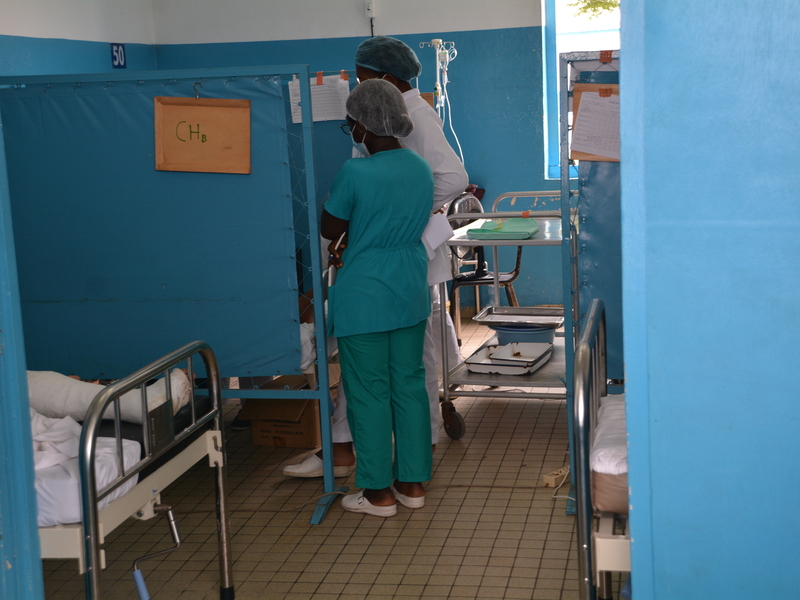
When a Work Permit holder slips on a wet factory floor and a doctor signs him off for ten days of light duty, the injury itself is often the smaller problem. Redeploying an injured foreign employee correctly, on time and without breaching either the Work Injury Compensation Act 2019 (WICA) or the conditions of the worker’s pass, is where most Singapore employers actually get tripped up. From 1 November 2025, MOM also raised the WICA compensation ceilings and the medical expense cap, which means the numbers an HR executive learned two years ago are already out of date.
This matters because the obligations run on two separate clocks that start ticking the moment the accident happens. The safety and health clock requires an incident report to MOM within ten days. The compensation clock requires the employer to keep paying medical leave wages and medical expenses, often before any insurer has confirmed a payout. Layered on top of both is the reality that a Work Permit or S Pass is tied to a specific employer, sector and, in many cases, occupation, so quietly shifting an injured worker into a different role for months is not a purely operational decision.
This article sets out the compliance sequence for redeploying an injured foreign employee: what triggers a MOM report, how light duty wages are actually calculated, what an employer can and cannot change about the worker’s role and pass, and where this intersects with termination, IR21 and quota headcount. Figures are current as at 15 September 2026 and cited to mom.gov.sg and sso.agc.gov.sg throughout.
Why Redeploying an Injured Foreign Employee Triggers MOM Compliance Duties
The Work Injury Compensation Act 2019 covers any local or foreign employee under a contract of service, regardless of salary, age or nationality, as confirmed on MOM’s WICA coverage page. It excludes only independent contractors, domestic workers and uniformed personnel. This means every Work Permit holder, S Pass holder and Employment Pass holder on your payroll is covered from day one, and there is no minimum salary threshold to worry about.
The trigger for reporting is broader than most employers assume. It is not limited to a serious accident. Any instance of outpatient medical leave, hospitalisation leave or light duty issued because of a work-related injury or disease makes the case reportable, and there is no longer a minimum number of days before the duty arises. A single day of light duty from a minor slip is enough. An employer who treats a one-day light duty note as too trivial to report is already in breach.
This sits alongside the compliance sequence in our piece on a Work Permit holder’s pregnancy, another case where a routine HR event becomes a MOM reporting obligation the moment a doctor’s certificate is issued.
What Counts as a Reportable Accident
Per MOM’s guidance on what and when to report, a work-related accident must be reported if it results in death, or if the employee is given outpatient medical leave, hospitalisation leave, light duty, or is diagnosed with an occupational disease. This includes traffic accidents while travelling for work, medical events such as a stroke at the workplace, and injuries during an overseas assignment for a Singapore employer, but excludes ordinary commuting and personal errands.
The MOM Incident Report: The 10-Day Clock and What Changed
Employers must submit an incident report within ten days of the accident for fatal cases, or within ten days of the employer’s first notice of the accident for non-fatal cases. Fatal accidents must also be notified to the Commissioner as soon as reasonably practicable, ahead of the formal report. If the doctor subsequently extends the medical leave or light duty period, the original incident report must be updated, not left as filed.
Failure to report is a real offence, not a technicality: a fine of up to SGD 10,000 for a first offence, and up to SGD 20,000, imprisonment of up to six months, or both, for a second or subsequent offence. Reports are filed through MOM’s WSH Incident Reporting eService, accessed via CorpPass.
Employers already facing a wage-related MOM audit should treat an unreported light duty case as an added exposure point; our article on how MOM’s salary audits actually work covers the documentation MOM expects on request, and incident reports form part of that same paper trail.
Paying Light Duty Wages Correctly
This is the step most employers get wrong, because light duty pay is not simply “pay them as usual.” It is calculated against Average Monthly Earnings (AME), which is based on the employee’s earnings over the 12 months before the accident and generally includes overtime and bonuses but excludes transport allowances and reimbursements. Where the injured employee’s actual wages while on light duty fall short of AME, the employer must pay the shortfall.
| Period | Outpatient MC | Light duty |
|---|---|---|
| Up to 14 days | Full AME | Actual wages plus shortfall to full AME |
| 15th day to 1 year from accident | 2/3 AME | Actual wages plus shortfall to 2/3 AME |
For hospitalisation leave, the employee is entitled to full AME for the first 60 days and 2/3 AME from the 61st day up to one year from the accident date. Medical leave wages must be paid by the employee’s next payday after the employer receives the original medical certificate, and CPF contributions continue to apply to the actual wages paid during light duty, since medical leave wages themselves are compensation rather than income and attract neither CPF nor tax.
MOM also raised the compensation ceilings for accidents from 1 November 2025: the medical expense cap rose from SGD 45,000 to SGD 53,000, minimum permanent incapacity compensation rose from SGD 97,000 to SGD 116,000 per percentage point of incapacity, and the death benefit range rose from SGD 76,000 to SGD 91,000 at the minimum and SGD 225,000 to SGD 269,000 at the maximum, as set out on MOM’s types of compensation page. Payroll teams still applying the pre-November 2025 figures will under-provision for any claim.
Employers who outsource payroll should confirm the light duty shortfall calculation, not just base salary, is run correctly each cycle. Raffles Corporate Services covers this calculation in its own guide to WICA for Singapore employers, a useful cross-check if payroll sits with a separate provider.
If the Employer Has No Suitable Light Duty Role
If a genuinely light duty role does not exist in the business, the employee should inform the treating doctor, who can then decide whether full medical leave is more appropriate. An employer cannot fabricate a light duty assignment simply to reduce the medical leave wage bill, and an employee who is absent without leave after being certified fit for light duty risks losing entitlement to compensation for that period.
Redeployment and the Work Pass: What You Can and Cannot Change
This part is specific to Singapore’s foreign workforce framework and does not appear in generic WICA guidance. A Work Permit is issued for a specific employer, sector and, in most sectors, occupation category. A short-term shift to lighter tasks within the same general trade during recovery is normal. Moving the worker into a materially different occupation category, for example from a construction tradesman role into clerical work for an extended period, can put the employer outside the pass terms and outside the sector’s dependency ratio and levy tier, since both are set by occupation and sector, not merely by employer.
The employer’s duty of care does not pause because the worker is on light duty. MOM is explicit that employers must continue providing adequate food and accommodation to injured foreign employees, and that failing to do so can result in forfeiture of the worker’s security bond. This duty continues even after the work pass has expired or been cancelled, until the worker returns to their home country, as confirmed in MOM’s guidance on an employer’s responsibility for an injured foreign employee’s well-being. An employer also cannot repatriate an injured worker against their wishes while a WICA claim is outstanding.
For S Pass and Employment Pass holders, the same principle applies in a different form: COMPASS and salary-based eligibility are assessed against the occupation and salary declared at application or renewal, and MOM’s guidance on handling an S Pass holder’s large medical claim covers the parallel administrative steps for pass holders on the S Pass framework specifically.
Where This Intersects With Termination, IR21 and Quota
An employer remains free to terminate an injured employee’s services under the Employment Act, but this does not end the WICA obligation. Compensation remains payable even after employment ends or the pass is cancelled, and the employee can still claim within one year of the accident. Terminating to avoid a pending claim, or quietly reducing duties to disguise an unreported injury, invites scrutiny; our article on why quiet firing is a legal landmine covers the broader exposure of exactly this kind of duties reduction.
Where termination does proceed for a foreign employee, the ordinary IR21 tax clearance sequence still applies for the departing worker, and the compensation payments themselves are not taxable income and are excluded from the IR21 computation, since WICA payments are compensation rather than salary.
For quota and levy purposes, a foreign employee on light duty or medical leave remains on the employer’s headcount and continues to be counted for dependency ratio and levy purposes for as long as the Work Permit or S Pass remains valid, so an extended light duty period does not free up quota headroom the way an actual termination or transfer would.
Disputing a Claim
An employer who genuinely believes an injury is not work-related, or that the claim is otherwise not valid, can raise a dispute directly with the designated insurer or MOM, supported by evidence, rather than simply declining to pay. Employees who believe they have been wrongfully dismissed following a work injury can separately bring a claim through the Tripartite Alliance for Dispute Management (TADM), which sits under the Tripartite Alliance framework rather than as a gov.sg statutory body, so employers should treat TADM referrals as a tripartite process alongside, not instead of, their MOM obligations.
A Practical Sequence for Redeploying an Injured Foreign Employee
| Step | Action | Deadline |
|---|---|---|
| 1 | Arrange treatment, notify insurer of the accident | Immediately |
| 2 | Submit incident report via MOM’s WSH Incident Reporting eService | Within 10 days of the accident or first notice |
| 3 | Assess whether a genuine light duty role exists; if not, employee remains on full medical leave | On receipt of MC |
| 4 | Pay medical leave wages based on AME, plus any light duty shortfall | By the employee’s next payday |
| 5 | Reimburse medical expenses already paid by the employee | Within 14 days of receiving original bills |
| 6 | Update the incident report if MC or light duty is extended | As soon as the extension is known |
| 7 | Maintain accommodation and upkeep for the worker throughout | Continuous, until repatriation |
| 8 | Pay any lump sum on the notice of computation, if undisputed | Within 21 days of the notice |
Conclusion
Redeploying an injured foreign employee is not simply a workplace safety and health matter, and it is not simply a payroll matter. It sits across MOM’s incident reporting rules, the WICA compensation schedule that was revised on 1 November 2025, and the pass conditions that tie the worker’s occupation, sector and headcount to a specific employer. Getting the sequence right protects the worker’s entitlements and keeps the employer clear of the fines, disputes and pass complications that follow from treating a light duty note as a minor administrative footnote.
If your business needs help building this sequence into a repeatable HR process, or reviewing how an existing case has been handled, Singapore Employment Agency works with MOM-licensed casework daily across Work Permit, S Pass and Employment Pass portfolios. Where the same case also touches payroll, CPF or WICA insurance provisioning, Raffles Corporate Services can support the accounting and compliance side of the engagement.
The Editorial Team, Little Big Employment Agency
Real people. Right here in Singapore.