
Insights for work and life.
Singapore vs Sydney 2026: Work Pass, Tax and Cost of Living for Professionals
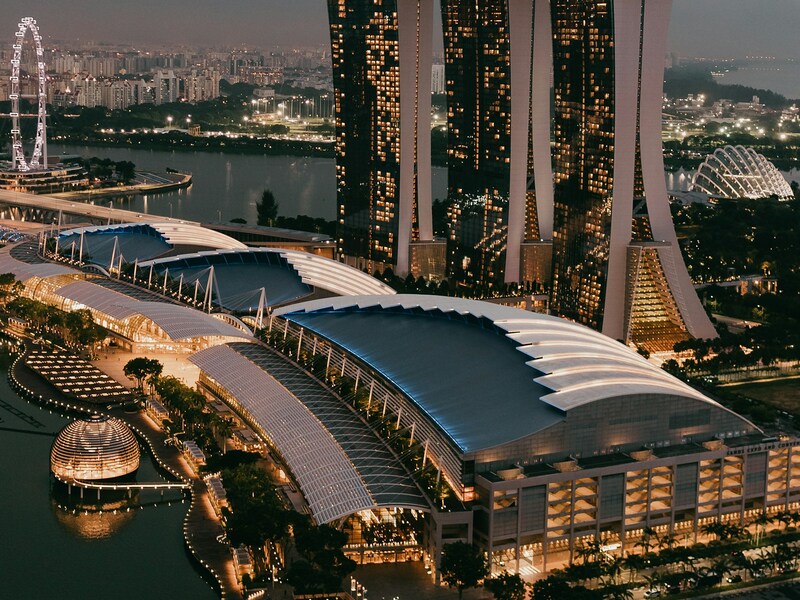
Two of Asia-Pacific’s most liveable cities, Singapore and Sydney compete for the same pool of internationally mobile finance, technology, and professional services talent. In 2026, the comparison between the two cities has shifted materially: Singapore has strengthened its work pass framework and lowered the friction for senior foreign professionals, while Sydney faces elevated housing costs, higher effective tax rates for foreign nationals, and a visa system that is more complex for employer-sponsored hires. This guide gives finance and technology professionals an objective comparison of Singapore vs Sydney 2026 across the four dimensions that matter most , work visa, income tax, cost of living, and career opportunity.
Singapore vs Sydney 2026: Work Visa Comparison
The work visa landscape in the two cities is fundamentally different in architecture and difficulty.
In Singapore, the primary work pass for professionals is the Employment Pass (EP) , a relatively streamlined pass with a fixed qualifying salary floor and a COMPASS points assessment. As at 1 January 2026, the EP minimum qualifying salary is SGD 5,600 per month (most sectors) and SGD 6,200 per month (financial services), per MOM’s EP eligibility guidance. The employer applies online and typically receives an In-Principle Approval (IPA) within 10 business days. EP holders can bring a spouse on a Dependant’s Pass and apply for Singapore Permanent Residence after two to three years.
In Australia, the primary sponsored work visa for professionals is the Temporary Skill Shortage (TSS) Subclass 482 visa, which requires the occupation to appear on Australia’s relevant skilled occupation list (MLTSSL or STSOL), the employer to be an approved sponsor, and a minimum salary equal to the Temporary Skilled Migration Income Threshold (TSMIT), which was raised to AUD 73,150 per year as at July 2023 and is subject to annual adjustment. TSS visa applications involve a labour market testing requirement (typically 4–8 weeks of domestic advertising), longer processing times (4–12 months for some streams), and a pathway to permanent residence that is less predictable than Singapore’s PR system. Senior professionals on the 482 visa must typically wait three to four years in a sponsoring role before accessing permanent residence via the Employer Nomination Scheme (ENS) Subclass 186.
For most finance and technology professionals considering Singapore vs Sydney from a visa-difficulty standpoint, Singapore is materially simpler and faster, particularly for roles in financial services, technology, and professional services.
Income Tax: Singapore vs Sydney 2026
Income tax is where the Singapore vs Sydney 2026 comparison is most stark for high earners. Singapore’s top marginal rate is 24% (on chargeable income above SGD 1,000,000), and the effective rate for a professional earning SGD 250,000 per year is approximately 15–18%, per the Inland Revenue Authority of Singapore (IRAS). Singapore has no capital gains tax for individuals, no inheritance tax, and no tax on dividends from Singapore-resident companies.
Australia’s top marginal income tax rate is 45% (applying above AUD 180,000 of taxable income), plus a 2% Medicare Levy (with exceptions). The effective rate for a professional earning AUD 250,000 is approximately 38–41%, including Medicare. Australia does not levy a federal capital gains tax per se, but capital gains are included in assessable income and taxed at the marginal rate (with a 50% discount for assets held over 12 months). Superannuation contributions (11.5% of salary from 1 July 2024, rising to 12% from 1 July 2025) are employer-paid but do not impact take-home pay directly.
For a finance professional earning AUD 300,000 (approximately SGD 270,000 at mid-2026 rates), the annual income tax saving from relocating to Singapore versus remaining in Sydney is typically SGD 40,000–70,000 , a compelling financial case for the move. Our cost of living in Singapore for expats: 2026 breakdown models the full net-of-tax monthly budget for various income levels.
Cost of Living: Singapore vs Sydney 2026
Singapore and Sydney are both expensive by global standards. The cost composition is different, however, and the net position for an employer-compensated professional with a housing allowance often favours Singapore.
Housing
Sydney property prices are among the highest in the world. Median house prices in inner Sydney exceed AUD 2.5 million (approximately SGD 2.25 million). Renting a 2-bedroom apartment in inner Sydney (Surry Hills, Paddington, Newtown) costs approximately AUD 3,200–4,500 per month. Singapore’s rental market is similarly elevated: a 2-bedroom condo in Districts 9–11 costs approximately SGD 5,000–8,000 per month. Housing costs are broadly comparable at the premium end, though Singapore’s international school fees and the absence of a car make the overall cost comparison in Singapore’s favour for professional families on employer packages.
Education
International school fees in Singapore (SGD 28,000–57,000 per year per child) are broadly comparable to Sydney Grammar, SCEGGS, or Sydney’s top private schools (AUD 25,000–45,000 per year). Singapore’s international schools are particularly well-suited to globally mobile families because they offer the IB, British A-Level, and American curricula , all portable when the family relocates again.
Transport
Singapore’s MRT and bus network is excellent and inexpensive. Most professionals in Singapore do not own a car , Certificate of Entitlement (COE) costs make car ownership prohibitively expensive (COE for a standard sedan was approximately SGD 100,000–120,000 as at mid-2026). In Sydney, car ownership is more common and contributes SGD 1,500–3,000 per month in depreciation, insurance, fuel, and parking.
Career Opportunity: Singapore vs Sydney 2026
Both cities offer strong career opportunities, but their focus sectors differ. Sydney is a regional hub for financial services, technology, and healthcare, with particular depth in asset management, superannuation, fintech, and mining-sector finance. Singapore is the primary financial hub for Southeast Asia and a growing hub for private banking, family office, technology (particularly for companies with ASEAN ambitions), and MAS-regulated alternative investments.
For finance professionals with an Asian career ambition , coverage of Southeast Asian markets, private banking for Asian HNW clients, or regional roles at global banks , Singapore offers unmatched proximity to the region’s capital flows. Professionals building an APAC career should review the EP vs PEP vs ONE Pass comparison to identify the pass type best suited to their career stage.
The Verdict: Singapore or Sydney in 2026?
For most finance and technology professionals considering relocating to Singapore from Australia in 2026, Singapore is the stronger choice on tax, visa simplicity, and Asia-Pacific career positioning. Sydney retains advantages in lifestyle (outdoor culture, property ownership for residents, access to Australia’s domestic market) and for professionals whose careers are anchored in Australian or Oceania markets.
Professionals who want to explore the Singapore relocation option should also read our comparison article on Singapore vs Hong Kong 2026: work pass, tax and living, which covers the other major Asia-Pacific financial centre in the same framework.
To begin your Employment Pass application or assess your COMPASS eligibility for a Singapore move, contact Singapore Employment Agency. For Singapore company incorporation and business setup assistance, our sister firm Raffles Corporate Services provides end-to-end support.
, The Editorial Team, Little Big Employment Agency
Real people. Right here in Singapore.