
Insights for work and life.
Singapore vs Sydney, Australia 2026: Work Pass, Tax and Life Compared
For the professional weighing a move between Asia-Pacific’s two most liveable English-speaking cities, the question of Singapore vs Sydney in 2026 comes down to six factors: work pass difficulty, personal tax, cost of living, career market depth, family lifestyle, and long-term residency path. Both cities are genuinely excellent , but they are excellent in different ways, and the right answer depends on your salary band, sector, family situation and tolerance for bureaucracy. This Singapore vs Sydney, Australia guide sets out the key facts across each dimension so you can make a properly informed comparison.
Work Pass Comparison: Singapore EP vs Australia 482 Visa
Singapore’s Employment Pass (EP) is Singapore’s primary work authorisation for foreign professionals. Australia’s equivalent is the Temporary Skill Shortage (TSS) visa, Subclass 482.
| Factor | Singapore EP (2026) | Australia 482 Visa (2026) |
|---|---|---|
| Minimum salary | SGD 5,600/month (most sectors); SGD 6,200 (Financial Services) as at 1 January 2025 | AUD 79,499/year (Core Skills Income Threshold, from 1 July 2026) ≈ AUD 6,625/month |
| Points system | COMPASS (40 points required); six criteria including salary, qualifications, firm diversity, local employment support | No universal points system; employer-sponsored; occupation must be on the relevant skilled occupation list |
| Pass duration | 1–5 years; renewable indefinitely provided criteria met | 2 or 4 years (stream-dependent); renewal possible; does not lead directly to PR without a separate application |
| Employer dependency | Tied to employer; change-of-employer application required, but MOM processes this in 1–7 days for most EP holders | Tied to employer and nominated occupation; sponsorship transfer possible but requires new employer to be an approved sponsor |
| Spouse work rights | DP holder requires a separate EP or S Pass application to work as an employee, or an LOC as a business owner | Secondary Subclass 482 applicants (spouse/dependants) generally have full work rights automatically |
| PR pathway from work visa | No direct conversion; separate PR application to ICA after typically 2–5 years of EP tenure | For certain 482 streams, direct pathway to Subclass 186 (Employer Nomination Scheme PR) after 2–3 years |
Verdict: Australia’s 482 visa is more complex to obtain (requires employer to be an approved 482 sponsor, which many SMEs are not), and its salary floor (approximately AUD 6,625/month) is broadly comparable to Singapore’s EP floor. Singapore’s COMPASS system is formulaic and transparent; Australia’s system depends heavily on occupation list eligibility. For mid-to-senior professionals in technology, finance and healthcare, both countries are accessible. For professionals in emerging or niche roles not on Australia’s skilled occupation lists, Singapore is materially easier.
Singapore vs Sydney: Personal Tax Comparison
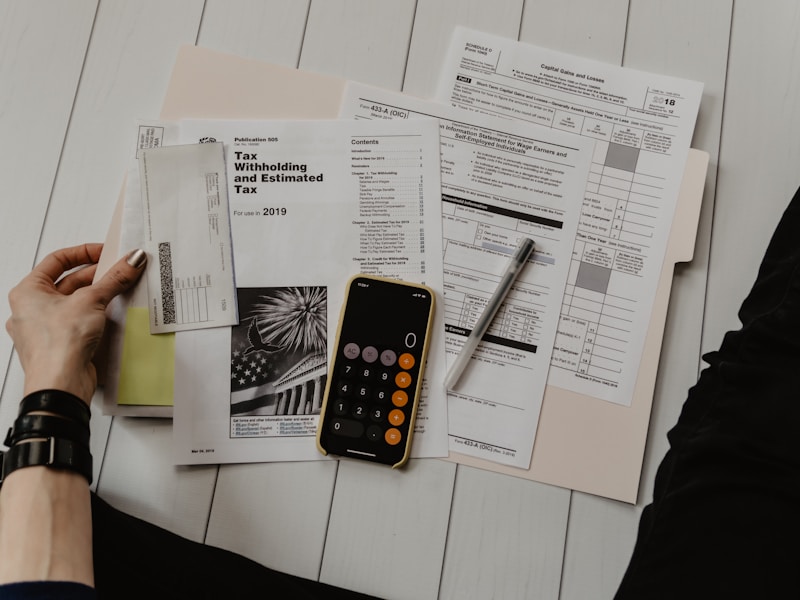
Tax is where Singapore vs Sydney produces the starkest difference for most professionals. Singapore’s income is taxed at progressive resident rates from 0% to 24% on chargeable income, with no capital gains tax, no inheritance tax and a territorial basis (foreign-sourced income is generally exempt). Australia’s resident rates run from 0% to 45%, plus a 2% Medicare levy, on worldwide income.
| Annual income (SGD equivalent) | Singapore income tax | Australia income tax + Medicare (AUD equivalent) |
|---|---|---|
| SGD 100,000 (~AUD 107,000) | ~SGD 9,450 (effective rate 9.5%) | ~AUD 26,017 + AUD 2,140 Medicare = AUD 28,157 (effective rate ~26.3%) |
| SGD 150,000 (~AUD 161,000) | ~SGD 17,400 (effective rate 11.6%) | ~AUD 48,567 + AUD 3,220 Medicare = AUD 51,787 (effective rate ~32.2%) |
| SGD 250,000 (~AUD 268,000) | ~SGD 38,150 (effective rate 15.3%) | ~AUD 95,167 + AUD 5,360 Medicare = AUD 100,527 (effective rate ~37.5%) |
At SGD 150,000 annual income, a Singapore resident pays approximately SGD 17,400 in income tax. An equivalent earner in Australia pays the equivalent of nearly SGD 55,000 , more than three times as much. The gap widens with income. Note: the exchange rate used is approximately AUD 1 = SGD 0.93 as a guide; rates fluctuate.
The Superannuation Variable
Australia mandates employer Superannuation contributions of 12% of ordinary time earnings (as at 1 July 2025). On AUD 150,000, that is AUD 18,000/year contributed to your retirement account , real money that belongs to you, not the employer. Singapore’s CPF equivalent does not apply to EP holders (only to Citizens and PRs). For professionals planning to spend 2–3 years in Australia and leave, superannuation may never be accessed without paying a withholding tax (typically 35–45%) on withdrawal under the departing Australia superannuation payment rules. For long-term residents intending to retire in Australia, it is a meaningful benefit. For transient professionals, it is largely a tax on your gross compensation.
Cost of Living: Singapore vs Sydney 2026
Both Singapore and Sydney are expensive. The composition of that cost differs significantly.
| Item | Singapore 2026 | Sydney 2026 (AUD, approximate) |
|---|---|---|
| 3-bed apartment, inner suburb rental/month | SGD 5,500–9,000 | AUD 4,000–6,500 |
| International school fees/month (per child) | SGD 2,000–4,500 | AUD 2,000–4,000 (major international schools) |
| FDW/domestic help (monthly all-in) | SGD 1,000–1,400 (FDW, full-time live-in) | AUD 3,000–4,500 (au pair or part-time cleaner; no live-in equivalent) |
| Public transport (monthly) | SGD 100–160 | AUD 200–280 |
| Dining out (mid-range restaurant, 2 people) | SGD 60–120 | AUD 120–200 |
| Private car (annual cost including road tax/insurance) | SGD 25,000–45,000 (COE premium adds SGD 80,000–120,000 purchase premium) | AUD 8,000–15,000 |
The FDW is Singapore’s standout cost advantage for families with children or elderly parents. A live-in FDW at all-in SGD 1,000–1,400/month is simply not available in Australia. The nearest equivalent , a part-time nanny or au pair , costs AUD 3,000–4,500/month. For a dual-income couple with children, this difference alone can make Singapore the more affordable city despite higher rents. For a deeper look at family costs in Singapore, our 2026 cost of living guide for Singapore expats provides the full breakdown. For the practicalities of moving your family, see our Singapore relocation checklist for newly approved EP holders.
Property: Buying vs Renting
EP holders in Singapore can purchase private residential property , condominiums, executive condominiums after a 10-year mark, and most new launches. However, the Additional Buyer’s Stamp Duty (ABSD) for foreigners stands at 60% of the purchase price as at 2026, effectively making property purchase non-economic for most EP holders. The great majority rent. Sydney, by contrast, allows foreign temporary residents to buy established dwellings only under Foreign Investment Review Board (FIRB) rules , in practice, most 482 visa holders also rent. Sydney’s median house price exceeded AUD 1.5 million in 2026; median apartment prices are AUD 800,000–1,000,000 in inner-suburban areas. For more on the property purchase landscape in Singapore for foreign professionals, see our guide to buying property as a foreigner in Singapore.
Career Market: Singapore vs Sydney
Singapore and Sydney serve different career markets, and the choice between them should be career-driven as much as lifestyle-driven.
Singapore Strengths
Singapore is Asia’s pre-eminent financial centre (rivalled only by Hong Kong), the regional headquarters location of choice for Fortune 500 companies, and a genuine deep hub for technology, biomedical sciences, commodities trading, and green finance. Per MOM’s labour market data, professional employment has grown consistently through 2025–2026, with technology and financial services accounting for the largest share of new EP approvals. Career advancement is steep and fast for senior professionals , Singapore’s small size concentrates decision-makers and C-suite roles in ways that larger markets do not.
Sydney Strengths
Sydney has real depth in financial services (particularly superannuation fund management, which does not exist at scale in Singapore), resources sector finance, law, healthcare, and technology (with a growing startup ecosystem in the Pyrmont and Inner West corridors). For professionals who value a large domestic English-speaking market, proximity to New Zealand and Pacific geographies, or who are building careers in Australian regulatory or government-adjacent sectors, Sydney is the stronger choice.
Family and Lifestyle
Singapore’s family lifestyle advantages are well-documented: low crime, exceptional urban infrastructure, tropical weather, and a food culture that is world-class at every price point. The English-medium school system (international and government) is strong. Green space is limited compared with Australian cities, but is offset by Singapore’s dense park connector network and proximity to Malaysia and Indonesia for weekend escapes. Sydney offers more obvious outdoors lifestyle , beaches, Blue Mountains, a genuinely suburban scale of living, and a social culture more familiar to Australians, New Zealanders and British expatriates. For families who find Singapore’s density difficult to adapt to, or who want children growing up with easy access to nature and sport, Sydney is the more comfortable fit.
For a comprehensive view of what family relocation to Singapore involves , from schools to healthcare to FDW , our complete Singapore family relocation guide for 2026 is the starting point. For a similar comparison of Singapore and Hong Kong, see our Singapore vs Hong Kong 2026 comparison.
Singapore vs Sydney: Summary Verdict
| Factor | Better for most professionals |
|---|---|
| Personal tax | Singapore , substantially lower effective rates at all income levels above SGD 80,000 |
| Work pass accessibility | Singapore , COMPASS is transparent; 482 sponsor requirement is a barrier in Australia |
| Cost of domestic help | Singapore , FDW at SGD 1,200/month vs AUD 3,500+ in Australia |
| Cost of cars | Sydney , COE premiums make Singapore car ownership prohibitively expensive |
| Superannuation / retirement savings | Sydney (long-term residents only) , 12% employer contribution; offset by higher tax |
| Spouse work rights | Sydney , 482 secondary applicants have automatic work rights; Singapore DP holders do not |
| PR pathway clarity | Draw , both are competitive and discretionary; Australia’s 482→186 path is more formulaic |
| Career in finance, tech, trading | Singapore , deeper regional mandate, denser C-suite |
| Outdoors lifestyle | Sydney , beaches, space, seasons |
Conclusion
For the professional optimising for career leverage, tax efficiency and family practicality in Asia, Singapore wins the Singapore vs Sydney comparison at most income levels above SGD 100,000. For the professional who values Australian lifestyle, proximity to family in Australasia, or a career path deeply rooted in the Australian domestic market, Sydney is the right answer. Both are excellent cities. The data above should make the personal maths clearer.
If Singapore is your choice and you need assistance with Employment Pass applications, Dependant’s Pass processing or relocation planning, Singapore Employment Agency , Little Big Employment Agency Pte Ltd (MOM Licence 19C9790) , provides licensed employment agency services across the full work pass spectrum. For company incorporation and corporate services in Singapore, Raffles Corporate Services is our affiliated practice.
, The Editorial Team, Little Big Employment Agency
Real people. Right here in Singapore.