
Insights for work and life.
US persons in Singapore , FATCA, PFIC, FBAR , Step-by-step walkthrough
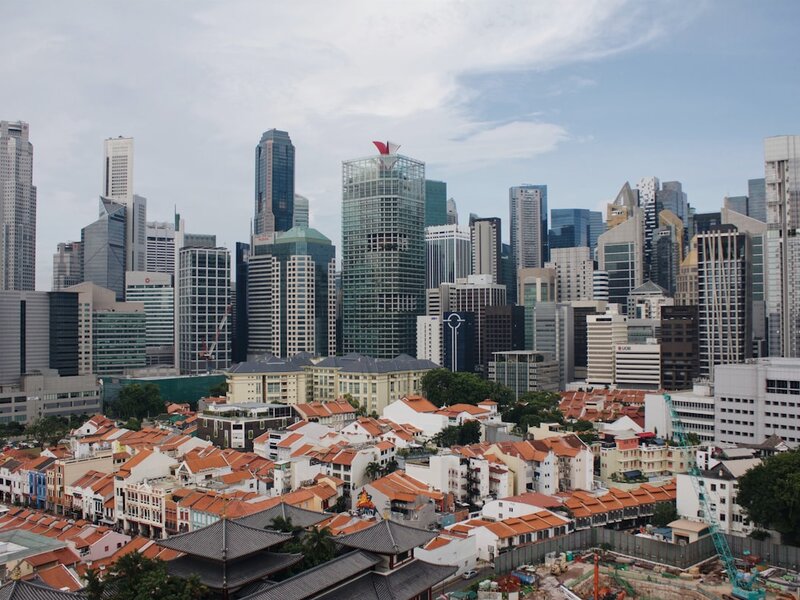
For US persons in Singapore , citizens and green-card holders , Singapore’s low taxes do not switch off US obligations. The United States taxes on worldwide income and layers on FATCA reporting, the FBAR and the punitive PFIC rules on foreign funds. This walkthrough maps the three big compliance pillars and the traps expats fall into. It is general information, not US tax advice.
Raffles Corporate Services works with a panel of corporate and employment law firms; this article is general information, not legal advice.
Why US persons are taxed differently
The United States taxes its citizens and lawful permanent residents on worldwide income regardless of where they live. So a US person in Singapore files a US federal return every year, claims the Foreign Earned Income Exclusion or foreign tax credits to reduce double tax, and still faces a battery of information-reporting rules that have no Singapore equivalent. Singapore’s tax treaties do not relieve US citizenship-based taxation.
FBAR: reporting foreign bank accounts
The Report of Foreign Bank and Financial Accounts (FinCEN Form 114, the FBAR) must be filed if the aggregate value of a US person’s foreign financial accounts exceeds US$10,000 at any point in the year. This includes Singapore bank accounts, and often CPF and brokerage accounts. The threshold is an aggregate, so several small accounts can together cross it. Penalties for non-filing are severe.
FATCA and Form 8938
Under the Foreign Account Tax Compliance Act, Singapore financial institutions report US account holders to the authorities under the Singapore-US intergovernmental agreement, and US persons separately report specified foreign financial assets on Form 8938 with their tax return once thresholds are met. The FBAR and Form 8938 overlap but are not identical, and both may be required.
The PFIC trap for US persons in Singapore
A Passive Foreign Investment Company (PFIC) includes most non-US pooled investments, such as Singapore-domiciled unit trusts, mutual funds and many ETFs. PFICs are taxed under punitive rules with compounding interest charges and complex Form 8621 reporting. The practical lesson for US persons is to avoid local funds and generally hold investments through US-domiciled vehicles instead.
Coordinating Singapore and US filings
Singapore tax is filed with IRAS by the usual April deadline; the US federal return is due in April with an automatic extension to June for those abroad, and the FBAR follows the US calendar. Foreign tax credits and the Foreign Earned Income Exclusion prevent most double taxation on employment income, but investment income and CPF often need careful treatment.
Common and costly mistakes
The biggest errors are not filing the FBAR, buying Singapore unit trusts or ETFs and triggering PFIC rules, assuming the US-Singapore information exchange means nothing personal needs to be filed, and forgetting that renouncing a green card or citizenship has its own exit-tax consequences. Specialist US cross-border advice is strongly recommended.
Official sources
Always confirm current rules and fees against the primary sources: www.iras.gov.sg, www.mas.gov.sg, www.cpf.gov.sg.
Related guides
- Corporate tax exemptions and partial-exemption scheme , Step-by-step walkthrough
- BEPS Pillar Two and 15% Multinational Top-up Tax , Step-by-step walkthrough
- US persons in Singapore , FATCA, PFIC, FBAR , Complete 2026 guide
FAQs
Do US citizens in Singapore still file US taxes?
Yes. The United States taxes worldwide income based on citizenship, so US persons file annually even while living in Singapore.
What is the FBAR threshold?
US$10,000 in aggregate across all foreign financial accounts at any time during the year triggers the FBAR filing requirement.
Why should US persons avoid Singapore funds?
Most local unit trusts and ETFs are PFICs, taxed under punitive US rules with heavy compliance via Form 8621.
Does FATCA mean I do not have to file anything?
No. Singapore institutions report under FATCA, but US persons still file their own Form 8938 and FBAR where thresholds are met.
Need help with this? Call, SMS or WhatsApp +65 8501 7133, or email [email protected]. Little Big Employment Agency (EA Licence 19C9790) works with a panel of corporate and employment law firms; this article is general information, not legal advice.
Real people. Right here in Singapore.