
Insights for work and life.
Singapore vs Australia 2026: Which Country Wins for Finance and Tech Professionals?
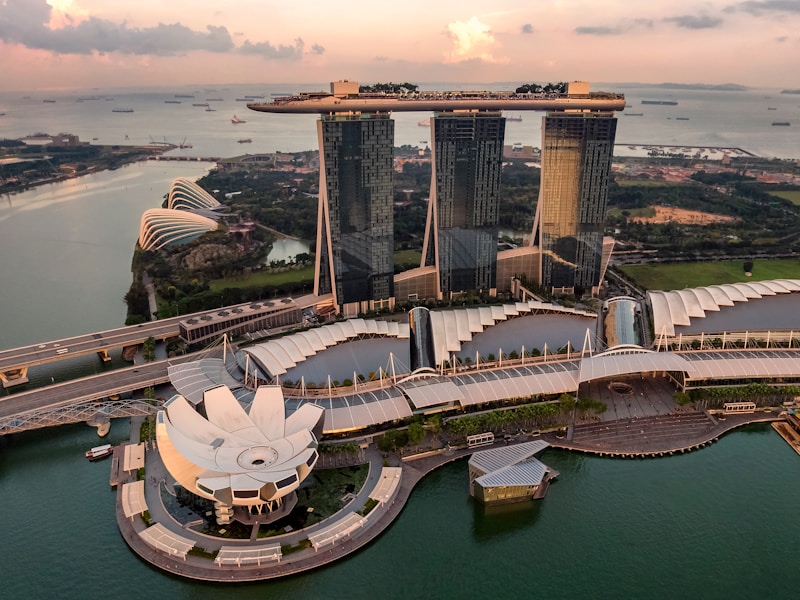
Two of the most common relocation decisions facing Asia-Pacific finance and technology professionals in 2026 are Singapore and Australia. Both offer English-speaking environments, rule-of-law governance, and genuine career opportunities in financial services and technology. The comparison is not academic: professionals relocating from India, the Philippines, mainland China, Indonesia and elsewhere in Asia regularly hold competing offers in Sydney and Singapore simultaneously. The right choice depends on your income level, family situation, career stage and long-term immigration goal. This article cuts through the noise and gives you the numbers and framework you need to decide which country better fits your situation in 2026.
Singapore vs Australia 2026: Personal Income Tax Compared
Tax is often the most decisive financial factor in the Singapore vs Australia choice for finance and technology professionals. Australia taxes resident income progressively, with rates reaching 45% on income above AUD 180,001 (approximately SGD 155,000 at mid-2026 exchange rates). A 2% Medicare levy applies on top of income tax for most earners. An Australian resident earning AUD 250,000 (approximately SGD 215,000) pays roughly 40% effective combined income tax and Medicare levy , with relatively limited deduction options for employees.
Singapore’s resident personal income tax peaks at 24% on income exceeding SGD 1,000,000, and is 22% on income between SGD 500,001 and SGD 1,000,000. For a professional earning SGD 200,000 per year, the effective Singapore income tax rate is approximately 12–14%. The same professional earning the AUD equivalent in Australia would face an effective rate of approximately 35–38%. The difference compounds materially at senior salary levels: a finance professional earning SGD 400,000 per year saves approximately SGD 80,000–100,000 in income tax annually by working in Singapore rather than the Australian equivalent.
Capital Gains Tax: Singapore Wins Clearly
Singapore charges no capital gains tax. Individuals and entities that dispose of shares, real estate investments, cryptocurrency or other capital assets pay no Singapore tax on gains. Australia’s capital gains tax regime treats gains as income but provides a 50% discount for assets held longer than 12 months by individuals, meaning the effective CGT rate for a top-rate Australian taxpayer is approximately 22.5% on gains. For finance professionals who hold significant investment portfolios, equity compensation or startup equity, the absence of CGT in Singapore can represent a very large absolute saving over a career horizon. The Inland Revenue Authority of Singapore (IRAS) does not levy any capital gains tax under current Singapore law.
Work Pass Comparison: Singapore vs Australia for Finance and Tech Professionals
Singapore’s primary work authorisation for finance and tech professionals is the Employment Pass (EP), which requires a minimum fixed monthly salary of SGD 5,600 in most sectors and SGD 6,200 in financial services (as at August 2026), assessed under the COMPASS points framework. Top-tier professionals earning SGD 30,000 per month or more qualify for the ONE Pass, which is not employer-tied and valid for five years. Singapore’s passes are employer-sponsored and processed by the Ministry of Manpower (MOM), typically within 10 business days.
Australia’s primary skilled work visa for overseas professionals is the Temporary Skill Shortage (TSS) 482 visa, which allows stays of up to four years for roles on the Medium and Long-term Strategic Skills List (MLTSSL) and two years for roles on the Short-term Skilled Occupation List (STSOL). Australia also offers the Global Talent Independent (GTI) program for highly exceptional individuals in priority sectors, which leads directly to permanent residence. Processing times for Australian work visas are typically longer than for Singapore EPs , 482 visa median processing times run at 30–60 days for straightforward applications, and significantly longer for more complex cases.
For a full overview of Singapore’s EP requirements and the COMPASS scoring framework, see our Complete Singapore Employment Pass Guide 2026.
Superannuation vs CPF: A Key Difference for Professionals
Australia requires employers to contribute 11.5% of ordinary time earnings into each employee’s superannuation fund (from 1 July 2024). This contribution is mandatory, tax-advantaged and the employee’s property , but it is locked until preservation age (60 for most) and is only accessible on a temporary visa under specific conditions via the Departing Australia Superannuation Payment (DASP) mechanism, with 65% tax withheld on withdrawal for temporary residents. A professional earning AUD 200,000 per year effectively receives AUD 23,000 in superannuation contributions per year that may be largely inaccessible during their time in Australia.
Singapore’s Central Provident Fund (CPF) does not apply to Employment Pass holders. Singapore PRs and citizens do contribute to CPF at graduated rates, but as an EP holder, your full salary is accessible as take-home pay. CPF contributions for Singapore PRs and new citizens are introduced gradually on a graduated contribution schedule upon attaining permanent residence.
Cost of Living: Singapore vs Australia in 2026
Sydney and Singapore are broadly comparable in overall cost of living for expatriates in 2026, though the composition differs. Sydney housing is marginally cheaper than Singapore’s expatriate-grade apartment market in comparable areas: a three-bedroom apartment in Sydney’s lower North Shore costs AUD 4,500–7,000 per month, compared with SGD 6,500–9,500 in Singapore’s city-fringe suburbs. However, Singapore’s income and capital gains tax advantages far outweigh any housing cost differential at senior salary levels.
International school fees differ: Singapore’s international schools charge SGD 28,000–57,000 per year, while comparable Australian international schools charge AUD 20,000–40,000 per year , broadly similar in absolute terms. Australian public (government) schools are free for permanent residents and citizens, which gives PR holders a significant cost advantage in Australia. Singapore public schools are accessible to EP holders’ children as fee-paying international students, typically at SGD 1,000–1,500 per month.
For a detailed Singapore cost-of-living breakdown with 2026 numbers, see our cost of living guide for Singapore expats.
Permanent Residence: Singapore vs Australia
Australia’s permanent residence system is points-based for most skilled applicants. The Subclass 189 (points-tested, no employer sponsor) and 190 (state-nominated) visas require applicants to score at least 65 points under a transparent framework assessing age, English ability, qualifications, experience and skills assessment. The process is predictable but competitive: in popular occupations, invitation rounds often require 90–100+ points. Processing times for 189 and 190 visas have historically run 12–24 months, though this varies.
Singapore Permanent Residence is granted through the ICA’s holistic assessment, which explicitly does not operate a points matrix. ICA considers economic contribution, family ties, qualifications, age, integration signals and length of residency together. The holistic assessment is less predictable than Australia’s points system but gives more weight to integration and commitment signals. For professionals earning above SGD 10,000 per month with 3+ years of EP employment in Singapore, approval rates under the PTS scheme are meaningfully higher than for lower-earning, shorter-tenure applicants. Our PR approval odds by salary band analysis provides defensible estimates based on ICA data.
For EP holders who successfully obtain Singapore PR, the Complete Singapore PR Pathway Guide 2026 covers the PTS application process and timeline in detail.
Finance and Tech Career Opportunities: Where the Jobs Are
Singapore is the undisputed capital of South-East Asian financial services and the ASEAN headquarters of most global banks, asset managers, insurance companies and technology multinationals. For professionals seeking regional mandates , covering ASEAN, South Asia or broader Asia-Pacific , Singapore is the operational hub. The talent pool is international, English is the business language and the financial services industry accounts for approximately 13% of GDP. Sydney and Melbourne are strong financial centres for Australian-market-facing roles and ANZ regional mandates, but have a smaller addressable market than Singapore for pan-Asia roles.
In technology, Singapore attracts significant investment from global tech companies and is a leading base for Southeast Asia’s tech ecosystem. Sydney has a growing tech sector but remains smaller in terms of Asia-Pacific tech leadership roles. Professionals focused on growth-market opportunities in fintech, digital banking and e-commerce will generally find more opportunities in Singapore in 2026.
The Verdict: Which Country Fits You Best?
Choose Singapore if: you are a finance or tech professional earning SGD 150,000 or more per year; you are oriented toward pan-Asia or global mandates; you want to minimise income tax and capital gains tax; and you are open to a compact, urban lifestyle. Choose Australia if: you value large outdoor spaces and Australian lifestyle; your role is Australia-market-facing; you plan to stay for the long term and value Australia’s more accessible and predictable PR and citizenship pathway; or your children benefit from being in the Australian public school system as PRs or citizens.
If you are leaning toward Singapore, Little Big Employment Agency (MOM Licence 19C9790) can advise on your EP eligibility, COMPASS scoring and pass strategy. Contact us at Singapore Employment Agency. For Singapore incorporation, tax planning and corporate secretarial services, Raffles Corporate Services provides end-to-end support for professionals establishing themselves in Singapore.
, The Editorial Team, Little Big Employment Agency
Real people. Right here in Singapore.