
Insights for work and life.
India to Singapore: A Complete Relocation Guide for Indian Professionals (2026)
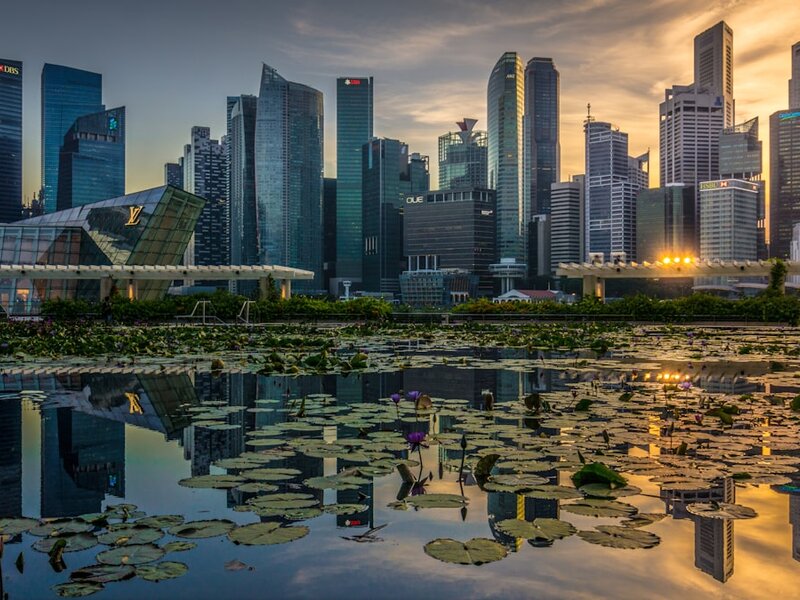
Singapore is home to one of the largest and most professionally accomplished Indian expatriate communities in the world. Indian nationals consistently form one of the top cohorts of Employment Pass holders in Singapore, drawn by a combination of factors that no other comparable jurisdiction offers: a top-tier financial and technology hub, a stable legal environment built on English common law, a personal tax rate that is roughly half of India’s highest bracket, a strong Indian cultural community, and a clear pathway to permanent residency and, eventually, citizenship.
This guide is written for Indian professionals , employed candidates rather than founders , who are considering or actively planning a move to Singapore. It covers the Employment Pass process, the tax picture, community and family life, and the longer-term residency pathway. For Indian entrepreneurs and founders looking to incorporate a company in Singapore, our sister company Raffles Corporate Services covers the incorporation and FEMA regulatory aspects at rafflescorporateservices.com.
Why Indian Professionals Choose Singapore in 2026
The practical reasons are numerous and compound. Singapore’s maximum personal income tax rate is 24%, per the Inland Revenue Authority of Singapore (IRAS). India’s peak individual income tax rate, inclusive of surcharges and cess, can reach approximately 42.7% for very high earners. Singapore has no capital gains tax, no inheritance tax, and no tax on dividends received by individuals. For a senior professional in technology, finance, pharmaceuticals or consulting earning the equivalent of INR 50 lakh or above per year, the tax-adjusted income gain from a Singapore role , before accounting for any salary increase , is material.
Beyond tax, Singapore offers: a world-class healthcare system with costs far below private Indian metro hospitals for equivalent-quality care; English as the primary business and education language; a safe, meritocratic professional environment; and, for families, school options ranging from international schools to one of the world’s highest-ranked public school systems. Singapore’s Indian community , including the Hindu Endowments Board temples, Indian Association, SICCI (Singapore Indian Chamber of Commerce and Industry) and dozens of Tamil and Hindi cultural organisations , means professionals and their families can maintain strong cultural connections while building new ones.
India to Singapore Relocation: The Employment Pass Pathway
Indian nationals apply for the Employment Pass through the same process as all other nationalities , there is no preferential or differential treatment by country of origin. The Ministry of Manpower assesses each application against the COMPASS framework, which scores candidates across salary, qualifications, company nationality diversity and local PMET hiring support.
As at August 2026, the Employment Pass minimum qualifying salary is SGD 5,600 per month for most sectors and SGD 6,200 per month for the financial services sector (these thresholds rise to SGD 6,000 and SGD 6,600 respectively from 1 January 2027). Most Indian professionals in technology, finance, consulting or pharmaceuticals who are offered Singapore roles will be offered salaries comfortably above the qualifying floor. Candidates earning SGD 22,500 or above per month are exempt from the full COMPASS assessment. For a full walkthrough of how COMPASS works for EP applicants, see our Complete Singapore Employment Pass Guide 2026.
Your Singapore employer will file the EP application before or upon your arrival. The standard processing time is three to eight weeks. Once your EP is approved and issued, you are legally resident in Singapore and permitted to work. You do not need a separate visa to enter Singapore on your Indian passport for the initial entry , the EP itself serves as your long-term stay authorisation.
The Singapore-India Tax Position
Singapore personal tax for Indian nationals
Once you are a Singapore tax resident , which applies after you have worked continuously in Singapore for 183 days or more, straddling two calendar years , your Singapore employment income is taxed at the progressive Singapore resident rates, with an effective rate of approximately 12–22% for professionals earning SGD 150,000–500,000 per year. Your Indian-source income (rental income from Indian property, Indian dividends, Indian capital gains) is generally taxed in India under Indian domestic law and not in Singapore, because Singapore’s territorial tax system only taxes income earned within Singapore.
The Singapore-India DTAA
Singapore and India have a comprehensive Avoidance of Double Taxation Agreement (DTAA). For employment income, the DTAA follows the standard approach: income from employment exercised in Singapore by a Singapore tax resident is taxable in Singapore and generally exempt from Indian tax during the period of Singapore residency. This removes the risk of being taxed in both countries on the same Singapore salary.
Once you establish Singapore tax residency, your remaining Indian tax obligations are principally on India-source income , rental income from Indian property, interest from Indian bank accounts, and dividends from Indian companies. These are all taxed in India under Indian domestic law, with treaty relief available where Singapore also has a right to tax (which it generally does not, given Singapore’s territorial system). Most Indian professionals in Singapore find their Indian tax compliance reduces to a simpler annual filing on passive Indian income.
Indian non-resident status: FEMA and RBI
Once you have been residing and working outside India for more than 182 days in a financial year, you become a Non-Resident Indian (NRI) under FEMA , the Foreign Exchange Management Act. NRI status has practical implications: you should convert your Indian resident savings accounts to NRO (Non-Resident Ordinary) or NRE (Non-Resident External) accounts; your NRE account interest is tax-exempt in India; and you can freely repatriate funds from your NRE account. If you have substantial Indian assets or investments, consulting a FEMA-specialist CA before your departure date is advisable to ensure the transition is structured correctly.
Family Life for Indian Professionals in Singapore
Dependant’s Pass for family members
EP holders earning SGD 6,000 or more per month , which covers most professional hires , are entitled to bring their spouse and unmarried children under 21 to Singapore on a Dependant’s Pass (DP). The DP application is submitted alongside or after the EP application. Spouses who wish to work in Singapore need a Letter of Consent (LOC), which is issued by the Ministry of Manpower based on the sponsoring EP holder’s salary and employer. See our Dependant’s Pass Singapore 2026: DP, LTVP and LOC Guide for the full process.
Schools in Singapore
Indian families in Singapore typically choose between international schools (offering IB, IGCSE or American curriculum), which are popular and well-represented in Singapore, and local government schools, which are English-medium, rigorous and excellent. For families planning to apply for PR within two to three years, enrolling children in local government schools is a powerful integration signal that ICA weighs meaningfully in PR assessments. See our Singapore Schools for Expats 2026 guide for a full comparison of the pathways available.
The Indian community in Singapore
Singapore’s Indian community is one of the most established and organised in Southeast Asia. Little India (Serangoon Road precinct) is a vibrant cultural centre with temples, restaurants, textile shops and services. Sri Veeramakaliamman Temple, Sri Srinivasa Perumal Temple and other Hindu endowment temples operate regularly. The Indian Association Singapore, Tamil Language Council and various regional and professional Indian associations provide cultural and social anchors for new arrivals. Most Indian professionals find the transition significantly easier than moving to a Western city precisely because the cultural infrastructure is already in place.
Housing and Cost of Living
Singapore housing costs for professionals are comparable to Mumbai and Delhi for equivalent quality, and substantially lower than equivalent London or New York neighbourhoods. Most Indian professionals at the EP level target condominiums in districts such as Novena, Bishan, Toa Payoh, Jurong East or Punggol , well-served by MRT, with good local amenities and proximity to both international and local schools. Monthly rents for a 3-bedroom condo in these areas run approximately SGD 4,500–7,000.
Food is one of Singapore’s great advantages for Indian professionals: Indian cuisine across all regional traditions (South Indian, North Indian, Tamil, Bengali) is available across the island at hawker-centre prices as low as SGD 3–8 for a full meal. Restaurants from fine dining to casual are well-represented. Our Cost of Living in Singapore for Expats: 2026 Numbers guide provides a full income-band breakdown including housing, schools, transport and lifestyle costs.
The PR Pathway for Indian Professionals
Indian nationals are eligible for Singapore permanent residency under the PTS (Professionals, Technical Personnel and Skilled Workers) scheme after at least two years of continuous employment in Singapore on a valid EP. The ICA’s holistic assessment does not discriminate by nationality. In 2026, Singapore is targeting 40,000 PR approvals per year , the highest intake rate in over a decade , creating a genuine window for well-positioned applicants.
Sectors that ICA currently prioritises include technology, financial services, healthcare and engineering , sectors where Indian professionals are strongly represented in Singapore’s employment base. Applicants with three or more years of consistent Singapore employment, children in local schools, and community involvement have among the strongest PR profiles. Our Complete Singapore PR Pathway Guide 2026: PTS, Family Ties and GIP covers the full application process and what ICA is looking for.
Start Your Singapore Journey
Little Big Employment Agency (LBEA) is MOM-licensed (Licence 19C9790) and works with Indian professionals at every stage of their Singapore journey , Employment Pass applications, family Dependant’s Passes, LOC for working spouses, and PR application advisory. We can review your individual profile, advise on timing and positioning, and manage the full application process on your behalf. Contact Singapore Employment Agency to get started. For Indian founders and entrepreneurs looking to incorporate a Singapore company or structure a Singapore holding company, Raffles Corporate Services provides the full range of corporate services including company incorporation, nominee directors, accounting and corporate secretarial support.
, The Editorial Team, Little Big Employment Agency
Real people. Right here in Singapore.