Today, December 1, 2025, marks a pivotal shift in Singapore’s immigration landscape. The Ministry of Home Affairs and the Immigration and Checkpoints Authority (ICA) have officially operationalized key sections of the Immigration (Amendment) Act 2023.
For Singapore Permanent Residents (PRs), particularly those who travel frequently or reside overseas, the rules of the game have fundamentally changed. The old system of “immediate loss and potential reinstatement” is dead. In its place, we now have a system of absolute clarity—and absolute finality.
If you hold PR status, you must understand exactly how the new 180-day prescribed period works. Failing to grasp these nuances could cost you your residency permanently.
The Old Way vs. The New Reality
Until yesterday, the system operated on a “cliff-edge” mechanism. If you were outside Singapore and your Re-Entry Permit (REP) expired, you technically lost your PR status immediately. However, the ICA offered a bureaucratic safety net: a one-month grace period where you could apply to “reinstate” your status.
While reinstatement was often approved for minor lapses, it left PRs in a dangerous legal limbo. During that gap, you were technically not a resident. This created massive uncertainty for housing loans, CPF withdrawals, and banking compliance.
As of today, December 1, 2025, that limbo is gone.
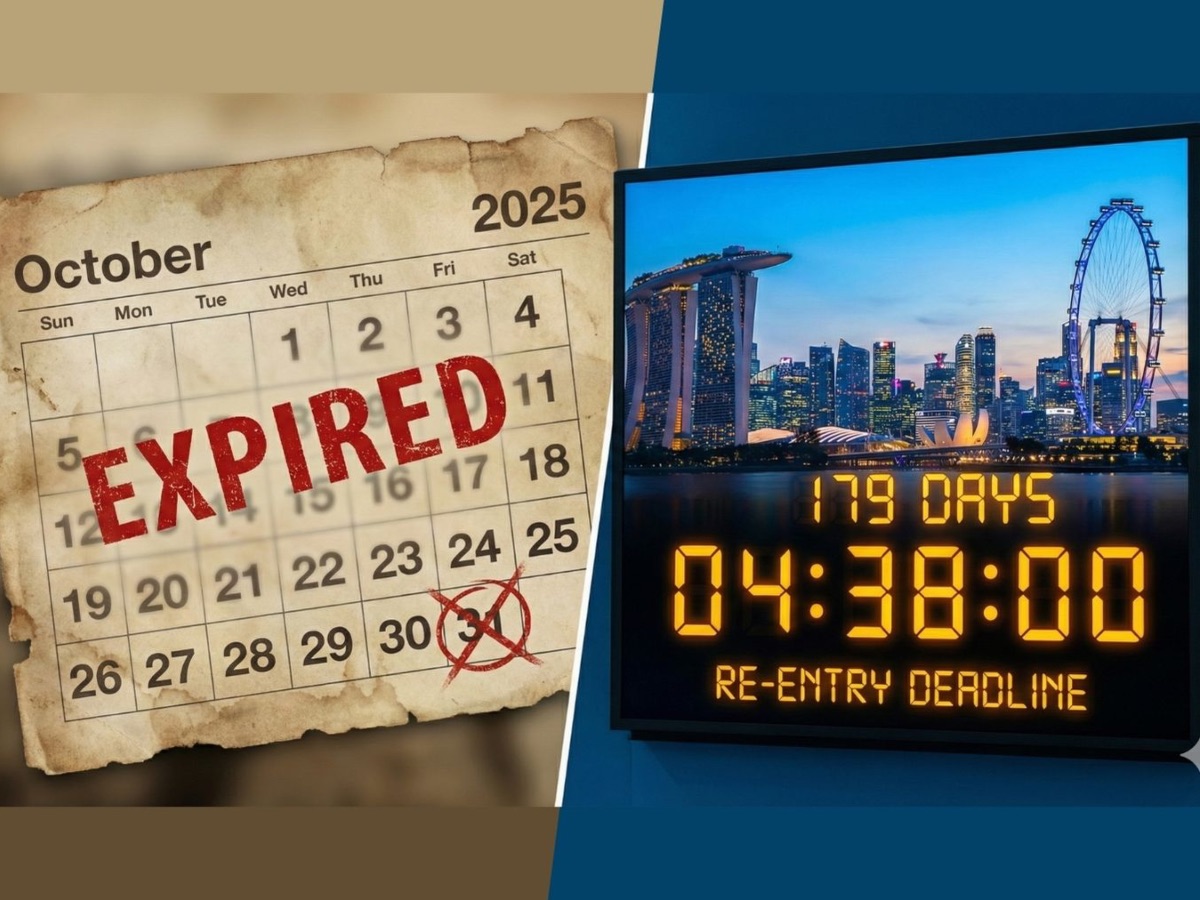
The new regulations introduce a mandatory 180-day grace period. If you are outside Singapore without a valid REP, you now have exactly six months to regularize your status. During this window, you legally remain a Singapore Permanent Resident. Your status is active, your bank accounts are safe, and your residency continuity remains unbroken—provided you act within the deadline.
Why the New System is Stricter
You might view a six-month grace period as more lenient than the old one-month rule. You would be mistaken. The government has traded administrative flexibility for legal certainty.
Previously, if you missed the reinstatement window, you could appeal to ICA’s discretion. Under the new framework, the reinstatement avenue has been completely abolished.
You now face three distinct outcomes:
-
Success: You apply within 180 days, ICA approves it, and you retain your status.
-
Rejection: You apply within 180 days, but ICA rejects it. You lose your PR status the day after the rejection notice.
-
Failure to Act: You miss the 180-day deadline. You automatically lose your PR status the day after the period ends.
There is no appeal process to “reinstate” a lapsed status after the deadline. Once lost, your only option is to submit a fresh PR application from scratch, competing with the general pool of new applicants.
How the 180-Day Countdown Works
The start date of your 180-day countdown depends on your situation:
-
Transitional Cases: If you were already overseas with an expired REP before today, your 180-day clock starts ticking today, December 1, 2025.
-
Standard Cases: For everyone else, the clock starts on the first day you are physically outside Singapore without a valid REP.
For example, if your REP expires on March 15, 2026, while you are in London, your 180-day window begins on March 15.
Crossing the Border: The Single-Entry Pass
A common concern involves physical travel. If your REP is expired, you cannot use it to clear automated lanes at Changi Airport. However, because you remain a legal PR during the 180-day grace period, ICA has established a specific protocol.
You can still return to Singapore to sort out your affairs. Upon arrival at the checkpoint, immigration officers will verify your status and issue a PR Single-Entry Pass. This temporary travel document allows you to enter the country legally to resolve your REP renewal.
Cleaning Up Legacy Documentation
The changes also impact long-term residents. Historically, some PRs granted status before 1987, or locally-born PRs before 2005, were never issued a physical Entry Permit (EP). This created data inconsistencies.
Effective today, all PRs must hold both a valid Entry Permit and a Re-Entry Permit. ICA is issuing digital EPs with updated conditions to all “legacy” PRs. This move standardizes records across the board, ensuring every resident serves under the same set of clear, enforceable immigration conditions.
Strategic Advice for Business Owners and Families
Do not treat the 180-day window as a convenient delay tactic. It is designed for emergencies—unexpected hospitalizations or travel restrictions—not for administrative procrastination.
We strongly advise all our clients to:
-
Check your expiry dates today via the MyICA portal.
-
Renew early. You can renew your REP three months before it expires.
-
Ignore the grace period unless absolutely necessary. Relying on it exposes you to the risk of rejection, which now carries immediate, irreversible consequences.
Secure your status. The new rules offer clarity, but they punish complacency.
How We Can Help
Navigating immigration compliance while managing a business or family relocation is complex. Whether you need assistance with corporate compliance, understanding how these changes affect your foreign employees, or ensuring your personal documentation is audit-ready, our team is here to assist.
Would you like us to review your current PR compliance status or assist with your corporate immigration planning?
Contact the Singapore Employment Agency team today at [email protected]
Yours sincerely,
The editorial team at Singapore Employment Agency