
Insights for work and life.
Filing PR and Citizenship for Children at Different Ages: How to Sequence a Family’s Applications
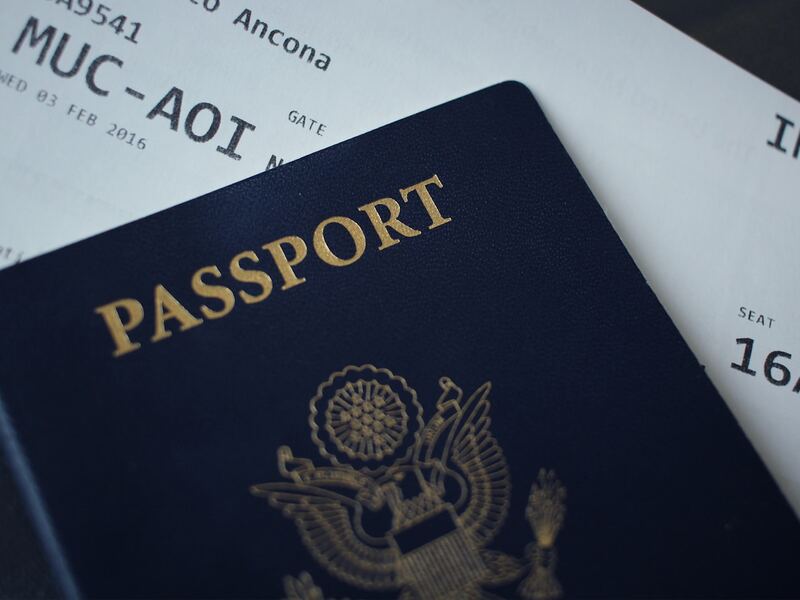
What happens to a family’s Singapore Permanent Residence plans when one child is 19 and eligible under the Family Ties Scheme, and an older sibling turned 21 the month before the application was submitted? Families rarely realise that filing PR and citizenship for children at different ages is not a single family event with one outcome. It is several separate clocks, each running from a different start date, each governed by its own cut-off.
The Immigration & Checkpoints Authority (ICA) allows a Permanent Resident or Singapore Citizen parent to include an unmarried child below 21 in a family application. That single age threshold, 21, is the fault line that determines whether siblings move through the system together or apart. Once a family has children on both sides of that line, sequencing stops being a formality and becomes a decision with real consequences for National Service liability, processing timelines, and which scheme a child can use at all.
This article sets out, with reference to ICA’s current published criteria as at 6 September 2026, how the age cut-off works, what changes when a child crosses it mid-application, why each child’s citizenship eligibility clock can start on a different date even within the same family, and how to sequence applications so no child is caught out.
The 21-Year Cut-Off That Splits a Family’s PR Application
Per the Immigration & Checkpoints Authority, an applicant may apply for Singapore Permanent Residence as the “unmarried child aged below 21 born within the context of a legal marriage to, or have been legally adopted by a Singapore citizen or PR”, with the parent sponsoring the application through ICA e-Service (ICA, Becoming a Permanent Resident, accessed 6 September 2026). This is the Family Ties Scheme pathway most families rely on when a parent already holds PR or citizenship and wants to bring the whole household into the same status.
The scheme has no equivalent provision for a child who is 21 or older. An adult child in that position cannot be added to a parent’s PR application under Family Ties at all. They would instead need to qualify in their own right, most commonly as a holder of an Employment Pass or S Pass, or as a student in Singapore who has passed a national examination such as the PSLE, GCE ‘N’/’O’/’A’ Levels, or is in the Integrated Programme. Our companion piece on the Family Ties Scheme for spouses, children and parents sets out the full eligibility grid. In practice, a family with a 23-year-old and a 17-year-old cannot file “one PR application” for both children: the elder sibling’s file, if it exists at all, runs on an entirely separate track.
Why the Cut-Off Catches Families Off Guard
ICA’s processing time for PR applications is up to six months, “provided all the required documents are submitted and are in order” (ICA, Becoming a Permanent Resident, accessed 6 September 2026). A child who is 20 years and 9 months old at submission may turn 21 before ICA completes its assessment. A family that delays filing, waiting for one more payslip or document, can inadvertently push a child past the threshold before the application is even lodged. The safer planning assumption is to treat 20, not 21, as the practical deadline for including a child under Family Ties.
Sequencing PR and Citizenship for Children at Different Ages: The Core Problem
Even where every child in a family is under 21 and eligible, sequencing PR and citizenship for children at different ages still matters because of how citizenship eligibility is calculated afterwards. ICA’s citizenship criteria state that a person becomes eligible after having “been a Singapore Permanent Resident (PR) for at least 2 years and are aged 21 and above”, and that this applicant “can apply together with your spouse who is a PR and any unmarried children aged below 21” (ICA, Becoming a Singapore Citizen, accessed 6 September 2026). Two details in that wording matter for a multi-child family:
- The two-year qualifying period is measured from each individual’s own date of PR grant, not from a family “start date”. If a younger child’s PR was approved eight months after an older sibling’s (because, for example, the younger child was born overseas and needed a separate PR submission once the family relocated), the two children reach citizenship eligibility on different dates even though they may apply for citizenship together later once both clocks have run.
- A child who ages past 21 while still holding PR, but before the parents apply for citizenship, is no longer covered by the parent’s citizenship application and must qualify independently once resident long enough as a PR, or through marriage to a Singapore Citizen.
Our article on the Singapore Citizenship application process for PR holders walks through the standard route in more detail; the point for a family with children of different ages is that the “standard route” is rarely identical for every family member.
A Worked Example: The Lim-Alvarez Family
Consider a hypothetical family: an Employment Pass holder father, a homemaker mother, and two children aged 23 and 16 at the time the parents’ own PR applications are being prepared.
| Family member | PR pathway | Earliest citizenship eligibility |
|---|---|---|
| Father (EP holder) | Own application as EP holder | 2 years after own PR grant, aged 21+ |
| Mother | Family Ties Scheme, as spouse of PR | Married 2+ years to a Singapore Citizen father would shorten this; otherwise 2 years as PR |
| Child, aged 16 | Family Ties Scheme, included in father’s PR application | 2 years after own PR grant, while still under 21, included in parent’s citizenship filing |
| Child, aged 23 | Not eligible under Family Ties; must qualify independently (EP/S Pass, or existing PR route) | Own 2-year PR clock, filed as a separate adult application |
The 16-year-old’s PR, if granted alongside the father’s, starts a citizenship clock that could allow a joint family filing once both are past the two-year mark and the child is still under 21. The 23-year-old is on a wholly separate track and must build independent eligibility, typically through employment, from scratch. Filing for PR and citizenship for different children at different times, in a family like this, is a structural feature of the rules to be planned around, ideally years before the parents themselves apply for citizenship.
National Service Adds a Second Layer of Sequencing Pressure
For families with sons, sequencing decisions cannot be made on immigration timing alone. Per the Immigration & Checkpoints Authority, “all male applicants who are granted Singapore citizenship (SC) or Singapore permanent residence (PR) status as a foreign student or under their parents’ sponsorship are liable for NS”, with registration required from age 16 and a half and enlistment scheduled “at the earliest opportunity upon reaching 18 years old” (ICA, Becoming a Permanent Resident, accessed 6 September 2026). This liability sits under the Enlistment Act 1970 (Singapore Statutes Online, Enlistment Act 1970, accessed 6 September 2026); MINDEF does not defer enlistment for university studies once a young man reaches registration age as a PR or new citizen.
A family that delays a younger son’s PR inclusion while resolving an older sibling’s separate application may find the son crosses 16 and a half before his own status is confirmed, changing his NS registration timeline. This is a further reason to file eligible children under Family Ties as early as possible, rather than waiting for a “tidier” combined submission. Our guide to National Service planning for sons of PRs and new citizens covers the mechanics in full.
Children Who Arrive Later: Newborns and Late Additions
Sequencing questions are not limited to existing children who age out. A child born after the parents already hold PR, whether in Singapore or overseas, is not automatically a PR or citizen and needs a fresh, separate application. Where the gestational mother is a Singapore Citizen, or the father is a citizen married to the child’s gestational mother at birth, ICA applies a reduced citizenship application fee of S$18 and a faster indicative processing time of one month, compared with the standard 12-month processing time for other citizenship applications (ICA, Becoming a Singapore Citizen, accessed 6 September 2026). A late-arriving child in a family that already includes older PR or citizen siblings should, in most cases, be filed as its own priority item rather than bundled into an older sibling’s application. Our related article on the birth, passport and Dependant’s Pass timeline for a newborn in Singapore sets out the immediate steps.
When an Older Child Already Holds a Long-Term Visit Pass
Families sometimes place an adult child who does not qualify for PR on a Long-Term Visit Pass while younger siblings proceed under Family Ties. This is a legitimate holding position, but it is a separate facility with its own sponsorship and renewal cycle, not a waiting room for PR. For families structuring a wider relocation, our sister site’s guide on who can sponsor whom under the Long-Term Visit Pass is a useful cross-reference before assuming the adult child’s status will convert automatically.
How ICA’s Holistic Assessment Treats a Staggered Family File
ICA assesses “the individual’s family ties to Singaporeans, economic contributions, qualifications, age, family profile and length of residency” for every named applicant (ICA, Becoming a Permanent Resident, accessed 6 September 2026). Each family member is assessed on their own merits, and ICA’s holistic approach means no single factor, including whether siblings apply together or apart, is determinative on its own. Historically, a family that presents a clear, documented reason for a staggered application (an age cut-off, a late birth, a study commitment abroad) tends to read more coherently than one where the sequencing looks unexplained. Families facing other unusual timing questions will recognise the same principle from our article on PR reapplication strategy after an earlier rejection: ICA rewards a file that explains itself.
A Practical Sequencing Checklist
- File eligible children first, not last. Do not hold back a 19-year-old’s inclusion to wait for an older sibling’s separate case.
- Treat 20, not 21, as the working deadline for Family Ties inclusion, to allow for ICA’s up to six-month processing window.
- Track each family member’s own two-year PR clock separately, rather than assuming a single household “citizenship eligibility date”.
- Flag sons approaching 16 and a half early, since NS registration timing is tied to the date PR or citizenship is granted.
- File newborns and late additions as their own priority item, particularly where the reduced fee and faster processing for overseas-born children of citizens may apply.
- Document the reason for any staggered filing so ICA’s assessing officer sees a coherent family story, not an unexplained gap.
Every citizenship applicant aged 16 to 60 must also complete the mandatory Singapore Citizenship Journey (SCJ) programme before formalities are completed (ICA, Becoming a Singapore Citizen, accessed 6 September 2026), which is a further scheduling item for older teenage children reaching citizenship separately from younger siblings.
Getting Professional Support for a Multi-Child Family Application
Sequencing PR and citizenship filings for children at different ages is one of the more procedurally unforgiving corners of Singapore immigration policy: the rules are published and clear, but the consequence of missing a cut-off, whether a birthday, an NS registration date, or a processing-time buffer, falls on the family, not on ICA. Families should read the current eligibility criteria carefully for every named child before submission, and should not assume a joint family application is always required or advantageous. Where children straddle the 21-year threshold, planning the filing order in advance is the difference between a clean family file and a scramble to fix an ageing-out problem after the fact.
Little Big Employment Agency Pte Ltd (LBEA), trading as Singapore Employment Agency, is a MOM-licensed employment agency (Licence No. 19C9790) supporting employers and relocating families through the practical side of Singapore work pass, PR and family immigration planning. Speak to our licensed agency team at Singapore Employment Agency to plan a multi-child family application in the right order, or, where a relocation also involves a Singapore company, our colleagues at Raffles Corporate Services can advise on the corporate side of the move.
The Editorial Team, Little Big Employment Agency
Real people. Right here in Singapore.