
Insights for work and life.
Singapore PR After Bankruptcy Discharge: What Changes
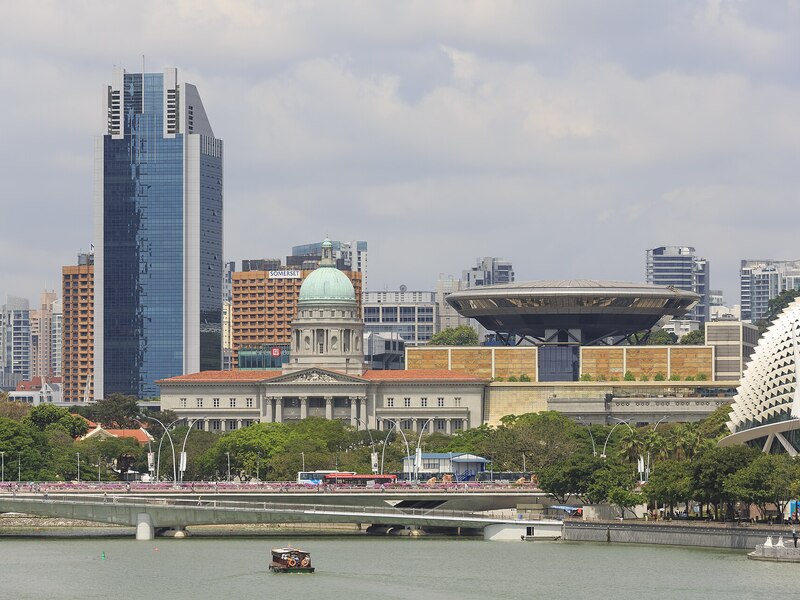
Roughly 1,200 people are made bankrupt in Singapore each year, and a meaningful share of them are foreigners holding Singapore Permanent Residence. For this group, a question rarely covered in general immigration guides arises the moment the Official Assignee issues a certificate of discharge: does Singapore PR after bankruptcy discharge proceed as normal, or does the bankruptcy history follow the applicant into their next Re-Entry Permit renewal, citizenship application, or even a directorship they hold?
The short answer is that bankruptcy itself is not a published, standalone disqualifying ground under the Immigration and Checkpoints Authority’s (ICA) permanent residence framework. But the practical mechanics of being an undischarged bankrupt, and the record that a discharge leaves behind, intersect with PR maintenance and citizenship timing in ways that catch PR holders off guard. This is especially true for PR holders who are also company directors, since a separate statutory bar kicks in the moment a bankruptcy order is made.
This guide sets out what changes, in practice, for a PR holder who has gone through bankruptcy in Singapore, when they are still undischarged, and after their discharge certificate is issued, drawing on the Ministry of Law’s Insolvency Office and ICA’s own published positions as at 11 September 2026.
Why Bankruptcy Status Intersects With PR and Citizenship Matters
ICA’s holistic assessment of a Singapore PR application weighs economic contribution, family ties, length of residency and, more loosely, an applicant’s general conduct and integration. A bankruptcy record does not appear anywhere on ICA’s published eligibility page as a bar, but it does two things that matter to an assessor. First, it interrupts the applicant’s economic contribution profile, since income during bankruptcy is largely directed to the bankruptcy estate under a Target Contribution rather than reflected in the applicant’s own savings or CPF trajectory. Second, an undischarged bankrupt is, by law, restricted from travelling out of Singapore without permission, which can create the kind of continuity-of-stay gaps ICA scrutinises when it reviews an existing PR’s application timeline and processing history.
Separately, and more concretely, the Companies Act 1967 automatically restricts an undischarged bankrupt from acting as a director or taking part in company management without the leave of the High Court or the written permission of the Official Assignee. This is not an ICA rule at all, but it matters enormously for PR holders who run or co-own a Singapore company, because the restriction is triggered from the date of the bankruptcy order, whether or not the company’s other directors are even aware of it.
What “Discharge” Actually Means, and the Routes to Get There
Singapore has no automatic discharge from bankruptcy. According to the Ministry of Law’s Insolvency Office, a bankrupt exits bankruptcy through one of four routes: annulment by the High Court, discharge by the High Court, annulment by Certificate of the Official Assignee, or discharge by Certificate of the Official Assignee. Each route depends on the case’s Target Contribution status, the proven debts, and how long the bankruptcy has run.
| Bankruptcy commenced | Minimum period before discharge by certificate | Key condition |
|---|---|---|
| Before 1 August 2016 | At least 3 years | Proven debts do not exceed SGD 500,000 |
| On or after 1 August 2016, first-time bankrupt | At least 3 to 7 years, tiered | Target Contribution met, or unmet due to extenuating circumstances, and creditor objections below the statutory threshold |
| Repeat bankrupt | Each tier extended by 2 years | Same Target Contribution and objection tests apply |
These timelines and conditions are set out in full on the Ministry of Law’s Exiting Bankruptcy guidance page (Insolvency Office, as at 11 September 2026), and no indicative timeline is guaranteed. The eventual date depends on the bankrupt’s conduct, cooperation with the Official Assignee, and whether creditors object.
Renewing Your Re-Entry Permit While Undischarged, and After Discharge
Before discharge: travel is restricted, not the PR status itself
Being made bankrupt does not, by itself, cause ICA to revoke PR status. What changes is mobility. As an undischarged bankrupt, the Insolvency Office’s Advisory on Leaving Singapore is explicit: the bankrupt must obtain the Official Assignee’s or the Private Trustee-in-Bankruptcy’s prior written permission before leaving, remaining, or residing outside Singapore, for any reason including employment. Departing without that permission is an offence, and immigration officers at the checkpoint will stop the departure. Applications should be filed online at least 14 days before the intended departure date.
This has a direct knock-on effect for PR holders, because every PR who wants to travel and return needs a valid Re-Entry Permit (REP). An undischarged bankrupt PR who travels on an approved OA permission still needs a valid REP to re-enter as a PR; the OA’s travel approval and ICA’s REP requirement are two separate authorisations that both need to be in order. Since 1 December 2025, ICA’s replacement of the old one-month grace period with a 180-day grace period for PRs caught outside Singapore without a valid REP gives some breathing room, but it does not excuse travelling without the Official Assignee’s permission in the first place.
After discharge: the record clears, but the file may still be reviewed
Once the Official Assignee or the High Court issues a certificate or order of discharge, the travel restriction and the directorship bar both fall away automatically. For REP renewal purposes, a discharged bankrupt PR applies exactly as any other PR would, submitting up-to-date employment, income and residence information through ICA’s e-Service. There is no published requirement to disclose a past, fully discharged bankruptcy on a routine REP renewal, but where an REP application coincides closely with a discharge date, or where continuity of residence was affected by the OA’s travel restrictions during the bankruptcy period, it is sensible to have supporting documentation, the discharge certificate and any OA travel permissions obtained, ready in case ICA requests clarification.
Effect on a Fresh PR (PTS) Application or a Citizenship Application
For a foreigner who is not yet a PR but has gone through bankruptcy in Singapore, whether as an Employment Pass holder or otherwise, the practical question is whether that history affects a Professionals, Technical personnel and Skilled workers (PTS) Scheme PR application filed after discharge. ICA does not publish bankruptcy as an eligibility criterion, so a discharged bankrupt is not automatically barred from applying. However, ICA’s assessment is holistic, weighing salary trajectory, CPF contribution history, and continuity of stay, all of which will show the interruption caused by bankruptcy. An applicant in this position should expect closer scrutiny along the same lines set out in the site’s own analysis of recurring ICA rejection patterns, since a gap in income consistency or a period of restricted travel can read, on paper, similarly to other profile weaknesses ICA has flagged in past rejections.
The same logic carries through to a subsequent citizenship application once PR has been held for the requisite period. Good conduct and lawful behaviour form part of ICA’s character assessment for citizenship, and while a discharged, closed bankruptcy is not itself a character offence, any bankruptcy offence committed leading up to or during the bankruptcy, for example failing to disclose assets to the Official Assignee, is a materially different matter and should be disclosed and explained rather than left for ICA to discover.
If You Are Applying as a Director or Business Owner
PR holders who hold or plan to hold a directorship face the sharpest edge of this issue. Under the Companies Act, an undischarged bankrupt is automatically disqualified from acting as, or taking part in the management of, any Singapore company, without the leave of the High Court or the Official Assignee’s written permission. This is a strict, self-executing restriction, not a discretionary ICA decision, and it lasts for as long as the bankruptcy subsists. A more detailed treatment of how this restriction operates, and the separate statutory disqualification grounds for directors, is available in Raffles Corporate Services’ guide to director disqualification in Singapore. PR holders rebuilding a business after discharge should confirm their directorship eligibility has been formally restored before signing new director consents or resuming management functions.
A Practical Timeline: From Bankruptcy Order to a Clean PR or Citizenship File
Because there is no automatic discharge in Singapore, and the Official Assignee’s discretion depends on conduct, cooperation and the Target Contribution, PR holders should plan around milestones rather than a fixed date. In practice, this means obtaining and keeping every Official Assignee travel permission granted during the bankruptcy period, requesting a copy of the discharge certificate or order the moment it is issued, and building a short written account of the bankruptcy’s cause and resolution to have on hand if ICA raises questions on a subsequent REP, PR, or citizenship filing. None of this needs to be volunteered proactively in a routine application, but being unable to produce it promptly if asked creates far more difficulty than the underlying bankruptcy history itself.
Common Mistakes That Delay Reapplication
The most frequent error is travelling on an existing REP without first securing the Official Assignee’s separate travel permission, which can trigger an immigration stop regardless of how much time is left on the REP. The second is assuming that a spent, fully discharged bankruptcy must be disclosed on every subsequent immigration form; it generally need not be volunteered unless a form specifically asks about it or ICA raises the point, but any bankruptcy-related offence should be. The third, specific to entrepreneurs, is resuming an active management role in a company before the directorship restriction has actually lifted, which exposes the individual to separate criminal liability entirely apart from any immigration consequence.
Given how much of this turns on the interaction between MinLaw’s insolvency framework, ICA’s discretionary PR and citizenship assessment, and the Companies Act’s director rules, PR holders navigating a bankruptcy discharge are well served by getting the immigration side reviewed by a MOM-licensed agency rather than piecing together forum advice. Singapore Employment Agency assists PR holders and Employment Pass holders with REP renewals, PR applications and citizenship filings where a complicating history like this is involved. Where the bankruptcy also touches a Singapore company the applicant directs or owns, Raffles Corporate Services can advise on the director eligibility and ACRA filing side of the same situation.
— The Editorial Team, Little Big Employment Agency
Real people. Right here in Singapore.