
Insights for work and life.
Singapore PR Application Timeline 2026: ICA Processing Times, Status Checks and What Delays Mean
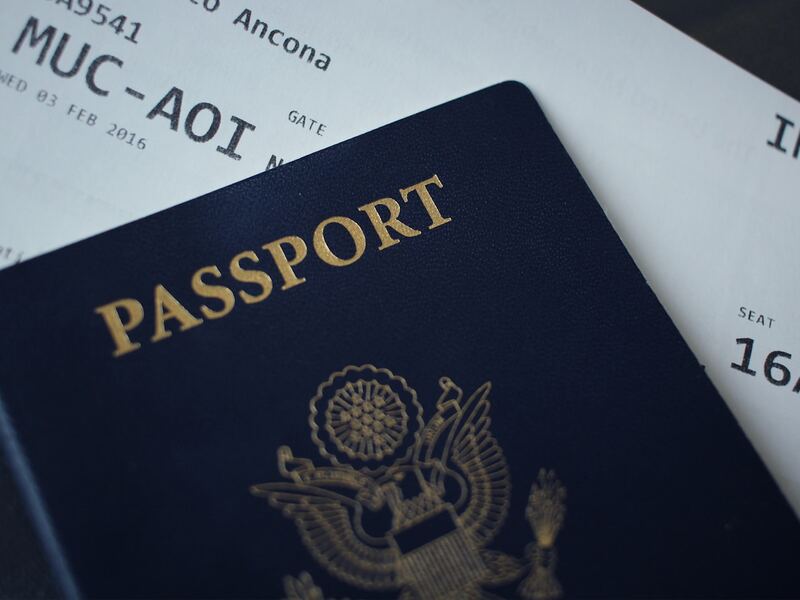
One of the most common questions asked by Employment Pass holders who have been in Singapore for a few years is a simple one: how long does the PR application actually take? The honest answer in 2026 is that the Singapore PR application timeline varies more than ICA’s official guidance suggests , typically between four and twelve months, with the six-month mark representing the current norm for straightforward profiles. This guide sets out what actually happens at each stage of the process, how to check your application status, and what a delay really means for your profile.
ICA’s Official Position on Singapore PR Processing Time
The Immigration and Checkpoints Authority (ICA) states on its website that PR applications will be processed within six months, provided all required documents are submitted and are in order. This is the official benchmark, and it is broadly achievable for complete, clean applications from straightforward profiles , a single applicant with continuous EP employment, no dependants, and a fully documented file.
In practice, the six-month benchmark is often met or bettered for high-earning applicants with strong files. For applicants with more complex profiles , blended families, overseas employment history, dependants with different nationality backgrounds, or prior ICA interactions , processing can extend to nine or twelve months. A small number of cases, particularly those involving very complex family situations or requiring cross-border verification, have taken longer.
Singapore has committed to increasing annual PR grants to approximately 40,000 per year between 2026 and 2030 (up from approximately 34,500 in 2024). This expansion of the PR intake does not automatically translate into faster processing , ICA has been investing in digital processing infrastructure to handle the higher volume , but it does mean the pool of successful applicants is growing. For context on the overall odds by profile type, our PR approval odds by salary band analysis for 2026 provides a defensible sense of where different applicant profiles stand.
The Singapore PR Application Timeline 2026: What Actually Happens
The Singapore PR application timeline 2026 unfolds in three broad phases after submission.
Phase 1: Submission and Acknowledgement (Weeks 1–4)
You submit your PR application through ICA’s e-Service portal using Singpass. A complete application covers all family members applying together , it is generally advisable to submit jointly with your spouse and any children under 21, as joint submissions are assessed holistically. After submission, ICA issues an acknowledgement and assigns a reference number. You will receive an email confirming receipt, and the application status on the portal will show as “Pending”. This first phase typically completes within two to four weeks of submission.
Phase 2: Active Assessment (Months 1–6)
During this phase, ICA’s officers are reviewing your documentation against the holistic assessment criteria , economic contribution (salary, tax paid, CPF contributions for PRs), family ties to Singapore, qualifications, age, and integration. ICA may send a request for additional documents via the e-Service portal during this phase; you will receive an email notification and must respond within the specified timeframe. Common requests include updated employment letters, recent payslips, or clarifications about overseas employment history. Responding promptly and completely is critical , delayed responses extend the assessment period.
For many applicants, particularly those with strong profiles in high-demand sectors, a decision arrives in this window. The exact timing within this window is unpredictable , ICA does not disclose where your application sits in the queue, and the status will simply read “Pending” until a decision is made.
Phase 3: Extended Review (Months 6–12+)
Applications that reach the six-month mark without a decision are not necessarily in trouble. Extended review is common for: applicants with complex family structures (stepchildren, adopted children, children from prior relationships); applicants whose files required cross-border document verification; applicants whose employer or sector underwent significant changes during the assessment period; and cases where ICA’s assessment is borderline and requires senior review. Remaining in the “Pending” status past six months is a signal to be patient, not to panic. ICA’s formal position is that some applications take longer , this is acknowledged rather than hidden.
How to Check Your PR Application Status Online
You can track your application status at any time through ICA’s e-Service portal using your Singpass login. The portal displays the status as “Pending” until a final decision is reached. ICA does not provide interim updates, progress percentages, or partial results , the transition from “Pending” to a decision (either in-principle approval or rejection) happens without advance notice. You should check the portal regularly, as the notification email is sometimes delayed relative to the actual status update on the portal itself.
If ICA requires additional documents, you will receive an email notification directing you to log in to the portal and submit the requested items. Check the email associated with your Singpass account and ensure it is current and monitored throughout the application period.
What a Delay Actually Means , And What to Do
A delay beyond six months does not typically mean your application is heading for rejection. Extended timelines are most common in cases that require additional information, family-situation complexity, or senior review. What you should not do during the waiting period: submit an appeal (there is nothing to appeal , no decision has been made), call ICA to follow up on progress (ICA’s stance is that applications are processed in order and follow-up calls do not expedite them), or submit a duplicate application.
What you can do: ensure your contact details and Singpass email are current; ensure your EP remains valid throughout the assessment period (an EP expiry during a pending PR application creates unnecessary complications); and continue building your Singapore integration record , additional CPF contributions, continued Singapore residency, and community involvement all strengthen your profile for the period ICA is assessing.
If your application is ultimately unsuccessful, our PR rejection pattern analysis provides a framework for understanding what ICA typically cites in rejection scenarios and how to strengthen a reapplication.
Factors That Affect How Long Your PR Application Takes
Several profile factors correlate with faster or slower processing:
- Completeness of documentation at submission , Incomplete applications almost always take longer. ICA’s document requests add weeks to the timeline. The ICA PR application document checklist for 2026 covers what to include at the outset.
- Family complexity , Single applicants with uncomplicated family situations tend to be processed faster than applicants with stepchildren, prior marriages, or overseas-born children requiring additional documentation.
- Salary and sector , High-earning applicants in strategic sectors (financial services, technology, healthcare) tend to be prioritised in the assessment queue, though ICA does not publicly confirm this.
- Length of Singapore residency , Applications with five or more years of continuous EP residency and a consistent employment record have a more complete data trail for ICA to review, which can facilitate faster assessment.
The Best Time to Submit Your PR Application
There is no conclusive evidence that submission timing affects ICA processing speed, but practitioner experience suggests avoiding December and January submissions , these months coincide with ICA staff leave and slower administrative processing across the public sector. Submissions between September and November tend to align with the start of the assessment calendar in a way that keeps processing moving during the peak working months of Q1 and Q2 of the following year.
Most experienced PR advisers recommend applying no earlier than two years of continuous EP residency, and ideally at the point where you can demonstrate consistent salary progression, continuous employment with the same employer or in the same sector, active CPF contribution history (if you are a re-employed EP holder from a prior PR), and family ties (Singapore-born children, a spouse actively contributing to Singapore society, and property ownership are all positive signals).
For a comprehensive understanding of the full PR pathway , including the PTS scheme, Family Ties scheme, and GIP , our complete Singapore PR pathway guide for 2026 is the starting point. And once PR is granted, the PR to Singapore citizenship journey guide covers what comes next.
If you are preparing a PR application and want professional support , including a pre-submission document review and profile assessment , Singapore Employment Agency (Licence 19C9790) and Raffles Corporate Services provide end-to-end PR application support for foreign professionals and their families.
, The Editorial Team, Little Big Employment Agency
Real people. Right here in Singapore.