
Insights for work and life.
New York and Bay Area to Singapore: An American Professional’s Relocation Guide 2026
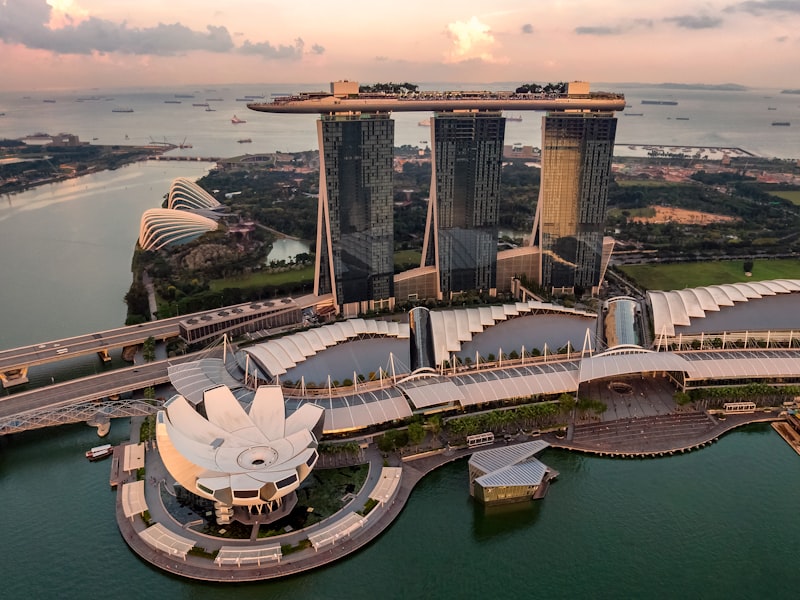
Each year, a significant cohort of finance, technology, and professional-services specialists make the move from New York or the Bay Area to Singapore , drawn by a 17% corporate tax rate, zero capital gains tax, a stable legal system grounded in English common law, and proximity to the fastest-growing consumer markets in the world. Singapore’s Employment Pass sits at the top of this relocation chain: a professionally credentialled US citizen earning above the qualifying salary threshold can be sponsored by a Singapore employer and issued an EP within three to eight weeks of application.
That process is broadly similar to any other nationality , but American professionals face a layer of complexity that most do not: the United States taxes its citizens on worldwide income regardless of where they live. FATCA reporting, FBAR obligations, and the Foreign Earned Income Exclusion (FEIE) are live considerations from day one. Add the Additional Buyer’s Stamp Duty (ABSD) remission available exclusively to US citizens under the US-Singapore Free Trade Agreement, and the Singapore relocation calculus for Americans is genuinely different from a British, Australian, or Indian professional making the same move.
This guide covers the Employment Pass pathway for US citizens, the unique tax considerations, banking setup, property options, and the family logistics , schools, healthcare, and Dependant’s Passes , that make relocating from New York or the Bay Area to Singapore more than a simple job transfer. For the full relocation sequence covering housing, schools, and domestic staffing, see our complete family relocation guide for Singapore.
Employment Pass for US Citizens: Qualifying and Applying in 2026
The Singapore Employment Pass is the standard work visa for foreign professionals. Per the Ministry of Manpower, the qualifying salary for a new EP application is SGD 5,600 per month for most sectors and SGD 6,200 per month for the Financial Services sector, as at 1 January 2025. These floors rise to SGD 6,000 (most sectors) and SGD 6,600 (Financial Services) from 1 January 2027.
US citizens are subject to the same COMPASS scoring system as all other nationalities. COMPASS awards points across six criteria , salary relative to local peers, qualifications, diversity contribution, local workforce support, skills bonus, and strategic economic priority , and a minimum of 40 points is required for EP approval. For the full COMPASS breakdown, see the complete Singapore Employment Pass guide.
For senior professionals earning above SGD 144,000 annually, the Personalised Employment Pass (PEP) is worth considering. The PEP is not tied to a specific employer, which means a New York-based professional taking a portfolio of Singapore mandates , common in finance and venture capital , can work across multiple engagements without triggering a new EP application for each employer change.
For founders and investors, the ONE Pass (qualifying salary of SGD 30,000 per month or an outstanding-achievement track) and the EntrePass for venture-backed founders are the relevant pathways. See our ONE Pass eligibility guide for the full criteria.
The Tax Transition: New York and Bay Area to Singapore
The most consequential difference for American professionals is US worldwide taxation. The United States taxes its citizens on all income regardless of tax residency , a feature shared only with Eritrea. Singapore does not: Singapore taxes on a territorial basis, meaning income earned outside Singapore is generally not taxable here.
Singapore Personal Income Tax for Americans
Singapore’s personal income tax is progressive, ranging from 0% on the first SGD 20,000 of chargeable income to 24% on income above SGD 1,000,000, per the IRAS published rate table. Effective rates at senior professional income levels (SGD 200,000–500,000 annually) typically run 14–20% after reliefs. Singapore has no capital gains tax and no inheritance tax , a material advantage for professionals with equity compensation, stock options, or investment portfolios.
US Tax Obligations in Singapore: FEIE, FTC, FATCA, and FBAR
American professionals in Singapore continue to file US federal income tax returns. The principal tools for managing double taxation are:
- Foreign Earned Income Exclusion (FEIE): For tax year 2026, the FEIE exclusion amount is approximately USD 132,900 for qualifying foreign residents. This excludes that amount of Singapore employment income from US federal taxation.
- Foreign Tax Credit (FTC): Where Singapore tax is paid, US tax on the same income can be offset dollar-for-dollar. A combination of FEIE and FTC is often optimal , your US tax adviser should model this for your specific income mix.
- FBAR (FinCEN Form 114): If aggregate maximum value of your Singapore financial accounts exceeds USD 10,000 at any point in the calendar year, FBAR filing is required. This is separate from your tax return and has its own deadline.
- FATCA (Form 8938): If foreign financial assets exceed USD 200,000 at year-end for a single filer residing abroad, Form 8938 is required. Singapore bank accounts, brokerage accounts, and CPF balances all count toward this threshold.
US citizens on EP status do not contribute to Singapore’s Central Provident Fund (CPF), as CPF contributions are mandatory only for Singapore citizens and Permanent Residents. This simplifies the US tax picture slightly , CPF balances, when they exist for PR holders, are generally taxable in the US as foreign pension funds.
Property: The ABSD Remission for US Citizens in Singapore
Singapore imposes an Additional Buyer’s Stamp Duty (ABSD) on most residential property purchases. As at 2026, foreigners not on the Singapore PR or citizenship track typically pay ABSD of 60% on any residential property purchase.
US citizens are a significant exception. Under the US-Singapore Free Trade Agreement, American citizens are entitled to be treated as Singapore Permanent Residents for ABSD purposes on their first residential property purchase , meaning 0% ABSD on the first property, 20% on the second, and 30% on the third. This remission is claimed at the time of purchase and requires documentation of US citizenship. Per the IRAS ABSD guidance, the remission applies to the purchase contract date.
For professionals who prefer to rent before committing to a purchase , which is sensible given that most EP holders work in Singapore for two to five years before assessing their long-term plans , our guide to renting in Singapore by neighbourhood covers the rental market in detail.
Banking in Singapore as a US Citizen
US citizens in Singapore face additional complexity in banking due to FATCA. Under FATCA, all Singapore financial institutions report US-citizen account balances and income to the IRS automatically. Some Singapore private banks and brokerage platforms have historically declined to service US persons due to FATCA compliance costs , this is less of an issue at the major retail banks (DBS, OCBC, UOB) but worth noting for wealth-management and brokerage accounts.
For day-to-day banking, EP holders open accounts at DBS, OCBC, or UOB using their passport, EP card, proof of Singapore address, and US TIN. All three banks are FATCA-compliant and accept US-person accounts at the retail level.
Relocating with Family: Dependant’s Passes, Schools, and Healthcare
EP holders sponsoring family members apply for Dependant’s Passes (for spouse and children under 21) or Long-Term Visit Passes. Processing typically runs alongside or shortly after the principal EP application. See our Dependant’s Pass and LTVP guide for eligibility and processing times.
American professionals typically enrol their children in international schools offering the US curriculum or the International Baccalaureate. Singapore hosts well-regarded American-curriculum international schools including the Singapore American School. Fees typically run SGD 35,000–60,000 per child per year. Our guide to Singapore schools for expat families covers the full landscape of international, MOE, and hybrid options.
For healthcare, foreign EP holders are not covered by Singapore’s national MediShield Life scheme , reserved for citizens and Permanent Residents. Most employers include private hospitalisation insurance in the employment package. See our complete guide to healthcare for expats in Singapore.
A Practical Relocation Timeline: New York or Bay Area to Singapore
A realistic relocation timeline for a New York or Bay Area professional moving to Singapore with family typically runs 10–16 weeks from offer letter to first day in Singapore:
- Weeks 1–3: Employment Pass application submitted by employer or authorised agency; In-Principle Approval (IPA) received.
- Weeks 4–6: Dependant’s Pass applications submitted; housing search begins; school places applied for.
- Weeks 7–10: Dependant’s Pass IPA received; EP and DP card issuance once in Singapore; Singpass and bank account setup.
- Weeks 10–16: Household goods arrive; schooling commences; US tax adviser briefed on FEIE/FTC structure and FBAR/FATCA thresholds.
Permanent Residence from the United States
The Singapore PR pathway is open to EP holders who have been working continuously in Singapore, typically for two to five years. ICA’s holistic assessment does not favour any nationality over another, but US citizens typically bring strong profile elements: high salary levels, professional qualifications, and diversity contribution , the US is a non-traditional source country for Singapore’s workforce, which scores positively under COMPASS’s diversity criterion. See our complete Singapore PR pathway guide for the full assessment framework.
Once PR is achieved, US citizens become subject to CPF contributions , and CPF balances are generally taxable in the US as a foreign pension fund. This is an important consideration to discuss with a US-qualified tax adviser before applying for PR.
Conclusion
Relocating from New York or the Bay Area to Singapore in 2026 offers American professionals a compelling package: lower personal tax, zero capital gains tax, ABSD remission on a first residential property purchase, and access to Southeast Asia’s fastest-growing markets. The complexity lies in managing ongoing US tax obligations , FEIE, FTC, FBAR, and FATCA , which require specialist US-qualified advice before and during the move.
For your Employment Pass application, Dependant’s Pass coordination, and the broader Singapore relocation, Little Big Employment Agency is a MOM-licensed agency (Licence 19C9790) with experience handling passes for professionals from the United States. For incorporation, fund structures, and Singapore corporate services, contact Raffles Corporate Services.
, The Editorial Team, Little Big Employment Agency
Real people. Right here in Singapore.