
Insights for work and life.
Home Insurance for Expats in Singapore (2026 Guide)
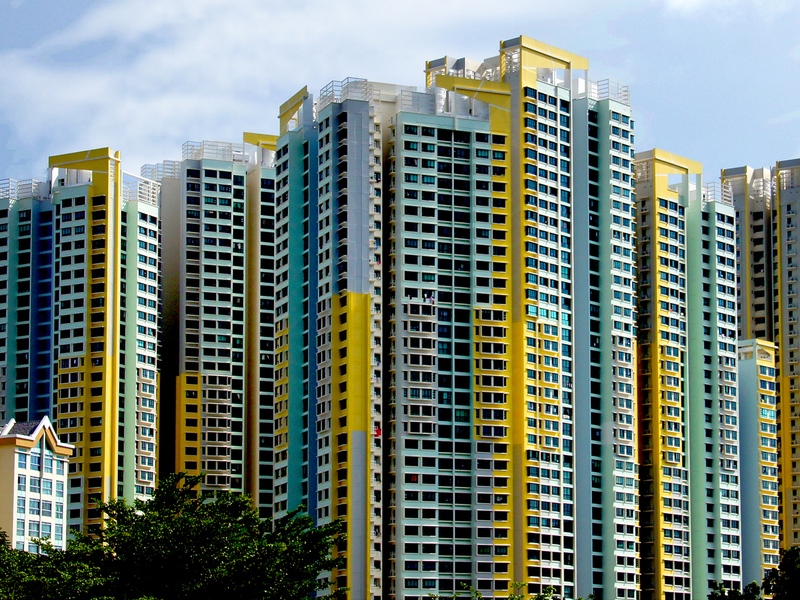
Many expat families budget carefully for rent, school fees and a helper’s salary, yet overlook a line item that can cost them tens of thousands of dollars after a single kitchen fire or a break-in: home insurance for expats in Singapore. Unlike motor insurance or the mandatory cover that comes with hiring a Foreign Domestic Worker (FDW), home contents and renters insurance is not compulsory for most tenants, which is precisely why so many newly arrived families skip it, only to discover the gap when something goes wrong.
Singapore’s rental stock is a mix of HDB flats, condominiums and landed houses, and the insurance picture differs for each. Flat owners with an outstanding HDB loan are legally required to carry fire insurance, but that cover protects the building’s structure, not a tenant’s furniture, electronics or a family’s belongings. For the roughly one in three Employment Pass and S Pass households who rent rather than own, and for homeowners who want protection beyond the compulsory minimum, understanding what is mandatory, what is optional and what the Foreign Domestic Worker insurance rules require is essential before signing a tenancy agreement or an FDW employment contract.
This guide sets out, as at 2 October 2026, what the Housing and Development Board (HDB), the Ministry of Manpower (MOM) and Singapore’s financial regulator actually require, what is left to personal choice, and how expat families typically structure their cover.
What Insurance Is Actually Compulsory for a Singapore Home
Contrary to what many new arrivals assume, there is no general legal requirement for a tenant or homeowner in Singapore to buy home contents insurance. The compulsory elements are narrower and apply in specific circumstances.
HDB Fire Insurance Scheme
Under the HDB Fire Insurance Scheme, flat owners whose HDB housing loan commenced on or after 1 September 1994 must buy, and renew every five years, a fire insurance policy for as long as the loan is outstanding. The current appointed insurer is Etiqa Insurance Pte Ltd. Crucially, this policy covers the cost of reinstating damaged internal structures and the fixtures HDB itself installed; it does not cover household contents such as furniture, renovation works or personal belongings. Once the HDB loan is fully repaid, or if the flat was financed with a bank loan instead, HDB’s scheme no longer applies, though banks typically impose an equivalent building insurance condition of their own.
For an expat family renting an HDB flat, this matters in one key way: the fire insurance the landlord is required to hold protects the landlord’s structure, not the tenant’s possessions. If a fire or water leak damages a tenant’s laptop, clothing or furniture, the HDB fire policy will not pay for it.
Mandatory Insurance When Hiring a Foreign Domestic Worker
Where insurance is genuinely compulsory in a Singapore household is around hiring an FDW, a step many relocating families take soon after arrival. MOM’s insurance requirements for migrant domestic workers (MDWs), last updated 18 September 2026, require every employer to buy, before the helper arrives in Singapore:
- Medical insurance (MI) with an annual claim limit of at least SGD 60,000 for inpatient care and day surgery. Since the Stage 1 enhancement took effect on 1 July 2023, claims above SGD 15,000 are split 75% insurer and 25% employer.
- Personal accident (PA) insurance with a sum assured of at least SGD 60,000 per year, covering sudden, unforeseen incidents resulting in permanent disability or death, with compensation payable to the helper or her beneficiaries, not the employer.
Employers cannot pass the cost of either policy on to the helper, and both must be maintained for the entire employment period. Families who have already read our guide to hiring a Foreign Domestic Worker in Singapore will recognise these as part of the standard employer obligations, separate from any home contents cover the family may also want.
Home Contents and Renters Insurance: The Optional Layer Most Expats Skip
Beyond the compulsory fire and FDW policies, Singapore’s general insurance market offers voluntary home contents, renters and householder policies, typically sold by general insurers or insurance brokers registered with the Agents Registration Board under the General Insurance Association of Singapore. According to MoneySense, the national financial education programme run with the Monetary Authority of Singapore (MAS), general insurance “is designed to protect the things you value,” paying a sum assured or agreed amount when a covered loss occurs, whether that is damage to a car, a house, or belongings lost while travelling.
A typical home contents or householder policy for an expat renter in Singapore will cover some combination of:
| Cover type | What it typically protects | Usually compulsory? |
|---|---|---|
| HDB Fire Insurance | Building structure and HDB-installed fixtures | Yes, if there is an outstanding HDB loan |
| Home contents / renters insurance | Furniture, electronics, clothing, personal belongings against fire, theft, water damage | No |
| Personal liability | Third-party injury or property damage caused by the policyholder or their household | No, but often bundled |
| FDW medical insurance | Helper’s hospitalisation and day surgery costs | Yes, minimum SGD 60,000 |
| FDW personal accident insurance | Lump sum for helper’s permanent disability or death | Yes, minimum SGD 60,000 |
Because many expat tenancies in Singapore involve furnished or partially furnished units, and because a diplomatic clause allows some leases to be broken early, families who have read our guide to renting in Singapore by neighbourhood will already know that tenancy agreements rarely obligate the tenant to insure the landlord’s furniture. That gap is exactly what a renter’s contents policy is designed to close: if the family’s own electronics, jewellery or a freshly imported collection of furniture is damaged in a fire, flood or burst pipe, there is no other party who will pay to replace it.
Why the Policy Owners’ Protection Scheme Matters
One detail many new arrivals never ask about is what happens if the insurer itself fails. MoneySense confirms that Singapore’s Policy Owners’ Protection (PPF) Scheme, administered by the Singapore Deposit Insurance Corporation (SDIC) under MAS oversight, covers personal property (structure and contents) insurance policies and FDW insurance policies among others. If a general insurer is wound up, SDIC compensates policyholders for claims incurred up to 30 days after the winding-up order and refunds pro-rated premiums for the unused period, so policyholders can seek alternative cover. This is a useful reassurance for expat families who may be buying a Singapore policy from an insurer brand they do not recognise from home.
Condominiums and Landed Housing: A Different Starting Point
Families who rent or buy condominiums do not fall under the HDB Fire Insurance Scheme at all, since that scheme is specific to HDB flats with an HDB loan. A condominium’s Management Corporation Strata Title (MCST) typically insures the building structure and common property through a master policy funded by the management fund, but this again stops at the unit’s internal fixtures and contents. Landed housing owners with a bank mortgage will usually find the bank requires a fire or building insurance policy as a loan condition, separate from any contents cover.
In practice, this means condominium and landed-house tenants are in a similar position to HDB tenants: the building shell is someone else’s responsibility, and anything inside the unit that belongs to the family is uninsured unless the family arranges it themselves. Families who have gone through our first 30 days administrative checklist after an Employment Pass is issued will recognise this as one more item worth adding alongside opening a bank account and registering a SIM card, rather than something to defer indefinitely.
How Home Insurance for Expats in Singapore Fits the Bigger Relocation Picture
Insurance decisions rarely sit in isolation from the rest of a relocation. A family that has just worked through the documents and templates for budgeting cost of living will already have a tenancy deposit, a furnishing budget and a helper’s salary mapped out; a modest annual premium for contents and liability cover is a small addition against those bigger numbers, but it is the one expats most often forget because no landlord, bank or ministry is chasing them for it.
It is also worth separating home insurance from health insurance, which operates under entirely different rules. As our guide to healthcare for expats, Integrated Shield and private cover explains, MediShield Life and Integrated Shield Plans are reserved for citizens and Permanent Residents, so work-pass holders rely on employer group medical cover and private hospitalisation insurance instead. Home insurance is a separate product again, bought independently of both the employer’s medical plan and any FDW insurance, and it is not linked to immigration status in the way health cover is.
Families who have opened accounts using our guide to Singapore bank accounts for EP and S Pass holders will find that several banks bundle a modest home contents policy with a credit card or premier banking package, which is often the simplest entry point before shopping around more broadly. Those who have sponsored a parent under an LTVP for parents should also note that an elderly parent living in the household does not change the compulsory insurance position; the FDW insurance rules apply regardless of who in the household the helper is caring for, while home contents cover remains the family’s own choice.
For families whose relocation also involves setting up or restructuring a Singapore business, whether to employ staff directly or to hold property through a corporate vehicle, our related article on Dependant Pass eligibility and the application process from our related firm, Raffles Corporate Services, is a useful next read, since company incorporation, work pass strategy and the family’s own relocation logistics are usually handled together rather than as separate projects.
Practical Steps Before Signing a Tenancy or Hiring a Helper
- Check whether the unit you are renting or buying has an outstanding HDB loan; if so, confirm the landlord’s fire insurance is current, but do not assume it covers your belongings.
- Get at least two quotes for a home contents or renters policy before move-in day, and check the sum insured against the replacement value of furniture, electronics and any items shipped from your home country.
- If hiring an FDW, confirm with the insurance agent or employment agency that the medical insurance policy meets the SGD 60,000 annual claim limit and that the personal accident policy also meets the SGD 60,000 sum assured, in line with MOM’s current requirements.
- Ask whether your policy is sold by an agent registered with the Agents Registration Board, and request the General Insurance Association (GIA) registration number if in doubt.
- Keep the policy documents and a photographic inventory of valuable items in case a claim is ever needed.
Conclusion
Home insurance for expats in Singapore sits in an unusual middle ground: the building itself is often protected by someone else’s compulsory fire insurance, the helper’s welfare is protected by mandatory MOM-mandated medical and personal accident cover, but the family’s own furniture, electronics and liability exposure is left entirely to personal choice. For a relocation budget that already runs into tens of thousands of dollars in deposits, agency fees and furnishing costs, the premium for a contents and liability policy is a small, sensible addition rather than an afterthought.
If you are planning a move to Singapore and want help sequencing the work pass, tenancy, schooling and insurance decisions that come with it, the team at Singapore Employment Agency can walk you through the practicalities, and where company incorporation or corporate structuring is also part of the move, Raffles Corporate Services can advise on the business side.
The Editorial Team, Little Big Employment Agency
Real people. Right here in Singapore.