
Insights for work and life.
Can Employment Pass Holders Drive for Grab in Singapore? Platform Work Rules (2026)
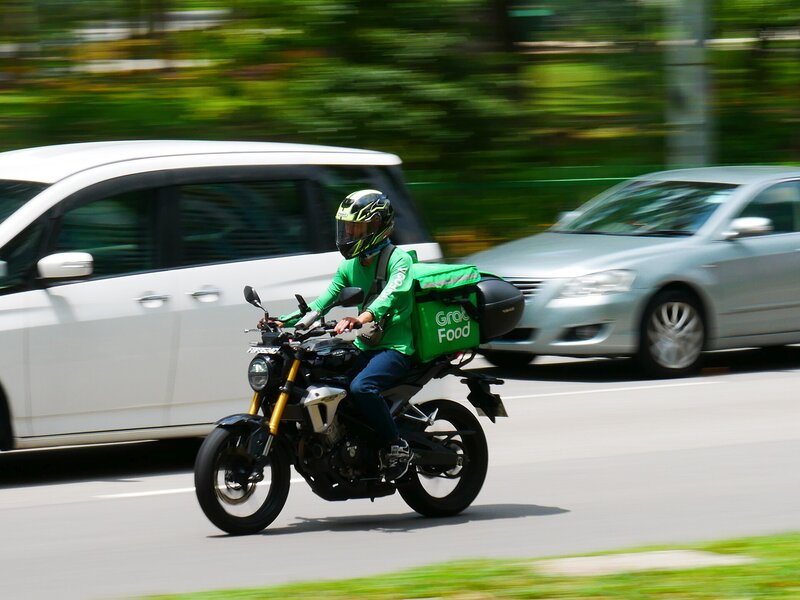
Every few months this firm fields the same question from a different Employment Pass or S Pass holder: can I drive for Grab on weekends, or pick up a few foodpanda deliveries to top up my income? The honest answer to can Employment Pass holders drive for Grab in Singapore is almost always no, and the reason has nothing to do with the Platform Workers Act itself and everything to do with the conditions already attached to every Singapore work pass.
This guide sets out, as at 30 September 2026, exactly why platform work sits outside what most foreign pass holders are permitted to do in Singapore, how the Platform Workers Act 2025 changed the compliance landscape for platform operators without changing this underlying restriction, and what the narrow legitimate exceptions actually look like.
Why Work Pass Conditions Are the Real Barrier
Per the Ministry of Manpower, every Employment Pass and S Pass is issued for a specific job with a specific employer, and the pass holder is not permitted to engage in any other form of paid work, including part-time, freelance or platform-based work, without separate MOM approval. This condition exists independently of the Platform Workers Act and applies whether the additional work is driving for a ride-hail platform, delivering for a food-delivery platform, or any other side income arrangement. A foreign professional who takes on platform work without approval is in breach of their pass conditions, and MOM treats this as a serious compliance matter that can lead to pass cancellation and future application difficulties, regardless of how modest the additional income might be.
This is a distinct and more restrictive position than what applies to Singapore Citizens and Permanent Residents, who face no equivalent work-pass condition and can take up platform work freely, subject only to the ordinary tax and, since 2025, CPF obligations that now apply to platform work generally. Employers and pass holders should not read general commentary about the Platform Workers Act, most of which is written for a local audience, as applying in the same way to foreign work pass holders.
Dependant’s Pass and Long-Term Visit Pass Holders
The position is different again for Dependant’s Pass and Long-Term Visit Pass holders, who generally require a Letter of Consent (LOC) before undertaking any paid work in Singapore, platform-based or otherwise. Our guide on Singapore Dependant’s Pass 2026 covers what DP holders can and cannot do without an LOC, and platform work falls squarely within the category of paid work that requires this separate authorisation before it can lawfully begin.
What the Platform Workers Act Actually Changed
The Platform Workers Act 2024 took effect on 1 January 2025 and introduced a structural shift in how Singapore treats ride-hail drivers and delivery riders: mandatory CPF contributions, mandatory work injury insurance funded by platform operators, and formal collective representation through registered Platform Work Associations. Per the Central Provident Fund Board, from 1 January 2026 the platform operator’s CPF contribution share doubled from 3.5 percent to 7 percent, with rates for both operators and workers set to climb over a legislated five-year glide path toward parity with standard employer-employee CPF rates.
None of this changes who is legally entitled to take up platform work in the first place. The Act regulates the employment relationship and protections for people who are already permitted to work as platform workers; it does not create a new lawful category of work that overrides existing Employment Pass, S Pass or Work Permit conditions. A platform operator onboarding a new driver or rider still needs to confirm the individual’s right to work in Singapore before activating their account, and a Singapore Citizen, Permanent Resident, or foreign national with a valid Letter of Consent or equivalent authorisation remains the only lawful profile for platform work.
CPF Contributions Do Not Apply to Foreign Pass Holders Anyway
Even setting aside the work-pass condition issue, the CPF contribution machinery introduced by the Platform Workers Act is built around Singapore Citizens and Permanent Residents, since CPF itself does not apply to most foreign work pass holders in ordinary employment either. Our guide on Major 2026 CPF, Tax and Employment Policy Changes sets out the current contribution landscape in full, and the platform-specific rate increases sit within that same broader CPF framework.
Employer Obligations When a Foreign Employee Is Found Moonlighting
Employers who discover that a sponsored Employment Pass or S Pass holder has been undertaking unauthorised platform work face their own compliance exposure, since MOM can hold the sponsoring employer partly accountable for failing to ensure the pass holder’s conditions were respected. Our earlier guide on a Work Permit holder caught moonlighting sets out the practical MOM notification sequence employers should follow once unauthorised work comes to light, and the same broad principles, prompt internal investigation, honest disclosure to MOM where appropriate, and correction of the underlying pass condition breach, apply across Employment Pass and S Pass cases as well.
The Narrow Legitimate Exceptions
There are limited circumstances in which a foreign pass holder can lawfully undertake additional paid work, most commonly where MOM has granted explicit approval for a specific secondary activity, or where the individual holds a work pass category, such as certain ONE Pass or EntrePass profiles, that is not tied to a single employer in the same way an ordinary Employment Pass is. Our guide on the ONE Pass explains why that pass’s employer-agnostic structure is fundamentally different from a standard Employment Pass, though even ONE Pass holders should not assume platform work specifically is automatically within scope without checking their pass conditions directly.
Practical Guidance for HR Teams and Pass Holders
HR teams managing a mixed local and foreign workforce should treat this as a standing item in onboarding and periodic compliance communications: foreign pass holders should be told plainly, in writing, that platform work of any kind requires prior approval and is very unlikely to be granted for an ordinary Employment Pass or S Pass profile. This sits alongside the broader annual compliance obligations set out in our Singapore HR Manager’s MOM Compliance Calendar, and employers structuring compensation or benefits around the assumption that staff might supplement income through platform work should reconsider that assumption for their foreign workforce specifically.
Frequently Asked Questions
Can an Employment Pass holder drive for Grab on weekends only? No. The restriction applies regardless of how few hours are involved; any unauthorised paid work outside the sponsored role breaches the pass condition.
Does the Platform Workers Act give foreign pass holders a new right to do platform work? No. The Act regulates CPF, insurance and representation for people already entitled to undertake platform work; it does not itself confer a right to work that a pass holder does not otherwise have.
What should a Dependant’s Pass holder do if they want to try platform work? Apply for a Letter of Consent through MOM first. Undertaking platform work on a DP without an LOC carries the same compliance risk as any other unauthorised employment.
Getting Pass Conditions Right from the Start
Work pass conditions in Singapore are more restrictive than many foreign professionals assume, and platform work is one of the clearest examples of an activity that looks informal and low-risk but carries real compliance consequences. Singapore Employment Agency, the consumer brand of MOM-licensed employment agency Little Big Employment Agency Pte Ltd (Licence 19C9790), advises both employers and individual pass holders on exactly this kind of compliance question. Employers managing broader HR compliance, payroll and secretarial matters alongside their work pass obligations can also turn to Raffles Corporate Services for support, and companies specifically navigating platform-operator obligations under the Platform Workers Act should review RCS’s dedicated Platform Workers Act employer guide for the CPF and insurance side of that framework.
The Editorial Team, Little Big Employment Agency
Real people. Right here in Singapore.