
Insights for work and life.
Dual Nationals and Singapore PR: A Practical 2026 Guide
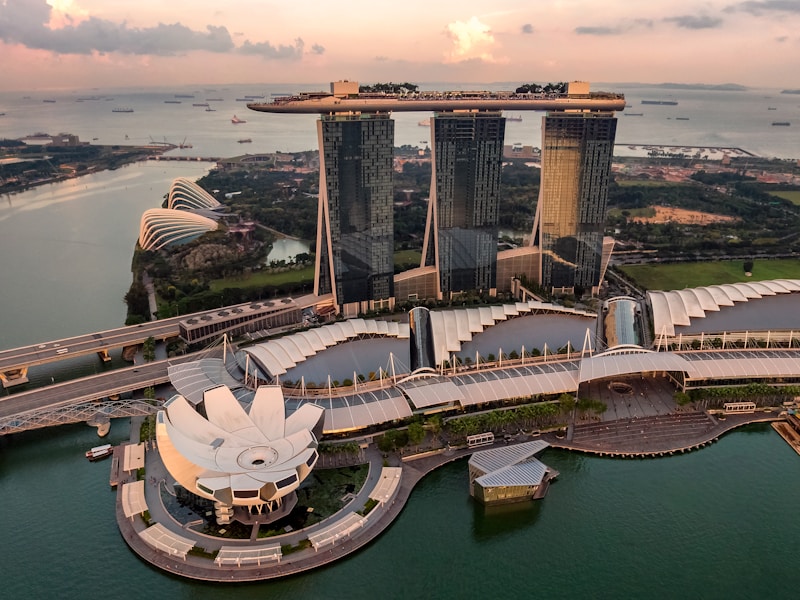
Holding two passports is not a bar to applying for Singapore Permanent Residency. Thousands of dual nationals , Indian-British professionals, Malaysian-Australian entrepreneurs, American-Filipino executives , apply for Singapore PR each year through the same ICA channels available to single-nationality applicants. Yet dual nationals face a distinct set of practical complications that can derail an otherwise strong application: incomplete disclosure, inconsistent travel records, and the post-PR renunciation logistics that vary dramatically by home country.
This guide addresses the specific questions dual nationals ask before, during, and after a Singapore PR application. It draws on ICA’s published PR criteria and the country-specific renunciation processes that shape the timeline from ICA approval to Singapore citizenship.
Singapore PR and Dual Nationality: The Core Principle
Singapore does not permit dual citizenship for adults. That is the destination rule. The journey , Permanent Residency , is different. Holding two or more passports does not disqualify a person from applying for Singapore PR. ICA assesses PR applications holistically: salary, sector, length of residency, family ties, community integration, and qualifications. An additional nationality in your passport portfolio is neither an advantage nor a disadvantage in itself. It is, however, a fact that must be disclosed in full.
Per ICA’s guidance, applicants are required to declare all current nationalities and travel documents when submitting the e-PR application (SOLAR+). Omission of a second nationality , even inadvertently , is treated as a material misrepresentation and is grounds for rejection or, if the PR has already been granted, revocation. ICA does not object to your having two passports. It objects to discovering that fact after approval.
Before you apply, read the Complete Singapore PR Pathway Guide 2026 to understand the three application schemes , PTS, Family Ties, and GIP , and how ICA weighs each factor in its holistic assessment.
Full Transparency: What Dual National Singapore PR Applicants Must Declare
The e-PR portal prompts applicants to list all nationalities held, all passports currently in possession, and all countries of residence over the preceding five years. Dual nationals must complete every field accurately:
- Current nationalities: List all. If you hold Indian and British nationality, declare both.
- Travel documents: Upload copies of both passports, including biographical-data pages and Singapore arrival/departure stamps.
- Travel history: Your travel history must be consistent across both passports. ICA cross-references its own arrival and departure records. Trips taken on Passport A that are absent from the history declared on Passport B create a red flag at assessment.
- Citizenship history: If you naturalised into a second citizenship later in life, include the date and country of your original citizenship and the date of naturalisation for the second.
Where an applicant has been using two passports to enter Singapore , for example, using a Malaysian passport on some trips and a British passport on others , ICA’s records will show both passport numbers. Present the full picture upfront rather than waiting for ICA to ask.
How ICA Assesses Dual National Applications
ICA’s holistic assessment considers economic contribution, integration, family ties, and long-term rootedness in Singapore. None of these criteria is negatively affected by dual nationality per se. What matters is the strength of your overall profile.
Factors that carry weight include salary level relative to your age and sector median, continuous employment in Singapore (three or more years is material), CPF contribution history as a proxy for economic footprint, IRAS tax payment track record, a Singapore-citizen or PR spouse, children enrolled in local schools, and community engagement such as club memberships or volunteer work.
For a calibrated view of how salary maps to approval likelihood, see the Singapore PR Approval Odds by Salary Band 2026 analysis. The patterns there apply equally to dual nationals and single-nationality applicants. Also read Singapore PR Rejection 2026: 7 ICA Patterns Explained to understand the most common reasons applications fail.
Country-Specific Complications Before You Apply
Before submitting a PR application, dual nationals should understand how their home countries treat the grant of Singapore PR. Most countries take no issue with a national holding a foreign PR status , PR is not citizenship. The complications arise later, when Singapore citizenship becomes a consideration. But some countries have rules that affect how you travel and identify yourself even at the PR stage.
Indian Nationals
India does not permit dual citizenship. Indian nationals holding Overseas Citizen of India (OCI) cards can hold Singapore PR without issue , OCI is a long-term visa status, not citizenship. However, Indian nationals who have naturalised into a second citizenship automatically lose their Indian citizenship under the Citizenship of India Act. If you hold both an Indian and a British passport, ICA needs to know which document governs your current status. Indian nationals who later convert from Singapore PR to Singapore citizenship must surrender their Indian passport and may apply separately for Person of Indian Origin (PIO) status thereafter.
Malaysian Nationals
Malaysia does not permit dual citizenship for adults. Malaysian citizens who naturalise elsewhere technically forfeit their Malaysian citizenship, though enforcement has historically been inconsistent. For the purposes of a Singapore PR application, a Malaysian national should declare whichever nationalities they currently hold. At the Singapore citizenship stage, the Malaysian Identity Card (MyKad) must be surrendered to the Malaysian National Registration Department. The process typically takes 3–6 months.
United States Nationals
The United States permits dual citizenship and imposes no restriction on US citizens holding foreign PR status or citizenship. A US citizen holding Singapore PR remains subject to US worldwide taxation , the US-Singapore tax treaty provides some relief on double taxation, but US citizens must continue to file US federal tax returns and FBAR reports even after becoming Singapore PRs or citizens. This is a material financial planning consideration that dual US-nationality applicants should address with a cross-border tax adviser before applying.
UK, European, and Commonwealth Nationals
The UK, most EU member states, Australia, Canada, and New Zealand permit dual citizenship. Holding Singapore PR alongside a British, French, German, Australian, or New Zealand passport creates no legal complication in the home country. Citizenship conversion timelines for these nationals after Singapore citizenship is granted are typically more straightforward than for Indian or Malaysian nationals, usually ranging from 6–12 months via the relevant embassy or consulate in Singapore.
Passport Consistency at Singapore Checkpoints
A practical issue that dual nationals frequently overlook: Singapore ICA maintains a digital record of every arrival and departure. If a dual national has used two different passports to enter Singapore at different times, both passport numbers are on ICA’s records. This is not itself a problem , but it means ICA will see both documents when reviewing your PR application.
Best practice is to designate one passport as your “Singapore passport” , the one linked to your EP or S Pass , and use it consistently at Changi Airport. Using both passports interchangeably creates a fragmented travel record that may prompt ICA to seek clarification, adding delay to your assessment.
Also ensure your ICA submission package is internally consistent: all employment letters, bank statements, and tax documents should reference the same name and the same nationality as your primary PR application passport.
National Service: The Critical Issue for Families with Sons
For families applying for PR with male children under 16½ years of age, National Service (NS) obligations are a significant planning consideration. Any male who receives Singapore PR before the age of 16½ is liable for full-time NS upon reaching 18. This applies regardless of the son’s dual-nationality status.
MINDEF does not routinely grant NS deferments for overseas university studies commenced before enlistment. Families considering their children’s PR alongside their own should factor the NS timeline into educational planning. Sons who have already completed NS , or are actively serving , are viewed particularly favourably by ICA as a signal of long-term commitment to Singapore. This is covered in depth in the From Singapore PR to Citizen: The 24–36 Month Journey Explained (2026) guide.
From PR to Citizenship: The Dual National Renunciation Step
Dual nationals who later convert from Singapore PR to Singapore citizenship must renounce all prior citizenships. The ICA citizenship ceremony requires the new citizen to formally relinquish prior nationality before or at the ceremony.
Renunciation timelines vary considerably by home country: India typically takes 1–3 months via the Indian High Commission in Singapore; Malaysia takes 3–6 months; European countries (UK, Germany, France, Netherlands) typically take 6–12 months; and the United States is the most complex, involving an in-person renunciation oath at the US Embassy, a US$2,350 renunciation fee, and exit-tax considerations under IRC Section 877A , most US citizens who take Singapore citizenship plan their renunciation 12–24 months in advance with a cross-border tax adviser.
For a detailed country-by-country breakdown of renunciation logistics, costs, and timelines, see Citizenship Renunciation Logistics by Source Country.
Pre-Application Checklist for Dual Nationals
Before submitting your PR application, complete these additional steps beyond the standard checklist:
- Designate a primary passport , the one linked to your Singapore work pass , as your PR application document.
- Gather all passports and prepare copies of biographical-data pages, visas, and Singapore arrival/departure stamps from all documents.
- Reconcile your travel history across all passports into a single unified log covering the five years prior to application.
- Check your home country’s rules on holding a foreign PR and on citizenship conversion , particularly important for US citizens (exit tax) and Indian nationals (OCI conversion).
- Model the NS timeline if you have a male son under 16½, before including him in your PR application.
- Consult a licensed agency or immigration adviser about the specific presentation of your dual-national profile.
For the full document checklist, see the Singapore PR Application Documents 2026: Complete ICA Submission Guide. For the step-by-step PTS process, see the PTS Scheme Application Playbook 2026.
Conclusion
Dual nationality is not an obstacle to Singapore PR , it is a planning variable. The dual national who applies with full transparency, a consistent travel record, and a well-prepared document package is in the same position as any other applicant with a strong economic profile and genuine roots in Singapore.
If you are a dual national considering a Singapore PR application, Singapore Employment Agency , the consumer brand of Little Big Employment Agency Pte Ltd (MOM Licence 19C9790) , can assess your profile and help you structure a well-prepared application. For incorporation, corporate secretarial services, or broader relocation planning, our related firm Raffles Corporate Services provides end-to-end support for professionals making Singapore their permanent base.
, The Editorial Team, Little Big Employment Agency
Real people. Right here in Singapore.