
Insights for work and life.
Singapore vs Hong Kong 2026: Work Pass, Tax and Living Head-to-Head
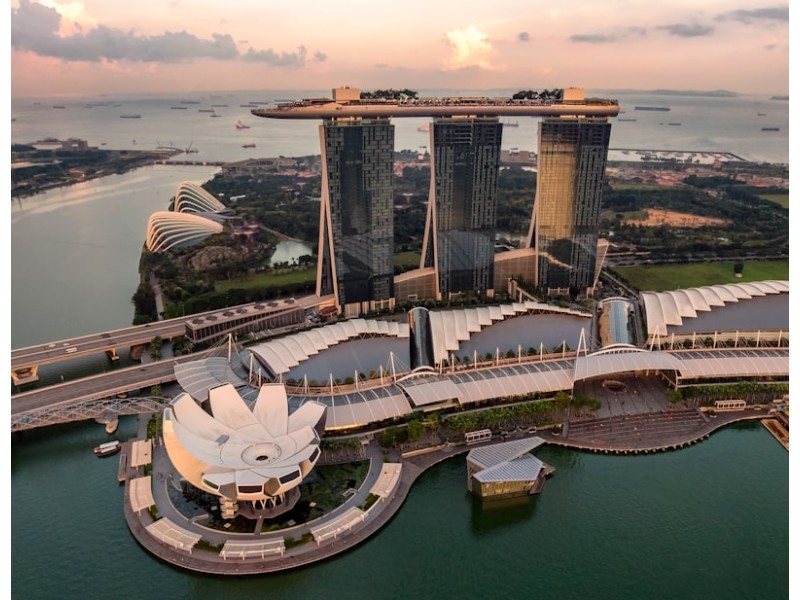
Singapore and Hong Kong have competed for Asia’s top professional talent for decades. Both cities offer world-class infrastructure, low crime, excellent schools and hubs for finance, technology, and logistics. Yet the two destinations are growing further apart in how they attract, assess and retain foreign workers , and a professional who chose the right city five years ago may face a different calculus today.
This head-to-head comparison covers the full decision set: work pass eligibility and processing, personal income tax, the path to permanent residency, and the real cost of expat life in 2026. Whether you are an employer planning a regional deployment or a senior professional weighing your options, read this before you decide. For the complete Singapore Employment Pass guide, see our Complete Singapore Employment Pass Guide 2026.
Work Pass Structures: Singapore EP vs Hong Kong’s Talent Schemes
Singapore Employment Pass
Per the Ministry of Manpower, the qualifying salary for a new Singapore Employment Pass application is SGD 5,600 per month for most sectors and SGD 6,200 per month for the Financial Services sector, both as at 1 July 2026. From 1 January 2027, those thresholds rise to SGD 6,000 and SGD 6,600 respectively for new applications.
Singapore’s EP uses the COMPASS points framework, requiring at least 40 points across six criteria: salary benchmark, qualifications, diversity, local employment ratio, skills bonus, and a strategic sector bonus. Candidates earning SGD 22,500 or above are exempt from COMPASS. EP processing runs 1–10 business days for straightforward applications and up to eight weeks for complex cases. For a full breakdown of how COMPASS scoring works, see our COMPASS Framework Explained: Earning Your 40 Points for a Singapore EP (2026).
Singapore also offers three employer-free passes for senior talent: the Personalised Employment Pass (PEP), which requires a last-drawn monthly salary of at least SGD 22,500; the ONE Pass, which requires a fixed monthly salary of at least SGD 30,000 or outstanding achievement; and the Tech.Pass (EDB-administered, closing to new applications on 31 December 2026 and replaced by the ONE Pass AI & Tech Track from 1 January 2027).
Hong Kong’s Talent Admission Schemes
Hong Kong does not have a single “Employment Pass.” The main route for employer-sponsored professionals is the General Employment Policy (GEP), which does not publish a minimum salary threshold but applies a market-rate test , the offered salary must be broadly commensurate with local norms for the role. Processing typically takes four to six weeks.
For self-sponsored talent, Hong Kong operates two principal schemes in 2026. The Top Talent Pass Scheme (TTPS) targets Category A applicants with annual income of at least HKD 2.5 million (approximately SGD 430,000) in the preceding year, and Category B/C applicants from top global universities. Successful TTPS holders receive 36 months (Category A) or 24 months (Category B/C) initial stay without a job offer requirement. The Quality Migrant Admission Scheme (QMAS) uses a points-based assessment with an annual quota.
Verdict: Singapore’s COMPASS gives candidates and employers a transparent, predictable checklist. Hong Kong’s GEP is less transparent but arguably more flexible for exceptional candidates who do not fit the COMPASS scoring model. For companies hiring in volume, Singapore’s structured approach is generally easier to manage at scale.
Singapore vs Hong Kong Tax 2026: Where Do You Keep More?
Singapore Personal Income Tax 2026
Singapore’s resident personal income tax is progressive from 0% (on the first SGD 20,000 of chargeable income) to 24% (on income above SGD 1 million). There is no capital gains tax and no dividend withholding tax on Singapore-sourced dividends. Effective rates typically run 10–18% for professionals earning SGD 150,000–SGD 400,000 per year. For authoritative rates and reliefs, see IRAS Individual Income Tax.
Non-resident individuals working in Singapore for 60 days or fewer in a calendar year are exempt from tax on that employment income. For non-residents working 61–182 days, a flat 15% rate applies or the resident rates apply with personal reliefs, whichever is higher.
Hong Kong Salaries Tax 2026
Hong Kong’s salaries tax is progressive at 2%, 6%, 10% and 17%, capped by a standard rate of 15% on net chargeable income up to HKD 5 million and 16% on the portion above HKD 5 million. There is no capital gains tax and no GST or VAT. There is also no equivalent of Singapore’s CPF contribution obligation for employers in Hong Kong.
At mid-senior salary levels (SGD 150,000–SGD 300,000 per year), the effective rates in both cities are broadly comparable. Singapore’s lower-bracket structure benefits professionals earning SGD 80,000–SGD 200,000 per year, while Hong Kong’s 15% standard-rate cap benefits very high earners above the SGD 350,000–SGD 400,000 range.
Verdict: Singapore is typically the better tax jurisdiction for professionals earning up to SGD 300,000–SGD 350,000 per year. Above that level, Hong Kong’s standard rate begins to narrow the gap. Both cities impose no capital gains tax , an important consideration for equity-compensated professionals and founders.
Permanent Residency: Speed vs Certainty
Singapore PR: Holistic ICA Assessment
Singapore’s Immigration & Checkpoints Authority (ICA) assesses PR applications holistically, weighing economic contribution, length and continuity of residency, family ties, and integration evidence. There is no prescribed minimum period, but applications submitted under two years of EP residency are rarely successful. Most competitive profiles have three to five years of Singapore-based employment before applying. Processing runs four to six months; complex cases can take up to 12 months.
Singapore granted approximately 34,500 new PRs in 2024 , a 14-year high , and announced an annual intake of approximately 40,000 for the 2026–2030 period. For a detailed breakdown of how approval odds vary by salary band and applicant profile, see our Singapore PR Approval Odds by Salary Band 2026. For a step-by-step application guide, see the Complete Singapore PR Pathway Guide 2026.
Hong Kong Permanent Residency: The Seven-Year Rule
Hong Kong’s path to permanent residency and the Right of Abode requires continuous ordinary residence for at least seven years. Unlike Singapore’s holistic model, the seven-year rule is largely automatic once the residency requirement is met, subject to an Immigration Department review confirming that the applicant has not breached immigration conditions.
Verdict: Singapore offers a faster but less predictable path , competitive profiles can gain PR in three to five years. Hong Kong is slower (seven years minimum) but more rule-bound and therefore more plannable. Professionals who prioritise speed and are confident in their Singapore profile should factor this heavily.
Cost of Living Comparison: Singapore vs Hong Kong 2026
Both cities consistently rank among the top five most expensive globally. Singapore’s rental market cooled measurably from its 2022–2023 peaks; Hong Kong saw a more pronounced correction driven by population outflows post-2020. That said, both remain firmly expensive by any international standard.
Housing: A 2-bedroom condominium in Singapore’s city-fringe (e.g. Tanjong Pagar, Queenstown, Tiong Bahru) runs approximately SGD 4,500–6,500 per month in mid-2026. A comparable Central district unit in Hong Kong (e.g. Kennedy Town, Wong Chuk Hang) runs approximately HKD 22,000–35,000 (roughly SGD 3,800–6,100) per month. On housing alone, Hong Kong has a modest edge for comparably sized mid-tier units, though the gap narrows in prime areas.
Food: Singapore’s hawker centre culture provides affordable daily meals at SGD 4–8 per dish. Restaurant dining is comparable across both cities, but hawker access in Singapore is unmatched. Hong Kong lacks a direct equivalent; mid-tier restaurant meals run approximately HKD 100–180 (SGD 17–31) per person.
International schools: Annual tuition at Singapore international schools runs approximately SGD 25,000–42,000 at primary level and SGD 35,000–52,000 at secondary level as at 2026. Hong Kong international school fees are broadly comparable but supply is more constrained, with waitlists common.
For 2026 cost-of-living numbers across all key categories in Singapore, see our Cost of Living in Singapore for Expats: 2026 Numbers.
Family Considerations
Both cities allow work pass holders to sponsor immediate family on dependant passes. Singapore’s EP family sponsorship threshold is at the SGD 5,600 qualifying salary, meaning most EP holders can bring their spouse and unmarried children under 21. Hong Kong’s GEP allows dependant sponsorship once the principal visa holder is approved.
Singapore’s ONE Pass adds a practical benefit: the DP-holding spouse of a ONE Pass holder receives an automatic Letter of Consent to work, removing the need for a separate work pass application. There is no direct Hong Kong equivalent. For families planning the full move to Singapore , schools, healthcare, FDW hire and banking , see our Relocating to Singapore: A Family’s Complete Guide 2026.
Which City Makes More Sense for You in 2026?
Choose Singapore if: you are an employer hiring in volume and want structured, predictable COMPASS-based assessments; you are a professional earning up to SGD 300,000 per year where Singapore’s tax rates are more favourable; your family needs reliable school places; you want a faster path to PR; or your industry is in Singapore’s strategic sectors (financial services, tech, biomedical sciences).
Choose Hong Kong if: you are a very high earner (above SGD 350,000–SGD 400,000 per year) for whom Hong Kong’s 15% standard rate cap delivers meaningful tax savings; you prefer the certainty of a seven-year automatic PR pathway; your business is strongly oriented towards Greater China capital markets; or you have existing business assets anchoring you there.
For professionals making the Hong Kong-to-Singapore move specifically, our dedicated guide covers the visa pathway, tax comparison, and family logistics: Hong Kong to Singapore Relocation 2026.
Singapore Employment Agency (Little Big Employment Agency Pte Ltd, MOM Licence 19C9790) assists foreign professionals and employers with Employment Pass applications, S Pass, PR submissions, and end-to-end relocation support. Speak with our licensed consultants at Singapore Employment Agency. For incorporation, accounting and corporate secretarial services, visit Raffles Corporate Services.
, The Editorial Team, Little Big Employment Agency
Real people. Right here in Singapore.