
Insights for work and life.
Singapore vs Hong Kong 2026: Work Pass, Tax and Life Compared
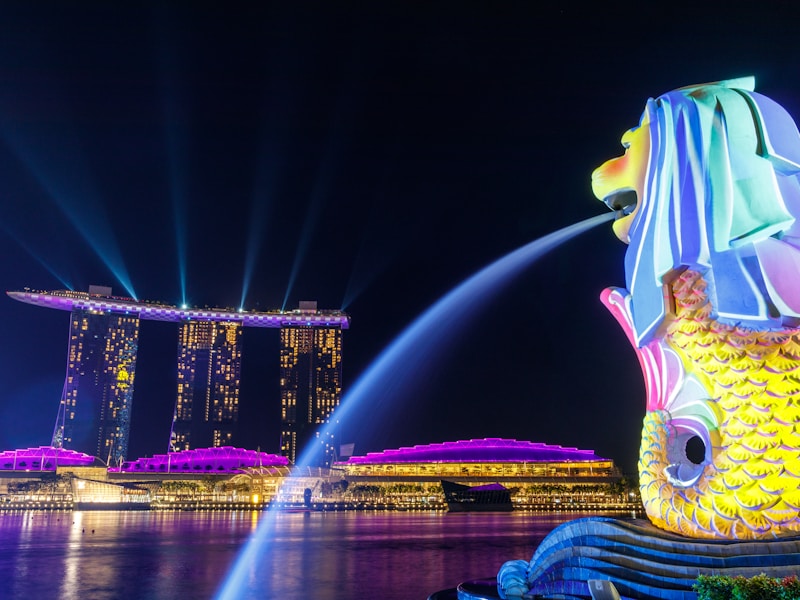
For international professionals choosing between Asia’s two dominant financial hubs, the Singapore vs Hong Kong debate is rarely simple. Both cities offer world-class infrastructure, low taxes, and gateway access to Asian markets. But in 2026, the two cities have diverged meaningfully , in work pass structures, tax treatment, political environment, cost of living, and quality of life. This guide gives you the data to make an informed comparison.
Work Pass Comparison: Singapore vs Hong Kong
Singapore Work Passes
Singapore’s work authorisation for professionals centres on the Employment Pass (EP), issued by the Ministry of Manpower (MOM). Key criteria as of 2026:
- Minimum salary: SGD 5,600 per month for most sectors; SGD 6,200 per month for the financial services sector. Age-graduated: older candidates require higher salaries.
- Qualifications: Good degree from a recognised university, or demonstrable professional experience and achievements
- COMPASS scoring: The Complementarity Assessment Framework (COMPASS) evaluates employer and candidate attributes , candidates and employers scoring below 40 points cannot obtain an EP regardless of salary
- Validity: New EPs typically issued for 2 years; renewals for 3 years
- Path to PR: EP holders may apply for Singapore Permanent Residency, though approval is selective and not automatic
The S Pass is available for mid-skilled workers (minimum SGD 3,150/month), and the Personalised Employment Pass (PEP) is available to high earners (SGD 22,500/month) with greater flexibility.
Hong Kong Work Visas
Hong Kong’s primary route for professionals is the General Employment Policy (GEP) visa, supplemented in recent years by targeted talent schemes:
- General Employment Policy: No minimum salary threshold, but applicants must demonstrate that their skills are not readily available locally. Sponsorship by a Hong Kong employer required.
- Top Talent Pass Scheme (TTPS): Launched in late 2022, this allows high earners (HKD 2.5 million/year, ~SGD 430,000) or graduates from globally top-100 universities to enter Hong Kong without a pre-arranged job offer. Valid for 24 months to seek employment.
- Quality Migrant Admission Scheme (QMAS): Points-based, quota-driven scheme for high-calibre professionals. More selective than GEP.
- Path to PR: Continuous residence of 7 years required for Hong Kong permanent residency , longer than Singapore’s typical EP-holder experience (most PR applicants apply after 5–8 years).
Assessment: Singapore’s EP is more structured and predictable, with clear salary thresholds and COMPASS scoring. Hong Kong’s GEP is more discretionary but historically faster to process. For talent attraction, Hong Kong’s TTPS has been aggressive , but Singapore’s overall EP volume remains higher.
Tax Comparison: Singapore vs Hong Kong 2026
Personal Income Tax
Both Singapore and Hong Kong are low-tax jurisdictions compared to Europe and North America, but there are meaningful differences:
Singapore: Progressive rates from 0% to 24% (top rate applies above SGD 1,000,000 chargeable income). The effective rate for most professionals earning SGD 150,000–300,000 is approximately 11–15% after personal reliefs. Singapore taxes income earned in Singapore; foreign-sourced income is generally exempt unless remitted under certain conditions.
Hong Kong: Progressive rates from 2% to 17% (top marginal rate), with a standard rate cap of 15% of total assessable income before personal allowances. Hong Kong operates a territorial tax system , only Hong Kong-sourced income is taxed. Effective rates for most professionals are broadly comparable to Singapore at similar income levels, though the 15% cap is an advantage for very high earners.
Assessment: Hong Kong’s 15% cap on assessable income gives it a slight edge for very high earners. Singapore’s rates are marginally higher at top incomes but remain competitive globally. For most working professionals, the after-tax difference is modest.
Social Security / CPF
This is a significant difference. Singapore requires CPF (Central Provident Fund) contributions for Singapore citizens and PRs: employees contribute up to 20% of wages (age-dependent), and employers contribute up to 17%. Foreign EP and S Pass holders are exempt from CPF , they receive full cash salary without CPF deduction, but also without the CPF savings benefit.
Hong Kong has MPF (Mandatory Provident Fund) for all employees: both employer and employee contribute 5% of relevant income (capped at HKD 1,500/month each). MPF contributions are lower and less visible than CPF, effectively adding a small retirement saving layer for all workers including foreigners.
Assessment: EP holders in Singapore keep their full salary in cash. This is an advantage for take-home pay but means they must self-fund retirement savings. Hong Kong MPF’s mandatory contributions are lower and apply to all employees including foreigners.
Cost of Living: Singapore vs Hong Kong 2026
Both cities are expensive by global standards. Key cost categories:
Housing
Housing is the dominant cost for most expats in both cities. In Singapore, private condo rentals for a 2-bedroom in central areas typically range from SGD 5,000 to SGD 8,000 per month; outer areas from SGD 3,000 to SGD 5,000. In Hong Kong, a comparable 2-bedroom in Mid-Levels or Kowloon typically ranges from HKD 28,000 to HKD 45,000 (SGD 4,800 to SGD 7,700). Both cities saw rental spikes in 2022–2023; Singapore’s market has moderated somewhat in 2024–2025 while Hong Kong’s market has softened more significantly following outmigration trends post-2020.
Schools
International school fees in both cities are high. Singapore international schools typically cost SGD 28,000 to SGD 48,000 per year (see our guide to Singapore schools for expats). Hong Kong international schools range from HKD 100,000 to HKD 200,000 per year (approximately SGD 17,000 to SGD 34,000), with debentures of HKD 200,000–500,000 for entry to popular schools. Singapore international schools are notably more expensive than Hong Kong’s on a per-year basis.
Everyday Costs
Hawker food in Singapore remains one of the world’s great bargains , a full meal for SGD 3–6 at a hawker centre. Hong Kong’s dai pai dong and cha chaan teng offer comparable affordability. Both cities have wide supermarket and restaurant options across all price ranges. Transportation costs are low in both cities with excellent public transit. Singapore’s Certificate of Entitlement (COE) system makes car ownership prohibitively expensive; Hong Kong’s vehicle costs are high but somewhat more accessible.
Quality of Life: Singapore vs Hong Kong
Political Environment and Rule of Law
This is the area of sharpest divergence since 2020. Singapore maintains a stable, predictable legal and regulatory environment under a Westminster-derived parliamentary system with an independent judiciary. The rule of law, contract enforcement, and protection of property rights are consistently ranked among the world’s highest.
Hong Kong’s political environment has changed significantly following the implementation of the National Security Law in 2020 and subsequent changes to the electoral system. A number of multinational firms and professionals relocated from Hong Kong to Singapore between 2020 and 2023, citing concerns about the evolving legal and political environment. Hong Kong retains a separate legal system under the “One Country, Two Systems” framework, with common law courts and independent judiciary , but professional and academic assessments of the strength of judicial independence have become more varied.
Connectivity and Travel
Both cities are world-class aviation hubs. Singapore Changi Airport and Hong Kong International Airport consistently rank among the top airports globally. Both offer excellent connections to Southeast Asia, Northeast Asia, and long-haul routes to Europe and North America. Singapore has a slight advantage for Southeast Asia connectivity; Hong Kong for Northeast Asia and mainland China access.
Lifestyle and Environment
Singapore offers a tropical climate year-round, with temperature moderated in most indoor environments. Outdoor recreation , including hiking, cycling, and water sports , is accessible. The city is known for cleanliness, safety, and excellent public infrastructure. Green spaces and nature reserves are surprisingly extensive for a city-state of Singapore’s density.
Hong Kong offers dramatic topography , hiking trails with ocean views, a vibrant street food culture, and proximity to mainland China. The climate is subtropical with a distinct winter; typhoon season (May–November) brings occasional disruption. The city’s density, while intense, also produces a particular urban energy that many professionals find compelling.
Business Environment: Where to Base Your Company
Both cities compete aggressively for regional headquarters, financial services, and high-growth businesses. Key considerations:
Singapore: Strong rule of law, extensive double-tax treaty network (over 90 treaties), political stability, strategic access to ASEAN markets, English as the primary business language, and strong government support for specific industries (fintech, biomedical, cleantech). The Singapore government’s Economic Development Board (EDB) actively courts global investors.
Hong Kong: Zero capital gains tax, dividends untaxed at source, free flow of capital with no foreign exchange controls, established position as gateway to mainland China, and a deep pool of financial and legal talent. The Hong Kong dollar’s peg to the USD provides currency stability. Hong Kong retains significant advantages for businesses with China-facing operations.
Assessment: For ASEAN-focused businesses or those prioritising political stability and rule of law predictability, Singapore is the stronger choice in 2026. For China-market businesses, Hong Kong retains unique structural advantages that Singapore cannot fully replicate.
Which City Is Right for You?
The Singapore vs Hong Kong decision depends heavily on your specific circumstances:
Choose Singapore if: Your employer or business is ASEAN-focused; you prioritise political stability and legal predictability; you have school-age children and want a diverse international school choice; you value Singapore’s PR pathway and eventual citizenship option; or your industry benefits from Singapore’s specific sector incentives (fintech, biomedical, professional services).
Choose Hong Kong if: Your role involves China-facing operations or mainland China travel; you prefer Hong Kong’s cost of living advantage for schools; you value the TTPS for entry without a job offer; or your firm is already established in Hong Kong and relocation is on your terms.
Many professionals in 2026 choose Singapore as the primary base precisely because its conditions have become more favourable relative to Hong Kong on rule-of-law and stability metrics, while Hong Kong continues to attract those with deep China exposure who value the unique access it provides.
Getting Your Singapore Work Pass
If Singapore is your destination, the Employment Pass application process requires careful preparation , particularly under COMPASS scoring, which evaluates salary, qualifications, diversity value, and employer track record. Singapore Employment Agency specialises in work pass applications for professionals relocating to Singapore, including EP, S Pass, and Personalised Employment Pass applications. Our team handles the full application, from eligibility assessment to submission and follow-up with MOM.
Real people. Right here in Singapore.