
Insights for work and life.
Singapore PR Application Strategy: Capitalising on the 40,000 Annual Quota Window (2026–2030)
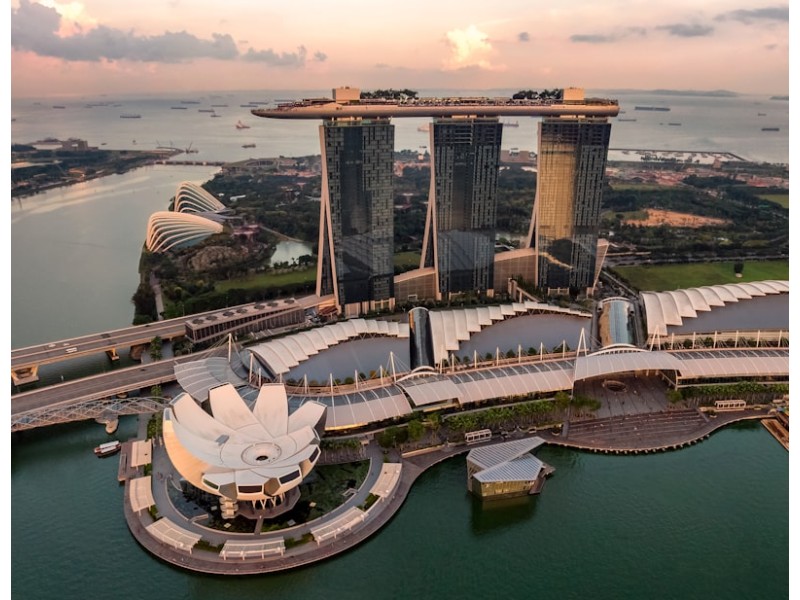
Singapore has set an annual Permanent Residency intake target of approximately 40,000 approvals per year from 2026 to 2030 , an increase of roughly 14% from the approximately 35,000 approved in 2025. The Immigration and Checkpoints Authority (ICA) frames this as a quality-first initiative driven by Singapore’s declining birth rate and the need to sustain a competitive, skilled workforce. Higher volume does not mean lower standards: ICA is processing more applications against the same holistic assessment criteria. What has changed is the available headroom , and for well-positioned applicants, that headroom is worth using strategically.
This guide is not about gaming the system. ICA’s holistic assessment has no published scoring matrix and no minimum salary floor. What it does have is a set of factors that consistently distinguish approved files from those deferred or rejected , and which Employment Pass and S Pass holders can systematically strengthen before they submit.
What the 40,000 Quota Actually Means for Your Application
Singapore granted approximately 35,264 PRs in 2024 and is targeting 40,000 per year from 2026. That additional capacity , roughly 5,000 more approvals annually , is real, but it is concentrated among the strongest applicant profiles. ICA has stated that the higher intake reflects more complete families applying together and a deeper pipeline of well-integrated long-term residents, not a lowering of the bar for marginal cases.
The practical implication: if your profile is already strong , stable employment in a priority sector, three or more years in Singapore, a complete family profile, consistent CPF contributions , the 2026–2030 window is the best moment to apply since 2008. If your profile has material weaknesses, adding volume to the queue does not automatically help; the weaknesses need to be addressed first.
For context on approval statistics and sector-specific patterns, our Singapore PR Approval Odds by Salary Band 2026 provides a data-grounded analysis of what ICA is approving and at what income levels.
Who ICA Prioritises: The Holistic Assessment Factors That Matter Most
ICA does not publish a scoring matrix. What it does publish, across various ministerial statements and its own guidance, is a list of assessment dimensions. The factors that most consistently appear in ICA’s communications , and which track with approved file profiles , are the following.
Economic Contribution and Sector of Employment
ICA assesses economic contribution through salary, CPF contribution history, income tax paid in Singapore, and the strategic value of the applicant’s sector to Singapore’s economy. Professionals in the RIE 2030 priority sectors are explicitly favoured: green energy and sustainability, financial services and fintech, healthcare and biomedical sciences, and artificial intelligence and advanced technologies.
Per ICA’s PR application guidance, there is no minimum salary required , but in practice, salary below the 50th percentile for your SSOC occupation code weakens the economic contribution dimension materially. Being at or above the 75th percentile for your occupation and industry strengthens it.
Length of Residency and Employment Continuity
ICA consistently approves PTS applicants with three or more years of continuous Singapore residency on an Employment Pass, and the modal approved profile shows five to seven years. First-time applicants within two years of arriving in Singapore face a harder road unless other factors are unusually strong.
Employment continuity matters as much as tenure. Multiple short-term contracts with different employers, long gaps between passes, or a history of expired passes that were renewed late all create questions about the stability and permanence of the applicant’s Singapore commitment. A single employer relationship of three or more years, with no pass gaps and consistent CPF contributions, is significantly more persuasive than equivalent time spent across several roles.
Family Profile and Integration Signals
Complete family profiles , where a spouse is in Singapore on a Dependant’s Pass or their own EP, and where children are enrolled in Singapore schools , are among the strongest integration signals available to a PR applicant. ICA treats family rootedness as evidence of genuine commitment to Singapore, not merely to a current job.
Integration signals beyond the family include community involvement: Residents’ Committee or community club membership, volunteering, participation in National Integration Council programmes, and active engagement with Singapore civil society. None of these are required, but each adds a credible data point to the holistic assessment that distinguishes an applicant who has chosen Singapore from one who happens to be working here.
Our Complete Singapore PR Pathway Guide 2026 covers the PTS, Family Ties, and GIP pathways in detail, including the documents ICA expects to see for each integration factor.
Strategic Timing: When to Apply During the 2026–2030 Window
Optimal EP Tenure Before a First Application
The data from approved files suggests that a first PR application submitted with fewer than two years of Singapore employment history has a materially lower approval rate, even at higher salary levels. Three years of uninterrupted EP tenure is the conventional planning horizon for a first application by a single professional without exceptional credentials. Five years is the sweet spot for mid-career professionals with families.
This means that an EP holder who arrived in Singapore in 2023 or 2024 is now entering the optimal submission window for the 2026–2030 quota period. If your pass history, salary, and integration signals are in reasonable order, submitting between late 2026 and 2028 captures the highest available intake capacity.
Joint Applications with Spouses and Children
ICA allows and encourages concurrent applications for a principal applicant and their immediate family members. Filing jointly , principal applicant, spouse, and children under 21 , is generally more efficient and signals permanence more clearly than a solo filing followed by dependent applications later. If your spouse holds their own EP, include both applications in the same submission package where possible.
Reapplication After a Rejection
PR applications rejected by ICA can be resubmitted after six months. Most successful reapplications are those where the applicant has meaningfully strengthened the profile since the first submission: a salary increase, a promotion, completion of one more year of Singapore residency, children enrolled in Singapore schools, or demonstrable community involvement added since the last filing.
Resubmitting with the same file and a cover letter asking for reconsideration does not generally change the outcome. For a detailed analysis of rejection patterns and what ICA is looking for in a reapplication, see our Singapore PR Rejection 2026: 7 ICA Patterns Explained.
Common Mistakes That Weaken a PR Application
The most avoidable errors in PR applications are not about the substantive profile , they are about document quality and preparation. ICA officers review hundreds of files: incomplete submissions, missing certificates, inconsistent employment dates between the application form and supporting documents, and CPF contribution gaps that are not explained create unnecessary doubt.
- Salary inconsistency: The salary declared on the form must match the CPF contribution records and the most recent EP. Discrepancies , even when explainable , require correspondence that delays processing.
- Incomplete employment history: Every gap in employment since arriving in Singapore needs an explanation. Unexplained gaps suggest either a pass that lapsed or employment that was not in Singapore.
- Missing tax filings: PR applicants who have not filed income tax returns consistently create a gap in the economic contribution evidence. File returns each year even where no tax is payable.
- Children’s school enrolment not documented: Including a school registration letter or report card for children enrolled in Singapore adds a concrete integration data point at minimal cost.
For a complete checklist of documents ICA expects at submission, see our Singapore PR Application Documents 2026 guide.
After PR Approval: The Re-Entry Permit and the Citizenship Timeline
PR status in Singapore is not unconditional. A Singapore Permanent Resident must hold a valid Re-Entry Permit (REP) to maintain PR status while travelling abroad. The first REP is valid for five years from the date of ICA’s In-Principle Approval and must be renewed before expiry. REP renewal is assessed on the same holistic basis as the original PR application, with continued employment in Singapore as the primary criterion.
PR holders become eligible to apply for Singapore Citizenship after a minimum of two to three years as a PR, though the modal successful citizenship application is filed five or more years after PR grant. Our From PR to Singapore Citizen: The 24–36 Month Journey sets out the Citizenship Journey programme, oath ceremony requirements, and the National Service obligations that apply to sons of new citizens.
How LBEA Can Help Position Your PR Application
LBEA is a MOM-licensed employment agency (Licence No. 19C9790) with deep experience in PR and citizenship applications under the PTS, Family Ties, and GIP schemes. Our team can assess your current profile against ICA’s holistic assessment criteria, identify the areas most worth strengthening before you submit, and prepare a well-documented application package.
Contact Singapore Employment Agency to book a PR consultation, or explore incorporation and company setup options at Raffles Corporate Services if you are also considering setting up a business in Singapore.
MOM publishes Employment Pass eligibility criteria and workforce development guidance that PR applicants in managerial or professional roles should review, as MOM employment records feed directly into ICA’s holistic assessment.
, The Editorial Team, Little Big Employment Agency
Real people. Right here in Singapore.