
Insights for work and life.
Singapore driving licence conversion , Step-by-step walkthrough
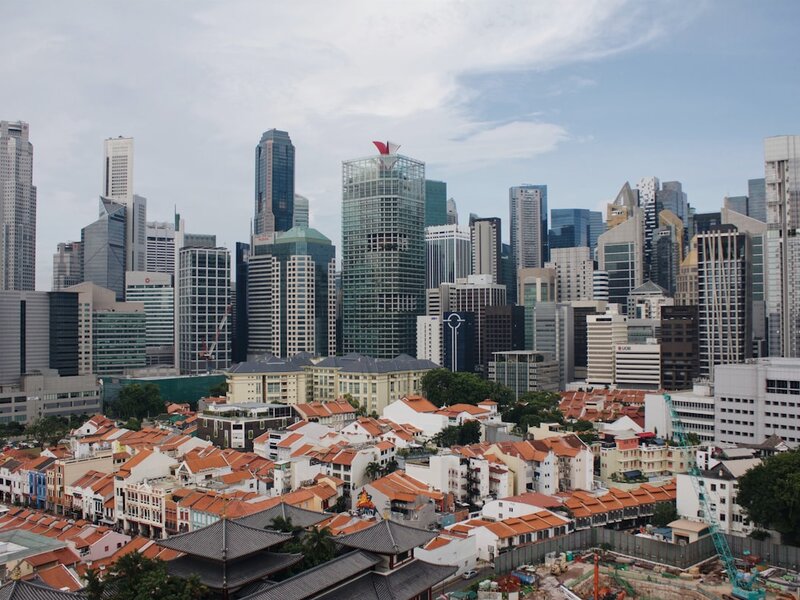
Singapore driving licence conversion is the process by which a foreigner who holds a valid overseas licence exchanges it for a Singapore one, after passing the Basic Theory Test. Once you become a resident and intend to keep driving, conversion is generally expected within 12 months of taking up residence, and the process is administered by the Traffic Police.
Little Big Employment Agency (EA Licence 19C9790) works with a panel of corporate and employment law firms; this article is general information, not legal advice.
What Singapore driving licence conversion is
When you first arrive in Singapore as a visitor or short-stay holder, you can usually drive on a valid foreign licence, accompanied by an International Driving Permit or an official English translation where the licence is not in English. That arrangement is temporary. Once you take up residence here, whether on an Employment Pass, a dependant’s pass or as a Permanent Resident, the expectation under the Road Traffic Act 1961 framework is that you convert to a Singapore driving licence if you wish to continue driving in the longer term.
Conversion does not require you to retake the full practical driving test in most cases. Instead, you pass the Basic Theory Test (BTT), submit your valid foreign licence and supporting documents, and the Traffic Police issue a Singapore Qualified Driving Licence. The logic is that you have already demonstrated practical competence abroad; what Singapore asks is that you demonstrate knowledge of local road rules and signage through the theory test.
One practical nuance trips up many new arrivals. The recognition of a foreign licence for short-term driving and the conversion entitlement are two different things. While you are a visitor or in the early months of residence, your foreign licence (with the appropriate translation) lets you drive. But that grace does not last indefinitely once you are resident, and continuing to rely on it beyond the expected period can put you on the wrong side of the rules. Conversion is the durable solution, and it is sensible to start the process well within your first year rather than at the eleventh hour.
Who this walkthrough is for
This guide is written for foreigners relocating to Singapore who hold a valid overseas driving licence and intend to drive here beyond the short term. That includes Employment Pass holders, their dependants and new Permanent Residents. It is less relevant to those who plan to rely on public transport and ride-hailing, which is entirely practical in Singapore and saves the considerable cost of car ownership. Because licence conversion is one of several residency-linked formalities, it often arises alongside tax and status questions; if you are also sorting out where you sit for tax, our explainer on the Singapore tax residency and control-and-management test for 2026 covers the residency dimension from the tax angle.
Eligibility and requirements
To convert, you generally need to hold a valid foreign driving licence (not an International Driving Permit alone, which is itself only a translation), be a holder of a recognised long-term pass or PR status, and pass the Basic Theory Test. If your licence is not in English, you will typically need an official translation from your embassy or a recognised translator.
The class of Singapore licence you receive maps to the class of your foreign licence. A standard private car licence abroad converts to a Singapore Class 3 or 3A. Motorcycle entitlements convert to the equivalent local class. Note that an automatic-only foreign licence will usually convert to the automatic-only Singapore class (Class 3A), not the full manual Class 3.
There is also a distinction between an in-country foreign licence and an International Driving Permit. An IDP is not itself a licence; it is a standardised translation of the underlying national licence and must be presented together with that national licence. For conversion purposes, the document the Traffic Police look to is the genuine foreign driving licence, so applicants relying on an IDP alone will find they cannot convert until they produce the original licence it translates.
Age and medical fitness can also feature. Older applicants, and those whose foreign licence carries medical conditions or restrictions, may be asked to provide a medical report from a clinic. The restrictions on a foreign licence, such as a requirement to wear corrective lenses, generally carry across to the Singapore licence.
Singapore driving licence conversion: cost and timeline
The costs are modest compared with property purchases. The Basic Theory Test fee is around S$6.50 per attempt, and the conversion fee for issuing the Singapore licence is around S$50. If you buy the official Basic Theory of Driving handbook and any practice materials, budget a further S$10 to S$20. A medical examination, where required for older applicants, may add a clinic fee.
On timeline, the main variable is how quickly you pass the BTT. Test slots can be booked online through a driving centre, and the test itself is a 50-question multiple-choice paper where you must score at least 45 to pass. With reasonable study, many applicants pass on the first attempt within 2 to 4 weeks of starting. Once you pass and submit your documents, the Singapore licence is typically issued within a few working days. Allow around 1 month end to end as a realistic planning figure, and remember the broad expectation that residents convert within 12 months of taking up residence.
It is worth keeping these figures in proportion. The conversion itself is one of the cheapest formalities a relocating family will encounter, perhaps S$70 to S$80 all in. The real expense of driving in Singapore comes afterwards, through the Certificate of Entitlement (COE) that you must secure before owning a car, which is auctioned and routinely runs into the tens of thousands of dollars, on top of the vehicle price, registration fees, road tax and insurance. Many relocating families convert their licence as a sensible contingency, then decide separately, and often later, whether car ownership is justified given Singapore’s compact size and excellent public transport network.
Step-by-step process
Step 1: Confirm you still need to convert. If you will rely on public transport, you may not need a licence at all. Car ownership in Singapore is expensive once you factor in the Certificate of Entitlement.
Step 2: Prepare your documents. Gather your valid foreign licence, your passport and pass or PR card, and an official English translation if your licence is not in English.
Step 3: Study for the Basic Theory Test. Obtain the official handbook and work through the road rules and signage. Local conventions, such as keeping left and specific signage, differ from many home countries.
Step 4: Book and sit the BTT. Reserve a slot at a driving centre, sit the 50-question test, and aim for the 45-mark pass threshold.
Step 5: Submit your conversion application. Once you pass, submit your foreign licence and supporting documents to the Traffic Police, pay the conversion fee, and surrender or have your foreign licence endorsed as required.
Step 6: Receive your Singapore licence. The Qualified Driving Licence is usually issued within a few working days. The orderly, document-led nature of this process echoes the discipline we describe in our guide to ordinary versus special resolutions in Singapore companies, where getting the paperwork right the first time saves time later.
Driving in Singapore once you have converted
Holding the licence is only the first step in actually getting on the road. Singapore’s roads are well maintained but tightly regulated, and the conventions differ from many home countries. Traffic keeps to the left, electronic road pricing gantries charge for entering certain zones at peak times, and enforcement of speed limits and red-light compliance is heavy and largely camera-based. Demerit points accumulate against your record under the framework of the Road Traffic Act 1961, and accumulating too many within a defined period can lead to suspension, so the local rules carry real consequences from day one.
Car ownership itself is a separate and far larger decision. Before you can register a vehicle you must bid for and secure a Certificate of Entitlement, which is auctioned in limited quantities and frequently costs tens of thousands of dollars in its own right, on top of the vehicle’s price, the registration fee, road tax and compulsory insurance. The COE is valid for ten years, after which it must be renewed or the car deregistered. For many relocating families, the honest conclusion is that converting the licence is worthwhile as a contingency, while day-to-day travel is better served by the MRT, buses and ride-hailing.
If you do drive, keep your Singapore licence and your identity documents current, observe the medical-review requirements that apply at older ages, and renew on time. The system is administrative rather than onerous, but it expects compliance, and the penalties for driving without a valid licence or insurance are serious.
Common mistakes and gotchas
The most common error is assuming an International Driving Permit is a substitute for conversion. It is not; the IDP is only a translation of your home licence and is intended for short-term driving, not long-term residence.
A second issue is the manual-versus-automatic trap. Drivers who passed their home test on an automatic vehicle are often surprised to receive only the automatic-restricted Class 3A and must take additional steps to gain full manual entitlement.
Third, applicants sometimes underestimate the Basic Theory Test, treating it as a formality. The signage and rules genuinely differ, and a careless approach leads to repeat fees and delay. Fourth, leaving conversion too late can create problems if you continue driving on an expired temporary arrangement, since driving without the appropriate licence is an offence. Finally, do not lose your original foreign licence before conversion, as you generally need to surrender or present it.
Related guides and official sources
Driving is one piece of settling in. New arrivals typically handle immigration status, housing and transport in the same window. The Land Transport Authority is the definitive source for vehicle ownership, the Certificate of Entitlement and road policy, while the Immigration & Checkpoints Authority confirms the pass and PR status that underpins your eligibility to convert. For a fuller treatment with the latest fees and class mappings, see our complete 2026 guide to Singapore driving licence conversion.
FAQs
Do I have to convert my foreign licence to drive in Singapore? If you are taking up residence and intend to keep driving in the longer term, conversion is generally expected within 12 months. Short-stay visitors can usually drive on a valid foreign licence with an International Driving Permit or an English translation.
Do I need to retake a practical driving test? In most cases no. Conversion typically requires only that you pass the Basic Theory Test, submit your valid foreign licence and supporting documents, and pay the conversion fee.
How much does Singapore driving licence conversion cost? The Basic Theory Test is around S$6.50 per attempt and the conversion fee is around S$50, plus modest study materials. The bigger cost of driving here is car ownership and the Certificate of Entitlement, not the licence itself.
Will my automatic-only licence convert to a full manual licence? Usually not. An automatic-only foreign licence generally converts to the automatic-restricted Singapore Class 3A. Gaining full manual Class 3 entitlement requires additional steps.
How long does the whole process take? Allow roughly 1 month end to end. The main variable is how quickly you pass the 50-question Basic Theory Test, where a score of at least 45 is needed; the licence itself is usually issued within a few working days after you submit your documents.
Need help with this? Call, SMS or WhatsApp +65 8501 7133, or email [email protected]. Little Big Employment Agency (EA Licence 19C9790) works with a panel of corporate and employment law firms; this article is general information, not legal advice.
Real people. Right here in Singapore.