
Insights for work and life.
S Pass and Work Permit Holders on No-Pay Leave: Does the Foreign Worker Levy Still Run?
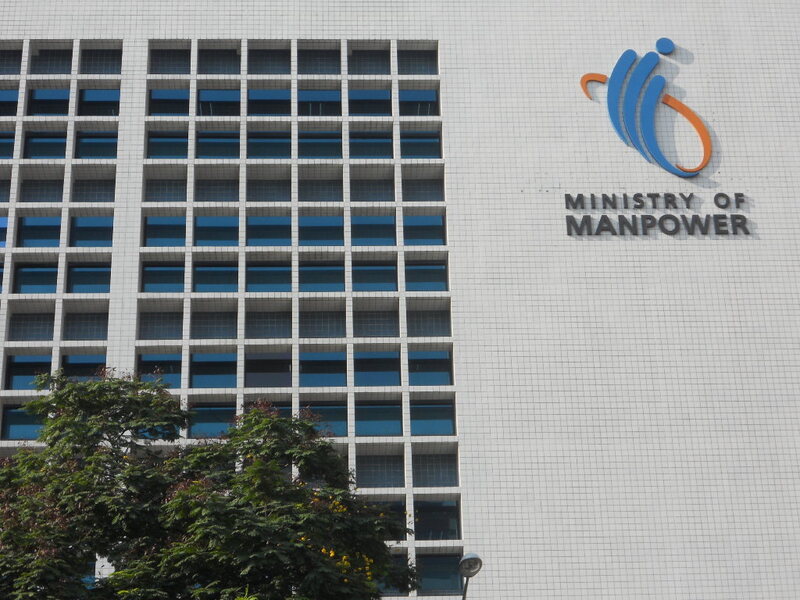
The Foreign Worker Levy does not pause automatically when a Work Permit or S Pass holder goes on no-pay leave, and this is one of the most common no-pay leave levy misunderstandings HR managers bring to us. Whether the leave is for maternity, an extended illness, a family emergency overseas, or simply a mutually agreed break, the levy bill from the Ministry of Manpower keeps arriving on the 1st of every month for as long as the pass itself stays valid and uncancelled. Employers who assume otherwise often discover the gap only when the levy statement lands.
This matters more than it used to. Since 1 September 2025, the S Pass levy sits at a flat SGD 650 per month across sectors and tiers, and Work Permit levy rates run into the hundreds of dollars depending on sector and Dependency Ratio Ceiling tier. Multiply that by even six or eight weeks of unpaid leave and the “invisible” cost of a no-pay leave arrangement can run into thousands of dollars nobody budgeted for.
This article sets out when the levy keeps running, the narrow list of situations where a waiver is available, how the foreign worker quota is affected, and what changes when the no-pay leave is for maternity, based entirely on MOM’s current published rules as at 15 September 2026.
No-Pay Leave Does Not Suspend the Work Pass
A Work Permit or S Pass is either valid or it is not; MOM has no intermediate “paused” status for a pass holder on leave, whether paid or unpaid. As long as the pass has not expired and has not been cancelled, it stays active, the worker still occupies a slot in the employer’s foreign worker quota, and the levy for that worker continues to be billed monthly. This is a separate question from whether the employer must keep paying salary during no-pay leave, which is a matter agreed between employer and employee subject to the Employment Act’s minimum protections. The levy is not linked to whether a salary was paid that month; it is linked to whether the pass exists and is active. See our Foreign Worker Levy Singapore 2026 guide for current rate tables by sector and tier.
Why Employers Assume Otherwise
The confusion usually comes from conflating “no work performed” with “no cost to the employer.” MOM’s position, set out on its Foreign worker levy page, treats the levy as a charge for holding a valid work pass, not a charge for hours worked. Cancelling the pass, not merely stopping pay, is what stops the levy.
The No-Pay Leave Levy Trap: Why the Bill Doesn’t Stop Automatically
There is no general “no-pay leave” category on MOM’s levy waiver list. The levy waiver eService recognises only a fixed set of qualifying situations, and ordinary unpaid leave taken for personal reasons is not one of them. Employers who cite “worker on no-pay leave” without one of the recognised grounds will have the application rejected. The two grounds most relevant to a leave scenario are:
| Qualifying reason | Cap | What is needed |
|---|---|---|
| Overseas leave (worker leaves Singapore for at least 7 consecutive days) | 60 calendar days per calendar year | No documents needed; apply after the worker returns and select “On overseas leave” |
| Hospitalisation leave issued by a Singapore-registered doctor at a local medical institution | 60 calendar days per calendar year | A medical certificate showing the worker’s name, FIN, MC number, leave period and doctor’s registration number |
Notice what is missing: leave taken in Singapore for reasons other than a locally-issued hospitalisation MC does not qualify. A worker who takes six weeks of no-pay leave in Singapore to care for a sick relative, recover at home without hospital admission, or take an agreed career break generates no waiver at all; the levy runs in full. Only genuine overseas leave of 7 or more consecutive days, or local hospitalisation, opens a waiver, and even then it is capped at 60 days a year and must be applied for within one year of the levy bill month.
The Waiver Is Prorated, Not a Full Refund
Even where a waiver applies, MOM calculates it daily for the qualifying period, not as a blanket exemption for the whole month. The formula: amount waived equals the monthly levy rate less the levy payable for the non-qualifying days in that month. A worker on 15 days of qualifying hospitalisation leave within a 30-day billing month, for example, sees the levy waived only for those 15 days at the applicable daily rate.
Maternity No-Pay Leave: A Common but Misunderstood Scenario
Maternity is where most no-pay leave levy queries originate, because pregnancy is rarely a “hospitalisation leave” in the narrow MC sense that qualifies for a waiver. Two separate legal questions get tangled together here: what maternity leave the worker is entitled to, and what happens to the levy while she is on it.
Employment Act Leave vs Government-Paid Maternity Leave
A Work Permit or S Pass holder whose child is not a Singapore citizen is not eligible for Government-Paid Maternity Leave under the Child Development Co-Savings Act. She is instead covered by Part 9 of the Employment Act 1968, entitling an eligible employee (at least 3 continuous months’ service before the birth) to 12 weeks of maternity leave. The first 8 weeks are paid by the employer if she meets the service and other conditions; the last 4 weeks are unpaid unless her contract says otherwise, as confirmed on MOM’s Maternity leave eligibility and entitlement page (last updated 24 August 2026). It is that final unpaid portion, or any additional no-pay leave agreed on top of the statutory 12 weeks, that counts as no-pay leave for levy purposes, and none of it qualifies as hospitalisation leave for a waiver.
Employers should also not overlook the notification duty: MOM requires employers to notify MOM if a Work Permit holder is pregnant, including the spouse’s particulars if she is married. For fathers on the equivalent side, our Shared Parental Leave guide for expectant dads covers how the newer shared leave scheme interacts with work pass status.
Does the Foreign Worker Quota Slot Free Up During No-Pay Leave?
No. The foreign employee quota (Dependency Ratio Ceiling) is calculated against the number of valid work passes an employer holds relative to its local headcount, not against who is actively working in a given week. A pass holder on no-pay leave still counts as an occupied quota slot for the full duration of the leave, because the pass has not been cancelled. Two consequences follow:
- The employer cannot use that “vacant” slot to bring in a replacement worker while the original pass holder is on leave, because the slot is not actually vacant.
- If local headcount drops in the same period, for example because a local employee’s pay falls below the Local Qualifying Salary, the quota math can tighten unexpectedly even though nothing changed on the foreign worker side. Our Local Qualifying Salary guide explains how the LQS, raised to SGD 1,800 from 1 July 2026, feeds into this calculation.
The only way to free the slot is to cancel the pass outright, which ends the employment relationship rather than merely pausing it.
A Worked Example: S Pass Holder on Six Weeks of No-Pay Medical Leave
Consider an S Pass holder in a services-sector role who takes six weeks of no-pay leave in Singapore following a non-hospitalised medical condition, treated as an outpatient with no hospitalisation MC issued.
| Item | Position during the 6-week no-pay leave |
|---|---|
| Salary | Not payable, by agreement, since it is genuine no-pay leave |
| S Pass validity | Remains active; not cancelled or suspended |
| S Pass levy (SGD 650/month) | Continues in full; no waiver ground exists for outpatient leave taken in Singapore |
| Foreign worker quota slot | Remains occupied for the full 6 weeks |
Had the worker instead been issued a Singapore-registered hospitalisation MC for that period, the employer could apply for a levy waiver once she returns to work, prorated for the qualifying days and capped at 60 days a year. The distinction between outpatient treatment and a documented hospitalisation MC is not a technicality; it is the difference between paying the full levy and recovering a meaningful part of it.
What HR Should Check Before Approving No-Pay Leave for a Work Pass Holder
- Confirm the leave category first. Overseas leave, locally-issued hospitalisation leave, maternity leave, or a discretionary personal arrangement. Only the first two carry any levy waiver potential.
- Budget the levy separately from salary. Treat it as a fixed cost that continues regardless of the no-pay arrangement.
- Do not let no-pay leave run indefinitely. Extended, open-ended no-pay leave can raise separate concerns about disguised retrenchment; our compliance checklist on extended no-pay leave sets out where that line sits.
- Keep supporting documents ready. If the leave is or could become hospitalisation leave, secure the MC with the worker’s name, FIN, dates, clinic name, MC number and the doctor’s registration details from day one.
- Time the waiver application correctly. Applications can only be lodged from the 1st of the month after the relevant levy bill, and must be filed within one year of that bill.
- Coordinate payroll and quota reporting together. Since the levy and quota sit outside CPF and payroll systems, reconcile them jointly rather than assuming payroll’s silence means the levy has stopped; our sister site’s Singapore Payroll and CPF guide is a useful cross-reference for employers handling both CPF-liable local staff and levy-liable pass holders.
Getting It Wrong: The Real Cost of a No-Pay Leave Levy Surprise
Employers who miscalculate this rarely face an enforcement penalty for the levy itself, since paying it is the default position. The real cost is a levy bill nobody budgeted for, a missed one-year window to claim a legitimate hospitalisation waiver, or a quota miscalculation that blocks a planned new hire because a “vacant-looking” slot is in fact still occupied.
Where the no-pay leave looks open-ended, or the employee may not return at all, employers should also plan for the pass cancellation process itself. Our guide on Work Permit renewal timing and documents is a useful companion for employers weighing whether to let a pass lapse naturally at renewal rather than cancel mid-leave, and our guide on terminating a foreign employee on medical grounds sets out the rules if a prolonged medical no-pay leave ends in termination rather than a return to work.
Getting Professional Support
No-pay leave levy questions sit exactly where MOM’s work pass rules, the Employment Act and an employer’s own payroll practices overlap, and getting any one wrong tends to surface as an unplanned cost rather than a clean compliance breach. As a MOM-licensed employment agency (Licence 19C9790), Little Big Employment Agency advises employers on structuring no-pay leave correctly, filing levy waiver applications within the eligible window, and keeping quota calculations accurate when a pass holder is off work. Where the same case also touches payroll, CPF administration or corporate secretarial matters, our sister firm Raffles Corporate Services supports the accounting and compliance side under the same group.
The Editorial Team, Little Big Employment Agency
Real people. Right here in Singapore.