
Insights for work and life.
Logistics and Last-Mile Delivery Sector Hiring Singapore 2026: Work Permit, S Pass and Quota Maths
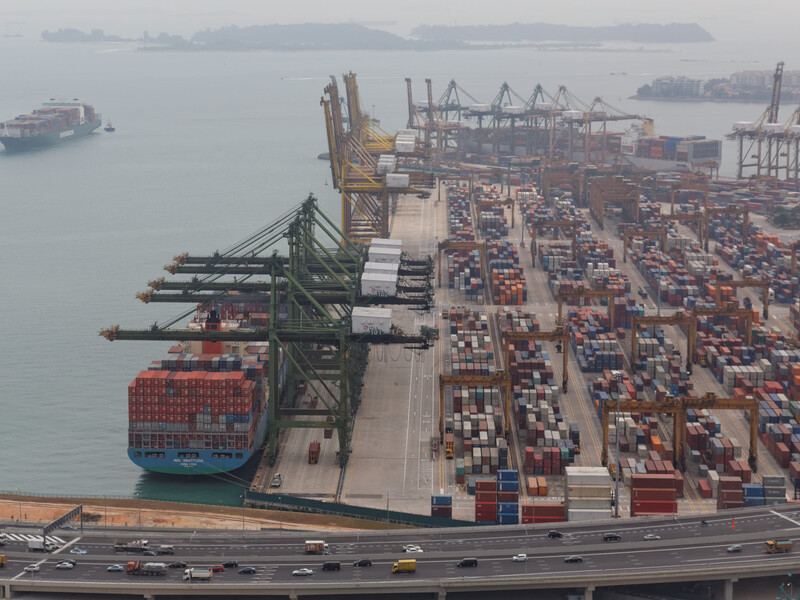
A warehouse in Tampines running three shifts a day and a last-mile delivery fleet dispatching from Defu Lane both answer to the same regulator on the same headcount question: how many foreign workers can this logistics operation legally employ. Logistics sector hiring Singapore 2026 turns on three moving parts for warehousing and last-mile delivery employers alike: the work pass an employer chooses, the Dependency Ratio Ceiling that caps the foreign share of the workforce, and the levy bill that follows every Work Permit and S Pass approval. Get the sequencing wrong and a signed job offer can end up stuck outside quota.
Unlike construction or manufacturing, logistics has no bespoke Work Permit sector category of its own. Warehousing, freight forwarding, courier despatch and last-mile delivery firms sit under the Ministry of Manpower’s broader Services sector, specifically its “transport, storage and communications services” limb, which carries a tighter foreign worker ceiling and a different levy ladder than construction and process.
This article sets out which passes apply, how the Services sector Dependency Ratio Ceiling and levy tiers work, where the Progressive Wage Model reaches into a logistics payroll through drivers and administrative staff, a worked quota and levy example, and whether the September 2026 Non-Traditional Source Occupation List expansion changes anything for this sector.
Which Work Passes Apply to Logistics and Last-Mile Delivery Roles
Employers hiring for logistics and last-mile delivery typically draw on three work pass categories, each pitched at a different skill and salary level.
Work Permit: warehouse assistants, pickers, packers and local delivery drivers
The Work Permit covers semi-skilled roles including warehouse assistants, forklift operators, pickers and packers, and drivers of goods vehicles engaged in local delivery. Per the Ministry of Manpower, a firm is assessed under the Services sector requirements if its registered principal business activity falls under transport, storage and communications services, or commerce, as at 14 September 2026. Source country eligibility for Services sector Work Permit holders is narrower than for construction, so check a candidate’s passport against the approved source list before making an offer.
S Pass: warehouse supervisors, logistics coordinators and fleet executives
Mid-tier roles, warehouse shift supervisors, logistics coordinators, fleet or dispatch executives, typically sit at S Pass level. Per the Ministry of Manpower’s S Pass eligibility criteria, the qualifying salary for most sectors is at least SGD 3,300 a month as at 14 September 2026, rising on an age-graduated scale, with the floor already set to increase to SGD 3,600 for new applications from 1 January 2027.
Employment Pass: operations managers and supply chain leads
Supervisory and managerial roles with genuine strategic scope, warehouse operations managers, regional supply chain leads, country logistics heads, fall under the Employment Pass. Per the Ministry of Manpower’s Employment Pass eligibility page, the minimum qualifying salary for non-financial sectors, which includes logistics, is SGD 5,600 a month as at 14 September 2026, age-graduated upward, with the candidate also needing to clear the points-based COMPASS framework. This floor rises to SGD 6,000 for new applications from 1 January 2027.
Employers deciding whether a logistics hire genuinely needs Employment Pass-level responsibility, or can be structured at S Pass level, may find it useful to compare against a different sector. The construction sector hiring guide for 2026 works through the same pass-selection logic for a sector that uses Man-Year Entitlement rather than a straight Dependency Ratio Ceiling.
Logistics Sector Hiring Singapore 2026: the Dependency Ratio Ceiling and Sub-Quotas
Because logistics sits within the Services sector for Work Permit purposes, it inherits that sector’s ceiling rather than the more generous ratios available to construction, marine shipyard or process employers. Per the Ministry of Manpower, the Services sector Dependency Ratio Ceiling is 35 percent of total workforce for combined Work Permit and S Pass holders, with a S Pass sub-quota capped at 10 percent, per the Services sector Work Permit rules and the S Pass levy and quota requirements page, both current as at 14 September 2026. In practice, at most roughly one in three people on a logistics payroll can be foreign Work Permit or S Pass holders, and no more than one in ten can be S Pass holders specifically.
The quota is anchored to the local workforce, not the foreign headcount. Per the Ministry of Manpower’s guidance on the Local Qualifying Salary, a local employee counts as one full headcount only if paid at least the Local Qualifying Salary, which rises from SGD 1,600 to SGD 1,800 a month with effect from 1 July 2026. A local paid between SGD 900 and just under SGD 1,800, or working part-time, counts at half a headcount, and locals paid below this do not count at all. For a logistics employer with part-time warehouse staff under the new SGD 1,800 floor, this can shrink the local headcount the quota is built on.
For a broader view of how the ceiling and levy structure compares across sectors, the foreign worker levy by sector guide lays out construction, manufacturing, marine shipyard, process and services side by side.
Levy Rates for Logistics and Warehouse Work Permit and S Pass Holders
Levy in the Services sector is tiered: the rate for each Work Permit holder depends on where that worker sits within the company’s foreign headcount, not a flat rate per head. Per the Ministry of Manpower’s page on what the foreign worker levy is, as at 14 September 2026 the Services sector Work Permit levy runs in three bands measured against the 35 percent ceiling:
- Tier 1 (first 10 percent of total workforce): SGD 450 a month Basic Skilled, SGD 300 Higher Skilled.
- Tier 2 (10 to 25 percent of total workforce): SGD 600 a month Basic Skilled, SGD 400 Higher Skilled.
- Tier 3 (25 to 35 percent of total workforce): SGD 800 a month Basic Skilled, SGD 600 Higher Skilled.
S Pass levy is simpler. Per the S Pass quota and levy requirements, it is a flat SGD 650 a month regardless of tier, so employers should compare this against the Work Permit tier cost before, not after, applying.
Worked Example: Quota and Levy Maths for a Mid-Sized Logistics SME
Consider a warehousing and last-mile delivery SME with this local workforce, reflecting the Local Qualifying Salary from 1 July 2026.
- 15 full-time local employees paid at least SGD 1,800 a month, each 1 headcount, giving 15 points.
- 10 part-time or lower-paid local staff earning SGD 900 to just under SGD 1,800 a month, each 0.5 headcount, giving 5 points.
Total local quota headcount is 20. Maximum combined foreign headcount equals local headcount multiplied by DRC divided by (1 minus DRC): 20 x 0.35 / 0.65 = 10.77, rounded down to 10. Within that 10, the S Pass sub-quota of 10 percent of total workforce limits S Pass holders to 20 x 0.10 / 0.90 = 2.22, rounded down to 2. The remaining 8 slots must be Work Permit holders, or left vacant.
Total workforce once fully staffed is 30 (20 locals plus 10 foreign workers). Levy tiers are measured against this total of 30: Tier 1 covers the first 3 foreign workers, Tier 2 the next 4, Tier 3 the final 3.
| Tier | Foreign headcount | Pass type assumed | Monthly rate | Subtotal |
|---|---|---|---|---|
| Tier 1 (0-10%) | 3 | 2 S Pass + 1 Work Permit (Basic Skilled) | SGD 650 x 2, SGD 450 x 1 | SGD 1,750 |
| Tier 2 (10-25%) | 4 | 4 Work Permit (Basic Skilled) | SGD 600 x 4 | SGD 2,400 |
| Tier 3 (25-35%) | 3 | 3 Work Permit (Basic Skilled) | SGD 800 x 3 | SGD 2,400 |
| Total monthly levy | SGD 6,550 | |||
That SGD 6,550 a month sits on top of CPF and the Skills Development Levy payable on every employee’s wages. The RCS guide to Skills Development Levy rates and employer obligations is worth reading alongside this maths, since SDL is frequently missed in first-pass hiring cost estimates.
Progressive Wage Model: Where It Reaches Into Logistics Payrolls
Logistics and warehousing have no sector-specific Progressive Wage Model schedule, unlike cleaning, security, landscaping and food services. However, Occupational Progressive Wages reach directly into a logistics or last-mile delivery payroll economy-wide, for any firm that hires foreign workers.
Per the Ministry of Manpower’s page on Occupational Progressive Wages for administrators and drivers, local drivers, central to any last-mile delivery operation, and local administrative staff at firms employing foreign workers must be paid at least the applicable Occupational Progressive Wage before that firm can apply for or renew Work Permits or S Passes. The wage schedule was updated from 1 July 2026, with a further step-up due 1 July 2027. There is no grace period, compliant local OPW pay is a precondition of the foreign worker pass.
Employers also running food delivery or F&B-adjacent operations should check the food services Progressive Wage Model too. The Progressive Wage Model and work pass compliance guide sets out how PWM non-compliance directly blocks pass applications and renewals, the mechanism that makes this a hiring issue and not just a payroll one.
September 2026 NTS-OL Expansion: Does It Touch Logistics-Adjacent Roles
The Ministry of Manpower expanded the Non-Traditional Source Occupation List with effect from 1 September 2026, adding eight occupations spanning food services, social services and air transport, opening a Work Permit route to these roles from source countries including Bangladesh, India, Myanmar, the Philippines, Sri Lanka and Thailand that previously had no pathway into them. MOM’s own parliamentary written answer on the impact of the Non-Traditional Source Occupation List expansion confirms the scope of this round.
For logistics and last-mile delivery employers, the direct answer is no. The eight new occupations sit in food services, childcare-related social services and air transport (cabin crew), none of which map onto core logistics or warehousing functions, so warehouse assistants, forklift operators, pickers, packers and local delivery drivers remain outside this list. A logistics employer running an adjacent food services or air cargo arm should check whether those roles are covered, but the core warehouse and last-mile delivery workforce still draws on the source countries and occupation rules that applied before 1 September 2026. Employers wanting the full detail should read the dedicated NTS-OL September 2026 expansion breakdown, since misreading this expansion as covering logistics could lead an employer to attempt a Work Permit application from a source country not actually approved for their sector.
Sequencing the Hiring Plan and Getting Compliance Right From the Start
A practical sequence for 2026 headcount growth: map every open role to the correct pass tier using the tests above, rather than defaulting to whichever pass was used last time. Recompute the local quota headcount using the Local Qualifying Salary from 1 July 2026, since part-time and lower-paid staff may count for less than expected. Then confirm every local driver and administrative employee is paid at or above the applicable Occupational Progressive Wage before submitting any new application, since a compliance gap here blocks the application outright rather than merely triggering a fine later. Getting a last-mile delivery work permit Singapore application right starts with the same warehouse work permit quota Singapore maths worked through above, whether the hire in question is an S Pass logistics Singapore 2026 application or a check on NTS-OL logistics Singapore eligibility.
Employers expanding a logistics footprint in Singapore for the first time may find a single master checklist more useful than tracking each deadline separately. The HR manager’s MOM compliance calendar for 2026 consolidates the recurring dates, levy cycles, PWM step-ups and pass renewal windows. It is also worth comparing the full cost of an Employment Pass hire against the S Pass and Work Permit costs modelled above, since the true cost of hiring a foreign professional in Singapore guide breaks down salary, levy and COMPASS-related overheads that a quota calculation alone will not capture.
Quota and levy maths is only half the picture; the other half is getting work pass applications right the first time, and structuring payroll, CPF and statutory filings correctly from day one. For work pass applications, renewals and quota planning, Singapore Employment Agency supports employers through the full Work Permit, S Pass and Employment Pass process, from eligibility assessment through to submission. For the payroll, accounting and incorporation side alongside any logistics hiring plan, particularly SMEs setting up or restructuring a Singapore entity for warehousing or delivery, Raffles Corporate Services provides payroll, accounting and incorporation support built around Singapore’s compliance calendar.
The Editorial Team, Little Big Employment Agency
Real people. Right here in Singapore.