
Insights for work and life.
Local school placement for foreign children , Timeline and processing benchmarks
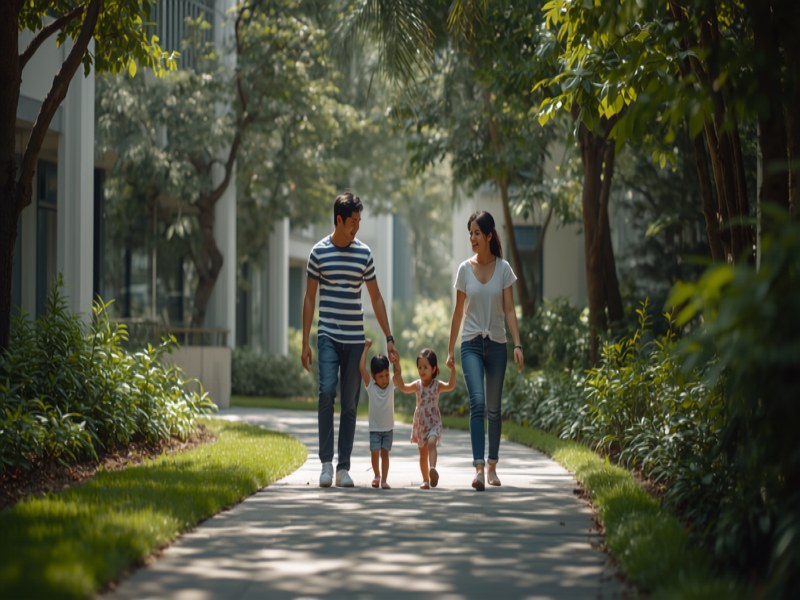
Local school placement for foreign children in Singapore runs through the Ministry of Education, mainly via the Admissions Exercise for International Students (AEIS) or the Supplementary intake. Foreign children compete for available vacancies after citizens and permanent residents, so timing and preparation are decisive.
Raffles Corporate Services works with a panel of corporate and employment law firms; this article is general information, not legal advice.
How local school placement for foreign children works
Foreign children seeking a place in a Singapore government or government-aided school generally sit the Admissions Exercise for International Students (AEIS), a centralised test of English and Mathematics. Those who pass are offered a school place based on performance, availability of vacancies and home address.
Under the Compulsory Education Act 2000, primary education is compulsory for Singapore citizens, and foreign children are admitted only where vacancies remain after citizens and permanent residents are placed. This is why placement is competitive and cannot be guaranteed at a specific school.
Who is eligible and the pathways available
AEIS is open to international students aged broadly 7 to 16 seeking entry to Primary 2 to 5 and Secondary 1 to 3. Children who narrowly miss the main AEIS may sit the Supplementary AEIS (S-AEIS) held early the following year. Pre-schoolers and those entering Primary 1 follow separate registration channels rather than AEIS.
Families weighing local versus international schooling should factor in language: the local system requires a Mother Tongue Language, which can be demanding for children arriving without prior exposure. Households managing wider relocation and corporate matters may find our reference on Property Tax for Companies in Singapore (2026): Commercial Property Guide useful alongside schooling decisions.
Costs and fee benchmarks
Government-school fees for foreign students are set as monthly rates and are far lower than international-school tuition, though higher than the rates for citizens and permanent residents. International students at primary level typically pay several hundred Singapore dollars per month, rising at secondary level, plus miscellaneous fees.
Add AEIS registration fees, textbooks, uniforms and enrichment. Preparation costs are often the larger line item, as many families engage tuition to build English and Mathematics to the AEIS standard, which can run S$1,000 to S$5,000 depending on intensity.
Timeline and processing benchmarks
The main AEIS is usually held around September to October, with results and posting to schools in December for a January start. The Supplementary S-AEIS typically runs in February to March for a placement later in the year. Registration windows open several weeks before each test.
Because the calendar is fixed, families should plan backwards from the test date, allowing several months of English and Mathematics preparation. Sequence placement with the child’s Student’s Pass, and read our companion guide on Subsidiary of foreign parent , director and capital pitfalls , Timeline and processing benchmarks for the corporate-and-relocation context and the practical schooling walkthrough in the Local school placement for foreign children , Costs and fees breakdown.
Step-by-step process
Confirm the child’s eligible level and target intake. Register for AEIS within the published window. Prepare English and Mathematics to the required standard. Sit the test. Receive results and, if successful, the posting to a school with vacancies. Complete enrolment and apply for the Student’s Pass. Prepare for the Mother Tongue Language requirement before term begins.
Keep an international-school application as a fallback, because AEIS placement depends on vacancies and is never assured at a specific school. International schools are registered under the Private Education Act 2009, which gives that route its own admission timeline.
Common mistakes
The most common error is underestimating the AEIS English and Mathematics standard and preparing too late. Another is assuming a place at a preferred or nearby school; postings depend on vacancies. A third is overlooking the Mother Tongue Language burden for a child with no prior exposure.
Confirm current test dates, fees and eligibility directly with the Ministry of Education at moe.gov.sg and, for younger children, the early-childhood regulator at ecda.gov.sg.
FAQs
How do foreign children enter local Singapore schools?
Most sit the Admissions Exercise for International Students (AEIS), a centralised English and Mathematics test. Successful candidates are posted to schools with available vacancies.
When is AEIS held?
The main AEIS is usually held around September to October for a January start, with a Supplementary S-AEIS around February to March.
Is placement at a specific school guaranteed?
No. Foreign children are placed only where vacancies remain after citizens and permanent residents, so a specific school cannot be guaranteed.
Do local schools cost less than international schools?
Yes. Government-school monthly fees for foreign students are far lower than international-school tuition, though higher than the rates for citizens and permanent residents.
Related guides
- Property Tax for Companies in Singapore (2026): Commercial Property Guide
- Subsidiary of foreign parent , director and capital pitfalls , Timeline and processing benchmarks
- Local school placement for foreign children , Costs and fees breakdown
Need help with this? Call, SMS or WhatsApp +65 8501 7133, or email [email protected]. Little Big Employment Agency (EA Licence 19C9790) works with a panel of corporate and employment law firms; this article is general information, not legal advice.
Real people. Right here in Singapore.