
Insights for work and life.
Local school placement for foreign children , Step-by-step walkthrough
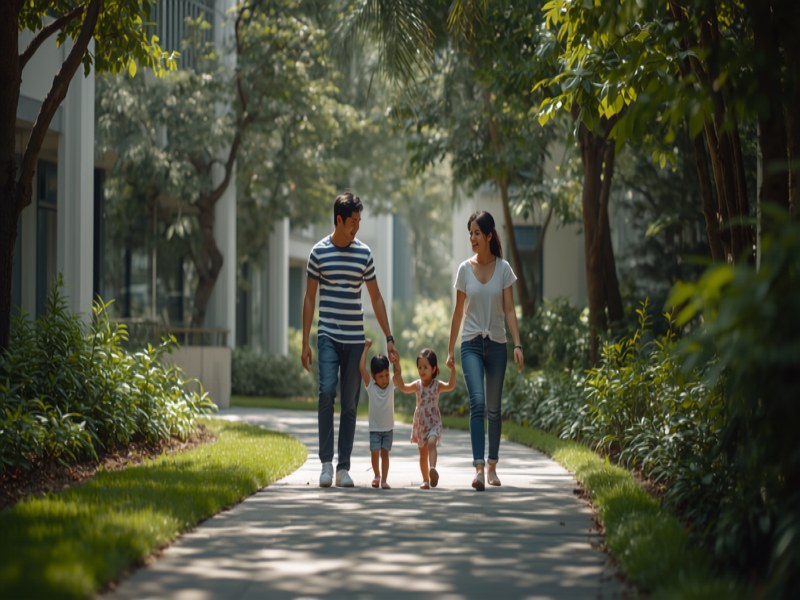
Local school placement for foreign children in Singapore is possible but competitive, because Ministry of Education places are allocated first to citizens, then permanent residents, then international students. Foreigners usually enter through the Admissions Exercise for International Students (AEIS) or at Primary 1 via limited vacancies.
What local school placement involves , local school placement for foreign children
Singapore’s national schools, run by the Ministry of Education (MOE), offer high-quality, affordable education, which is why some foreign families seek a place rather than paying international-school fees. Access is governed by a clear priority order: Singapore citizens first, then permanent residents, and finally international students for any remaining vacancies.
For more on this on our site, see Local school placement for foreign children , Complete 2026 guide.
Who can apply and the AEIS route
For most foreign children seeking entry to Primary 2–5 or Secondary 1–3, the route is the Admissions Exercise for International Students (AEIS), a centralised test of English and mathematics held annually, with a supplementary exercise (S-AEIS) early in the year. Passing AEIS leads to placement in a school with vacancies, though families do not choose the specific school. Primary 1 entry follows the standard registration exercise, where international students rank last in priority.
Always confirm the current rules with the authoritative source: the Ministry of Education, ECDA, the Ministry of Health.
Costs and fees
International students pay higher monthly school fees than citizens and PRs, plus a compulsory miscellaneous fee. As a guide, international-student monthly fees at MOE schools run from roughly S$900 at primary level to over S$2,000 at senior secondary, materially cheaper than international schools but rising over time. There is also an AEIS registration fee of a few hundred dollars per attempt.
Step-by-step walkthrough
The sequence is: (1) confirm eligibility and the child’s level; (2) register for AEIS within the published window; (3) sit the English and mathematics test; (4) receive a posting offer if successful, based on vacancies and home address; and (5) accept and complete enrolment. Because outcomes depend on vacancies, families should keep an international-school option open as a fallback.
Common mistakes and gotchas
Families underestimate the English standard required for AEIS, miss the narrow registration window, or assume they can pick a preferred school. Another error is leaving no fallback, since a child who does not secure a place may have no schooling option for the term. Fees also rise faster for international students than many families expect.
Preparing a child for AEIS
The AEIS test is demanding, particularly in English, and many foreign children benefit from focused preparation in the months before they sit it. Familiarity with the Singapore mathematics syllabus, which can be ahead of some overseas systems at the same age, also helps. Because a pass leads to placement based on vacancies rather than choice, families should be open about location and prepared to accept a school that may not be their first preference.
Weighing local against international schooling
Local placement offers lower fees and immersion in Singapore’s well-regarded system, but it comes with less curriculum flexibility and a competitive, examination-focused environment. International schooling offers a portable curriculum and a smoother transition for globally mobile families, at a much higher cost. The right answer depends on how long the family will stay, the child’s adaptability, and where they will study after Singapore. Keeping both options open until AEIS results are known is the prudent course.
Related guides
- Foreign Tax Credit (FTC), pooling and limitations , Step-by-step walkthrough
- Subsidiary of foreign parent , director and capital pitfalls , Complete 2026 guide
FAQs
Can foreign children attend Singapore public schools?
Yes, but only after citizens and permanent residents, usually via the AEIS test for remaining vacancies.
What is AEIS?
The Admissions Exercise for International Students, an annual centralised English and mathematics test used to place foreign children in MOE schools.
How much are MOE fees for foreigners?
Roughly S$900 per month at primary level up to S$2,000+ at senior secondary, plus a miscellaneous fee, far below international-school tuition.
Can we choose the school?
No. Placement after AEIS depends on vacancies and home address, not parental preference.
Need help with this? Call, SMS or WhatsApp +65 8501 7133, or email [email protected]. Little Big Employment Agency (EA Licence 19C9790) works with a panel of corporate and employment law firms; this article is general information, not legal advice.
Real people. Right here in Singapore.