
Insights for work and life.
Hiring from Malaysia in 2026: Navigating the New Commuting Arrangements
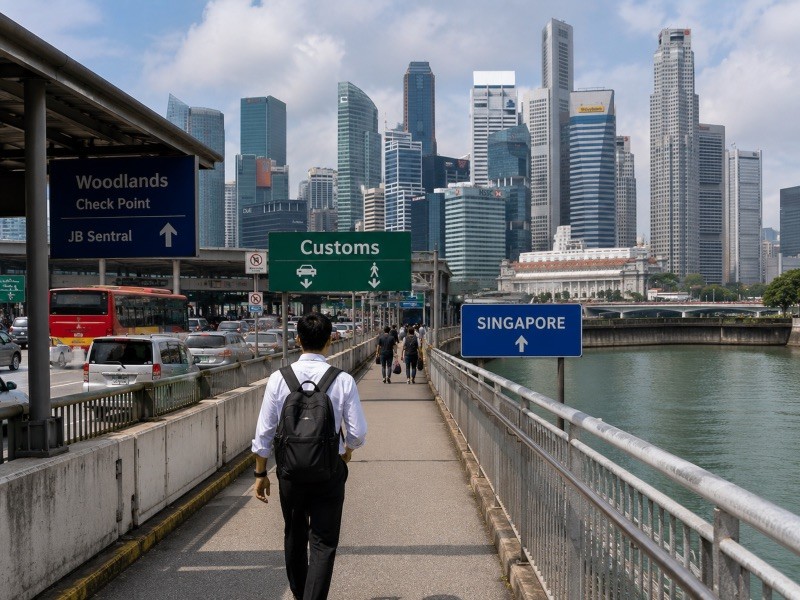
Introduction
Many Singapore employers are exploring hiring talent who live in Malaysia and commute to Singapore for work in 2026. Changing commuting arrangements raise practical and compliance questions for payroll, taxation, social security and work pass eligibility.
This article, “Hiring from Malaysia in 2026: Navigating the New Commuting Arrangements”, explains the main considerations employers should know when engaging Malaysian-based employees who will cross the border regularly to work in Singapore.
Who this applies to
This guidance is relevant to:
- Singapore employers recruiting or retaining employees who reside in Malaysia and commute daily or frequently.
- Human resources and payroll teams managing cross-border attendance, CPF, SDL and tax obligations.
- Employment agencies and outsourced HR service providers advising on work passes such as Employment Pass, S Pass and Work Permits.
Key rules and requirements in Singapore
Employers must balance immigration rules, employment law, tax and social security. Key Singapore statutes and agencies include the Employment of Foreign Manpower Act, Manpower Act, Employment Act, CPF Act, IRAS, MOM, ACRA, PDPA and the Employment Agencies Act.
- Work passes and entry: Cross-border commuters may require short-term passes or full work passes depending on duties and duration. Employment Pass, S Pass and Work Permit criteria remain governed by MOM. Frequent cross-border attendance does not automatically exempt a person from requiring a work pass if their substantive work is in Singapore.
- Immigration clearance: Employers should ensure staff have the correct immigration status for re-entry, and comply with any border health or security requirements at the checkpoints.
- Taxation (IRAS): Tax residency is determined by physical presence in Singapore. Employers should track days worked in Singapore for payroll withholding and determine whether the employee is a tax resident. Cross-border commuters may create split-tax residence situations and require double taxation considerations in line with IRAS guidance and relevant tax treaties.
- CPF and social security: In general, CPF Act obligations apply to employees employed under a contract of service who perform work in Singapore. Where the employment is structured so the employee performs duties physically in Singapore, CPF contributions may be required even if the employee resides in Malaysia. Employers should check CPF guidelines and seek tailored advice for borderline cases.
- SDL and staff benefits: Employers must consider Skills Development Levy (SDL) obligations, workplace injury cover (Work Injury Compensation Act) and statutory benefits under the Employment Act where applicable.
- Data protection and privacy: PDPA applies to employer handling of personal data. Cross-border transfers of employee data must meet PDPA standards.
Step-by-step process
Below is a practical sequence employers can follow to remain compliant and operationally effective when hiring Malaysian commuters.
- 1. Determine the employment location: Clarify where duties will be performed and the expected pattern of commuting (daily, weekly, or periodic). This affects work pass choice, CPF and tax treatment.
- 2. Check MOM work pass requirements: Assess whether the role requires an Employment Pass, S Pass or a short-term arrangement. Apply through MOM with accurate job scope and salary details.
- 3. Confirm immigration and entry requirements: Ensure the employee holds the necessary passports, permits and is aware of checkpoint procedures.
- 4. Assess payroll, tax and CPF obligations: Liaise with payroll to account for IRAS withholding, CPF contributions (if applicable), SDL and personal income tax filing obligations. Use IRAS myTax Portal and ACRA BizFile+ where necessary for corporate filings.
- 5. Put a clear employment contract in place: The contract should specify place of work, commute expectations, working hours, benefits, CPF treatment and termination provisions. Ensure compliance with the Employment Act where applicable.
- 6. Implement workplace policies: Address occupational safety (Workplace Safety and Health Act), incident reporting, PDPA consent for data handling, and POHA or building access rules for cross-border staff.
- 7. Monitor and review: Track actual days worked in Singapore, maintain accurate records for IRAS and MOM, and review arrangements annually or when circumstances change.
Common mistakes to avoid
- Assuming commuting negates the need for a Singapore work pass , substantive work performed in Singapore often requires a pass.
- Failing to track days physically worked in Singapore, which can lead to incorrect tax residency and CPF treatment.
- Not updating employment contracts to reflect cross-border arrangements and reimbursement of commuting costs or allowances.
- Neglecting PDPA obligations when transferring employee data between Malaysia and Singapore.
- Overlooking workplace injury coverage and local occupational safety obligations when employees work on-site in Singapore.
Practical examples
Example 1 , Daily commuter on fixed salary:
A Singapore employer hires a Malaysian resident to work in an office in Jurong and commute daily. The employee spends five working days per week in Singapore. The role requires an S Pass due to salary and qualifications. Employer must apply for the S Pass, make CPF contributions if guidance indicates the employee is subject to CPF (seek clarification), withhold tax as appropriate and ensure workplace safety coverage.
Example 2 , Hybrid worker, majority remote from Malaysia:
If the employee performs most work remotely from Malaysia and only attends Singapore for client meetings occasionally, the employer should document the arrangement, consider whether short-term work permits or business visitor arrangements suffice for occasional visits, and confirm tax residence with IRAS.
How an experienced consultant can help
Engaging a specialist helps you interpret MOM, IRAS and CPF guidance for your specific facts. Little Big Employment Agency can assist with work pass applications, drafting employment contracts, payroll and compliance checks, and advising on record-keeping for cross-border workers.
Practical support typically includes:
- Assessing whether Employment Pass, S Pass or other permissions are required.
- Preparing and submitting MOM applications and supporting documents.
- Advising on payroll set-up, CPF considerations, SDL and tax withholding.
- Drafting policies for PDPA-compliant data transfers and workplace safety protocols.
If you would like to find out more about how Little Big Employment Agency can assist with your employment and immigration requirements, please get in touch with the team at [email protected].
Yours sincerely,
The editorial team at Little Big Employment Agency
Frequently Asked Questions
Do Malaysian commuters automatically become Singapore tax residents?
No. Tax residency is based on physical presence in Singapore. IRAS counts days spent in Singapore to determine residency status. Employers should maintain accurate records of days worked in Singapore and consult IRAS guidance or a tax adviser for specific scenarios.
When are CPF contributions required for cross-border employees?
CPF obligations depend on whether the employment is considered to be exercised in Singapore and on the employee’s employment relationship. In many cross-border commuting cases, CPF contributions will be required if work is substantially performed in Singapore. Employers should seek specific guidance from CPF Board and a professional adviser.
Can commuters use business visitor or short-term passes instead of work passes?
Occasional business visits for meetings may be permitted under short-term visitor rules, but regular substantive work in Singapore usually requires an appropriate work pass such as an Employment Pass, S Pass or Work Permit. Confirm with MOM before relying on visitor status.
Key takeaways
- Hiring Malaysian-based commuters requires careful assessment of work pass, tax, CPF and payroll obligations under Singapore law.
- Track days worked in Singapore for IRAS and MOM compliance; document the employment arrangement clearly.
- Do not assume commuting removes obligation for CPF, SDL or workplace insurance, seek guidance.
- Use PDPA-compliant procedures when transferring employee data across borders.
- Little Big Employment Agency can provide advisory support, application help and compliance checks tailored to your situation.
- Requirements may change, so always check the latest guidance from MOM, or consult a professional adviser.
Requirements may change, so always check the latest guidance from MOM, or consult a professional adviser.
Disclaimer: This does not constitute legal advice. If you require legal advice, please contact a lawyer.
Real people. Right here in Singapore.