
Insights for work and life.
Cost of living for expat families , Complete 2026 guide
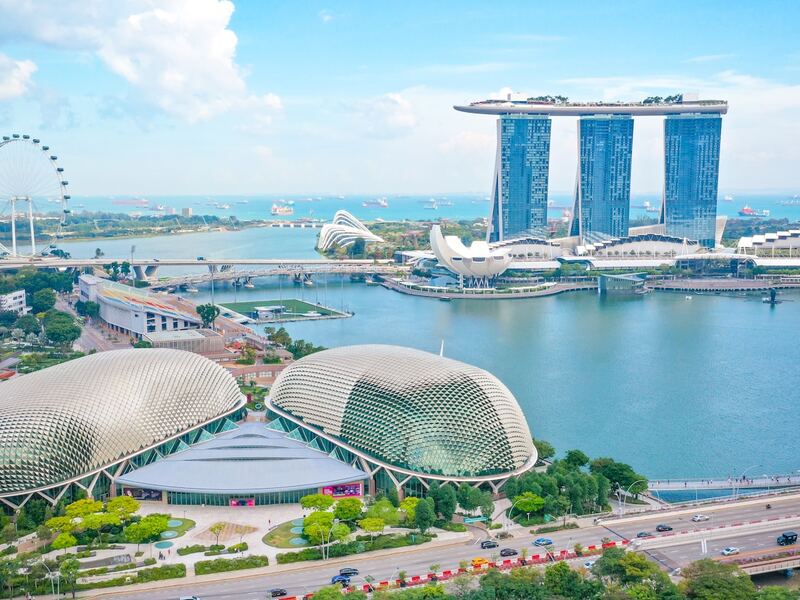
The cost of living for expat families in Singapore in 2026 typically runs S$12,000 to S$25,000 a month for a family of four , driven by rent of S$4,500 to S$12,000, international school fees of S$2,500 to S$5,000 per child, and car ownership that can exceed S$2,500 a month. This guide breaks down every major line item.
Housing , the biggest line
Rental is the dominant cost. As at 2026, realistic monthly rents: a 3-bedroom condominium in the city fringe (Districts 9–11 periphery, East Coast, Holland) runs S$5,500–S$9,000; central prime locations S$8,000–S$15,000; suburban condos (Woodlands, Pasir Ris, Jurong) S$3,800–S$5,500; landed houses S$8,000–S$20,000+. Add a two-month security deposit, stamp duty on the lease (0.4% of total rent for leases up to 4 years), and agent commission (typically half a month per year of lease where payable by tenant). Utilities for a condo family average S$250–S$450 a month with air-conditioning; broadband around S$40–S$60.
Education , the expat-specific premium
International school fees are the second-biggest item: S$25,000–S$50,000 a year per child at the major international schools, plus application fees (S$500–S$4,000) and one-off facility levies at some schools. Local government schools are dramatically cheaper (international students pay roughly S$550–S$900 a month in school fees) but places for foreigners are limited and admission is via the AEIS exam. Preschool for younger children runs S$1,200–S$2,800 a month full-day for foreigners, since subsidies are citizen-only , see our companion guides on moving to Singapore country-pair playbooks for how families from different home systems typically choose.
Transport , the car decision
Singapore’s car costs are the world’s highest: Certificate of Entitlement (COE) premiums have ranged roughly S$95,000–S$120,000 for larger cars in recent cycles, pushing a new family SUV to S$200,000–S$280,000 all-in. Amortised with insurance, road tax, parking (S$150–S$400 a month) and petrol, a car commonly costs S$2,500–S$4,000 a month. The alternative works well: public transport caps around S$130 a month per adult, and ride-hailing for a car-free family typically S$600–S$1,200 a month. Many expat families simply skip the car.
Healthcare, insurance and helpers
- Health insurance: expat family plans (private hospitals, outpatient) commonly S$8,000–S$20,000 a year for a family of four; employer plans offset much of this.
- GP visit: S$50–S$120 private; specialist consultations S$150–S$350; childbirth at private hospitals S$12,000–S$25,000.
- Domestic helper: salary S$650–S$900 a month plus the foreign domestic worker levy of S$300 (concessionary S$60 with young children), insurance, and the requirement under Section 5(1) of the Employment of Foreign Manpower Act 1990 for a valid work permit , total cost typically S$1,100–S$1,500 a month.
Cost of living for expat families , the monthly totals
Groceries for a family of four: S$1,200–S$2,000 a month (imported brands push this up sharply). Hawker meals cost S$5–S$8; mid-range restaurants S$30–S$60 a head; international dining easily S$100+. Putting it together, three realistic profiles:
- Lean (suburban condo, local school/one preschooler, no car): ~S$10,000–S$13,000 a month.
- Typical (city-fringe 3BR, two international school children, no car, helper): ~S$17,000–S$22,000.
- Premium (prime district, two children at top-tier schools, car, helper): ~S$28,000–S$40,000.
The tax offset , why net often beats gross comparisons
Singapore’s personal tax materially softens the headline costs. Tax residents pay progressive rates from 0% to 24%, with no capital gains tax; a S$300,000 employment income bears roughly S$40,000 of tax , far below most home jurisdictions. Section 10(1) of the Income Tax Act 1947 charges tax on income accrued in or derived from Singapore, and most foreign-sourced personal investment income received by resident individuals is exempt. Note there is no CPF obligation for foreigners (and no employer CPF top-up unless contractual), which lifts take-home pay relative to citizens but removes forced savings. Executives whose packages are structured through regional employers can compare the corporate side in the Regional HQ and IHQ tax incentives guide.
Common budgeting mistakes
- Negotiating salary on home-country cost assumptions , school fees and rent reset the baseline.
- Forgetting one-off landing costs: deposits, stamp duty, school levies and furnishing, easily S$30,000–S$60,000.
- Underestimating helper and insurance costs that home-country families never carried.
- Locking a two-year lease before testing commute and school-run logistics.
- Skipping the bank setup step , fee-free multi-currency arrangements save real money; see Singapore bank account opening , DBS, OCBC, UOB, Wise, Aspire.
Authoritative references: the Ministry of Education for school fee schedules and AEIS, the Ministry of Health for healthcare cost benchmarks, and the Land Transport Authority for COE and vehicle cost data.
FAQs
Is Singapore more expensive than Hong Kong or London for families?
Rent is comparable to Hong Kong and above London; cars are far dearer; but lower taxes, safety and short commutes mean net financial position often favours Singapore for school-age families.
How much should a family of four earn to live comfortably?
With two children in international school and no employer housing/education allowances, a household income of S$25,000–S$30,000 a month supports a typical expat lifestyle without strain.
Do employers still pay expat packages?
Full expat packages are rarer; most 2026 hires are local-plus , local salary with partial schooling or housing allowances , so negotiate the two big-ticket items explicitly.
Can we live well without a car?
Yes. MRT coverage, buses and ride-hailing make car-free living the default for most expat families outside landed-housing estates.
What’s the cheapest big lever?
School choice. Moving one child from a top-tier to a mid-tier international school saves S$15,000–S$20,000 a year; local school places, where attainable, save more.
Need help with this? Call, SMS or WhatsApp +65 8501 7133, or email [email protected]. Little Big Employment Agency (EA Licence 19C9790) works with a panel of corporate and employment law firms; this article is general information, not legal advice.
Real people. Right here in Singapore.