
Insights for work and life.
US persons in Singapore , FATCA, PFIC, FBAR , Complete 2026 guide
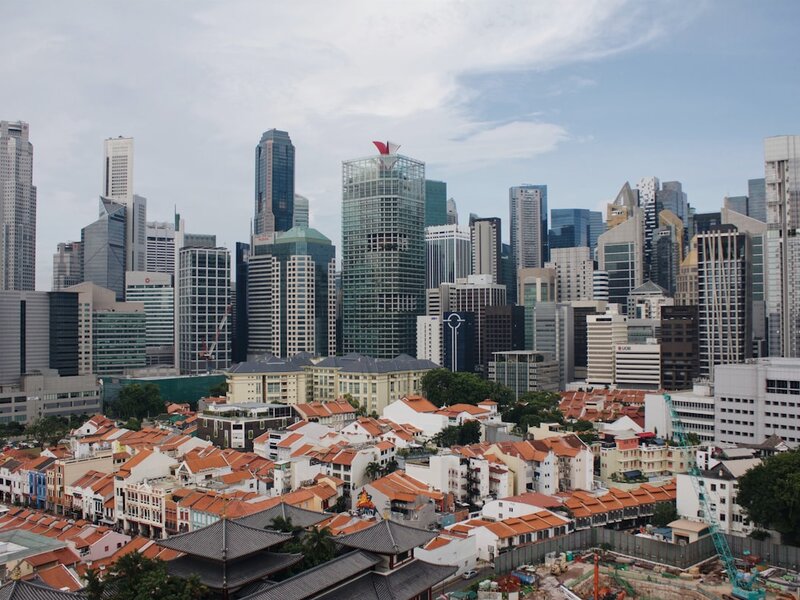
US persons in Singapore face United States tax and reporting obligations that continue regardless of where they live, layered on top of Singapore tax. This 2026 guide explains the three obligations that catch US persons in Singapore most often: FATCA reporting, the PFIC rules on foreign funds, and the FBAR foreign account report.
Little Big Employment Agency (EA Licence 19C9790) works with a panel of corporate and employment law firms; this article is general information, not legal advice.
Why US persons in Singapore have dual obligations
The United States taxes its citizens and green card holders on worldwide income regardless of residence. A US person living in Singapore therefore files both a Singapore return on Singapore-sourced income and a US return on worldwide income. Double taxation is mitigated through the foreign earned income exclusion and foreign tax credits, but the reporting obligations are extensive and the penalties for missing them are severe.
FATCA: account and asset reporting
The Foreign Account Tax Compliance Act requires US persons to report specified foreign financial assets above certain thresholds on Form 8938 with their US tax return. Singapore financial institutions also report account information on US persons to the United States under the intergovernmental framework, so the obligation cuts both ways: the individual reports, and the bank reports. Singapore implements its side of FATCA through reporting administered locally.
PFIC: the trap in foreign funds
The Passive Foreign Investment Company rules are the single biggest trap for US persons in Singapore. Most non-US pooled investments, including Singapore and other foreign unit trusts and many ETFs, are PFICs for US tax purposes. PFIC holdings attract punitive default taxation and complex annual reporting on Form 8621. Many US persons inadvertently create PFIC exposure by buying locally marketed funds, which is why investment selection should be reviewed before purchase.
FBAR: the foreign bank account report
The FBAR (FinCEN Form 114) requires US persons to report foreign financial accounts where the aggregate value exceeds US$10,000 at any point in the year. It is filed separately from the tax return with FinCEN, not the IRS, and the threshold is an aggregate across all accounts, so even modest balances spread across several Singapore accounts can trigger it.
Cost, thresholds and the numbers that matter
- FBAR threshold: aggregate foreign account value over US$10,000 at any time in the year.
- Form 8938 (FATCA) thresholds: higher than the FBAR and vary by filing status and residence abroad.
- Foreign earned income exclusion: an annually indexed amount of foreign earned income may be excluded, subject to qualifying tests.
- Singapore residency: establish first using the 183-day rule, set out in our guide to the 183-day tax residency rule.
Step-by-step: getting compliant as a US person
- Confirm US person status (citizen, green card holder or substantial-presence resident).
- Establish Singapore tax residency and Singapore filing obligations.
- Inventory all foreign financial accounts and test the FBAR aggregate threshold.
- Identify any PFIC holdings and assess the reporting and election options before year-end.
- Coordinate the US return, Form 8938, Form 8621 and the FBAR with foreign tax credits and the exclusion.
- Consider engaging a US-qualified tax adviser, since these filings are outside the scope of Singapore tax practice.
Statutory and treaty context
On the Singapore side, taxation rests on the Income Tax Act 1947, with section 10 of the Income Tax Act 1947 establishing the charge on Singapore income and section 13 of the Income Tax Act 1947 providing exemptions for foreign-sourced income of individuals. The US obligations arise under the US Internal Revenue Code and the Bank Secrecy Act; Singapore and the United States do not have a comprehensive double tax treaty, so relief depends on the US foreign tax credit and exclusion rather than treaty relief. High-net-worth families should consider structuring carefully, including our overview of Singapore trust structures for high-net-worth families.
Authoritative sources
See IRAS guidance at iras.gov.sg for the Singapore position, the Monetary Authority of Singapore on financial institutions’ reporting, and cpf.gov.sg for CPF treatment. US obligations should be confirmed with a US-qualified adviser.
Frequently asked questions
Do US citizens in Singapore still file US tax returns?
Yes. The United States taxes citizens and green card holders on worldwide income regardless of where they live, with relief via the foreign tax credit and foreign earned income exclusion.
Why are Singapore unit trusts a problem for US persons?
Most foreign pooled investments are PFICs for US tax purposes, attracting punitive taxation and complex reporting on Form 8621. Investment selection should be reviewed before purchase.
What is the FBAR threshold?
US persons must file an FBAR where the aggregate value of their foreign financial accounts exceeds US$10,000 at any time during the year.
Is there a US-Singapore tax treaty?
There is no comprehensive double tax treaty between the two countries, so US persons rely on the foreign tax credit and exclusion to avoid double taxation.
Related guides
For wider context, see our withholding tax in Singapore, our Singapore trust structures for high-net-worth families, and the 183-day tax residency rule.
Need help with this? Call, SMS or WhatsApp +65 8501 7133, or email [email protected]. Little Big Employment Agency (EA Licence 19C9790) works with a panel of corporate and employment law firms; this article is general information, not legal advice.
Real people. Right here in Singapore.