
Insights for work and life.
Buying Property in Singapore as a Foreigner or PR: Documents Required and Templates
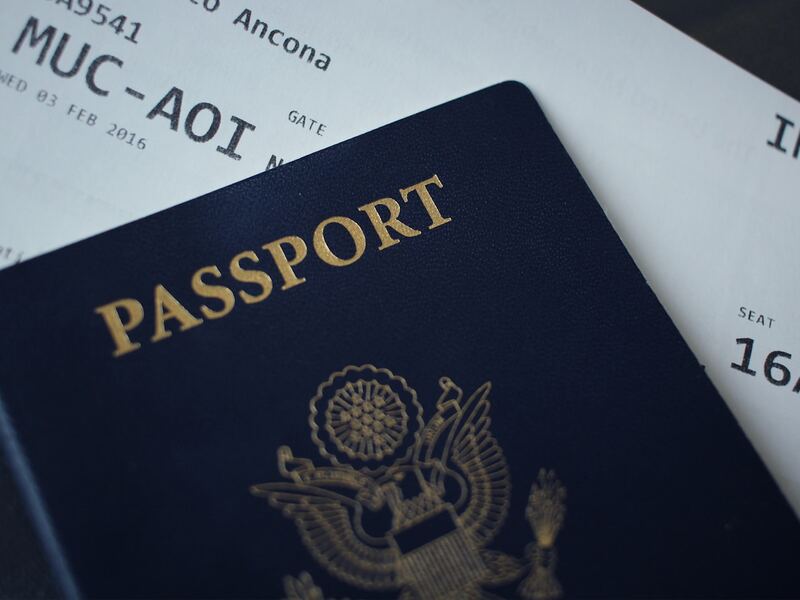
Buying property in Singapore as a foreigner or PR is legally possible for most private condominium units without approval, but it comes with Additional Buyer’s Stamp Duty, restrictions on landed and HDB property, and its own document trail from eligibility check through to the Sale and Purchase Agreement. This guide sets out exactly what to prepare and what it costs.
What buying property in Singapore as a foreigner or PR involves
The starting point for anyone buying property in Singapore as a foreigner or PR is understanding that “foreigner” and “Singapore permanent resident” are treated quite differently under Singapore’s property rules, and both are treated differently again from citizens. A PR can buy an HDB resale flat (subject to conditions), most private condominium units without special approval, and, in narrow circumstances, an existing landed house with government approval. A foreigner who is not a PR can generally buy condominium units and apartments freely, but cannot buy an HDB flat at all, and needs approval from the Singapore Land Authority under the Residential Property Act 1976 to buy most categories of landed residential property. Getting this eligibility question right before you start viewing saves weeks of wasted effort on a property you are not actually able to complete on.
Who can buy what: eligibility by property type
- HDB flats (resale): PRs may buy subject to Housing and Development Board eligibility conditions, including a minimum PR status duration and household composition rules; foreigners without PR status cannot buy HDB flats at all. PRs whose application for permanent residence is still pending should read our companion guide on buying an HDB resale flat while your PR application is pending before committing to an Option to Purchase.
- Private condominiums and apartments: both foreigners and PRs can generally buy freely, without approval, which is why this segment absorbs the large majority of foreign buyer demand.
- Landed property (terrace houses, semi-detached, bungalows): restricted for foreign persons under the Residential Property Act 1976; approval from the Singapore Land Authority is required and is generally reserved for cases of substantial economic contribution to Singapore, though PRs face fewer restrictions than non-PR foreigners in narrower categories such as Sentosa Cove.
- Executive Condominiums (ECs): foreigners cannot buy new ECs at all, and can only buy resale ECs once the development has reached the 10-year mark and effectively become a fully private condominium.
Section 4 of the Residential Property Act 1976 distinguishes “non-restricted residential property”, which foreign persons and non-approved entities may acquire without approval, from other residential property covered by section 4(2), which requires approval before a foreign person may acquire it; most private condominium and apartment units fall into the non-restricted category, while landed houses generally do not.
ABSD and other costs (numerical specifics)
Additional Buyer’s Stamp Duty (ABSD) is charged on top of the standard Buyer’s Stamp Duty and varies by buyer profile and the number of residential properties already owned. As a planning benchmark (always confirm current rates on IRAS’s website before committing, since these rates are periodically revised by the government):
- Singapore Citizens: 0% on a first property, 20% on a second, 30% on a third and subsequent property.
- Singapore Permanent Residents: 5% on a first property, 30% on a second, 35% on a third and subsequent property.
- Foreigners (non-PR): 60% on any residential property purchase.
- Entities (companies) buying residential property: 65%, plus, for developers, an additional non-remittable component in certain cases.
On top of ABSD, buyers should budget for standard Buyer’s Stamp Duty on a tiered scale (broadly 1% to 6% of the purchase price depending on the price band), legal conveyancing fees typically in the S$2,500 to S$4,000 range for a straightforward resale purchase, a valuation report fee of roughly S$300 to S$600, and, where a mortgage is involved, a bank’s arrangement and legal fees which are sometimes subsidised by the bank as part of the loan package. For a S$2,000,000 condominium bought by a foreigner with no other Singapore property, ABSD alone would be S$1,200,000 at the 60% rate, illustrating why the ABSD line item, not the headline purchase price, is usually the single biggest number a foreign buyer needs to plan cash for.
Documents checklist: eligibility, IPA and approval documents
Before or during a purchase, foreign and PR buyers should expect to assemble:
- Passport and, for PRs, the PR (Blue) identity card, issued by the Immigration and Checkpoints Authority, to establish residency status and ABSD tier.
- Proof of PR status duration, relevant to HDB eligibility and, in some cases, to loan-to-value assessment by banks.
- Income and employment documents: recent payslips, employment letter, and, for self-employed buyers, Notices of Assessment for the past two years, required by banks for mortgage underwriting.
- Existing property declarations: a declaration of any other residential property owned in Singapore or overseas, since ABSD tiering depends on the total count, not just Singapore properties for citizens and PRs (foreigners are flat-rated regardless of count).
- Singapore Land Authority approval application (for restricted landed property only): a formal application setting out the buyer’s economic contribution to Singapore, intended use of the property, and supporting documents such as investment plans or employment records.
- In-Principle Approval (IPA) letter for a home loan, obtained from a bank before making an offer, confirming indicative loan quantum, which most agents and sellers will ask to see before accepting an offer.
- CPF withdrawal statement (where relevant to PRs using CPF funds, subject to CPF Board rules on usage for residential property).
Note that the Immigration and Checkpoints Authority document (PR card) and the Singapore Land Authority’s approval for landed property are two entirely separate approvals from two different agencies, and confusing one for the other is a common source of delay for foreign buyers targeting a landed home.
SPA checklist and conveyancing documents
The Sale and Purchase Agreement (SPA) is the binding contract, and a thorough SPA-stage checklist includes:
- Option to Purchase (OTP), granted by the seller on payment of an option fee (typically 1% of the purchase price), giving the buyer an exclusive period, usually two weeks, to exercise the option.
- Exercise of Option, on payment of a further sum (commonly bringing the total deposit to 5% of the purchase price), converting the OTP into a binding contract.
- Sale and Purchase Agreement itself, prepared by the conveyancing lawyer, setting out completion date (commonly 8 to 10 weeks after exercise for a resale purchase), vacant possession terms, and any special conditions.
- Title search and property information, conducted by the buyer’s lawyer against the Singapore Land Authority’s land register, to confirm the seller’s ownership and check for any existing mortgages, caveats or encumbrances.
- Mortgage-in-principle and formal loan offer, from the buyer’s chosen bank, finalised before completion.
- CPF Board application (for PRs using CPF), submitted through the conveyancing lawyer ahead of completion.
- Stamp duty payment confirmation, for both Buyer’s Stamp Duty and ABSD, due within 14 days of exercising the option.
- Completion statement and handover documents, including keys, the original title deed or, for strata property, the share certificate, and any warranty documents for fittings.
Buyers purchasing through a corporate vehicle, whether a family investment holding company or otherwise, should note how the entity’s other assets are treated for accounting purposes; our guide on FRS 38 intangible assets in Singapore covers recognition, amortisation and the R&D tax deduction trap that can arise alongside a property purchase. Buyers considering a newly incorporated holding entity purely to hold the property should also read why we do not recommend using shelf companies in Singapore, given the ABSD and legal status implications of that structure.
Step-by-step buying process and timeline
A realistic sequence for a foreign or PR buyer: obtain a mortgage IPA from a bank (three to seven days); shortlist and view properties (two to six weeks); negotiate and secure an Option to Purchase with a 1% option fee (same day once agreed); engage a conveyancing lawyer and conduct due diligence within the option period (typically two weeks); exercise the option and pay the balance deposit to reach 5% (day 14 of the option period); pay Buyer’s Stamp Duty and ABSD within 14 days of exercise; for restricted landed property, submit the Singapore Land Authority approval application in parallel, which can itself take eight to twelve weeks or longer to be decided; complete the purchase and receive vacant possession, typically eight to ten weeks after exercising the option for a resale unit, or per the developer’s schedule for a new launch. All-in, a straightforward private resale purchase by an eligible foreign or PR buyer typically completes ten to twelve weeks from first viewing to key collection, while a landed property purchase requiring Singapore Land Authority approval can extend to four to six months.
Common mistakes and rejection reasons
The most common and costly mistake is underestimating ABSD, particularly among foreign buyers who compare the headline price to their home market without adding the 60% ABSD line, which can double the effective cash required. The second is assuming PR status alone qualifies a buyer for any property type; HDB and landed property both carry additional conditions beyond simple PR status. The third is applying for Singapore Land Authority approval for landed property without a clear, well-documented case for economic contribution, which is the single biggest reason such applications are rejected or delayed. The fourth is exercising an Option to Purchase before mortgage financing is properly confirmed, leaving the buyer exposed to forfeiting the 5% deposit if the loan later falls through. The fifth is overlooking that citizens and PRs, unlike foreigners, are assessed on the total count of residential properties owned when determining their ABSD tier, so an existing overseas property can sometimes affect the calculation and should be disclosed and checked with the conveyancing lawyer rather than assumed away.
Useful templates to prepare before making an offer
A handful of simple working documents make the difference between a smooth purchase and a rushed one, particularly given how tight the timelines are once an Option to Purchase is granted.
- ABSD and total cost worksheet: a simple spreadsheet totalling purchase price, Buyer’s Stamp Duty, ABSD at the applicable rate, legal fees, valuation fee and any renovation budget, so the true all-in cash requirement is clear before an offer is made, not discovered afterwards.
- Eligibility pre-check template: a short checklist confirming property type against buyer status (citizen, PR, foreigner), any existing Singapore or overseas property owned, and whether Singapore Land Authority approval will be required, completed before viewing rather than after falling in love with a unit.
- Due diligence checklist for the conveyancing lawyer: covering title search, outstanding mortgages or caveats, outstanding property tax, Management Corporation arrears for strata property, and any subdivision or planning irregularities.
- Mortgage comparison template: a simple table comparing indicative rates, lock-in periods, legal subsidy offers and early repayment penalties across two or three banks before committing to a formal Mortgage-in-Principle.
- Completion day checklist: confirming keys, meter readings, final utility account transfers, receipt of the title deed or share certificate, and a final inspection against the inventory agreed at the Sale and Purchase Agreement stage.
None of these need to be complicated; a shared spreadsheet and a one-page checklist, reviewed with your conveyancing lawyer before the option period runs out, cover most of what causes last-minute stress in a Singapore property purchase.
FAQs
Can a foreigner buy an HDB flat in Singapore?
No; HDB resale flats can only be bought by Singapore Citizens and, subject to conditions, Permanent Residents. A non-PR foreigner cannot buy an HDB flat under any circumstances.
How much is ABSD for a foreigner buying property in Singapore?
As a planning benchmark, non-PR foreigners are charged 60% Additional Buyer’s Stamp Duty on any residential property purchase, on top of standard Buyer’s Stamp Duty; always verify the current rate on IRAS’s website before committing funds, as rates are periodically revised.
Can a PR buy a landed house in Singapore?
Generally still subject to Singapore Land Authority approval under the Residential Property Act 1976 for most landed categories, though PRs are treated somewhat more favourably than non-PR foreigners in certain narrow categories such as Sentosa Cove; approval is not guaranteed and should not be assumed before an offer is made.
What is the difference between the Option to Purchase and the Sale and Purchase Agreement?
The Option to Purchase is a time-limited right to buy, exercisable within a set period (commonly two weeks) on payment of an option fee; exercising it converts the transaction into a binding Sale and Purchase Agreement.
Do I need Singapore Land Authority approval for a condominium unit?
No; most condominium and apartment units fall within the non-restricted residential property category under the Residential Property Act 1976 and can be bought by foreigners and PRs without approval; approval is generally only required for landed property.
Need help with this? Call, SMS or WhatsApp +65 8501 7133, or email [email protected]. Little Big Employment Agency (EA Licence 19C9790) works with a panel of corporate and employment law firms; this article is general information, not legal advice.
Real people. Right here in Singapore.