
Insights for work and life.
Additional Buyer’s Stamp Duty (ABSD) for foreigners , Documents required and templates
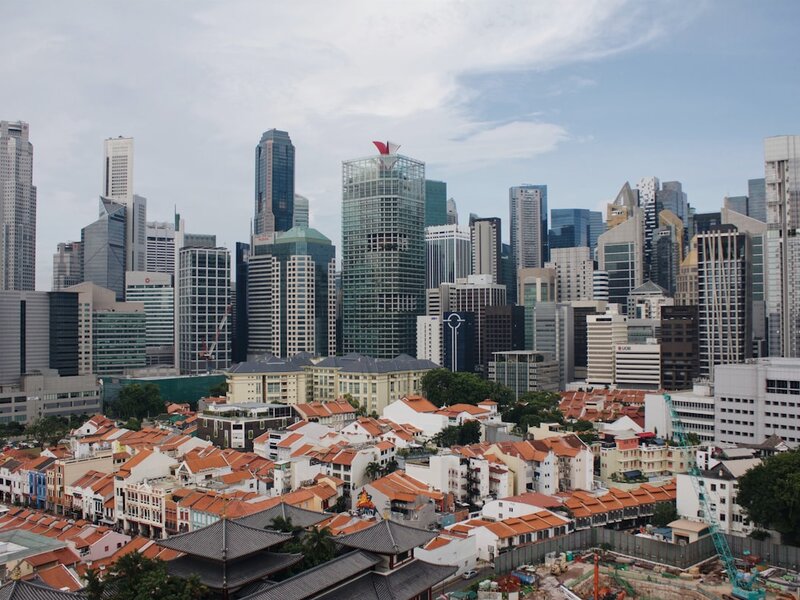
Additional Buyer’s Stamp Duty is an extra tax that foreigners, permanent residents and certain entities must pay on top of the standard Buyer’s Stamp Duty when purchasing residential property in Singapore, currently set at 60% of the purchase price or market value for foreign buyers, payable within 14 days of the contract date.
What is Additional Buyer’s Stamp Duty?
Additional Buyer’s Stamp Duty (ABSD) is a duty imposed under the Stamp Duties Act 1929 on top of the standard Buyer’s Stamp Duty (BSD) whenever a residential property in Singapore is acquired. It was first introduced in December 2011 as a cooling measure and has been revised several times since, most recently with rates effective from 27 April 2023. Unlike BSD, which applies to all buyers on a progressive scale, additional buyer’s stamp duty is profile-dependent: the rate a purchaser pays is determined by citizenship or residency status and by the number of residential properties already owned. Singapore Citizens buying their first residential property pay no ABSD at all, while foreigners pay a flat 60% regardless of whether it is their first purchase. The Inland Revenue Authority of Singapore (IRAS) administers and collects ABSD alongside BSD as part of the overall stamp duty framework set out in the Stamp Duties Act 1929. Liability to pay falls on the buyer: under section 34(1) of the Stamp Duties Act 1929, liability for stamp duty rests with the party specified in the Third Schedule to that Act, which for a conveyance on sale identifies the purchaser or transferee, meaning it is the incoming foreign buyer, not the seller, who is legally liable for both BSD and ABSD.
It is worth stressing that ABSD is calculated on whichever is higher: the purchase price stated in the contract or the market value of the property as assessed by IRAS. This matters for relocating families who may be buying under favourable terms from a developer or a related party, since IRAS will still assess additional buyer’s stamp duty against open-market value if that figure is higher than the contract price. ABSD also interacts with other cooling measures a relocating family should be aware of, notably the Seller’s Stamp Duty (SSD) payable if a residential property is sold within a holding period, and the Total Debt Servicing Ratio (TDSR) framework that banks apply when assessing mortgage affordability. Neither SSD nor TDSR reduces ABSD liability, and lenders will not finance the ABSD portion of a purchase; it must be funded from cash or CPF savings, subject to CPF usage rules that in any event restrict CPF use for foreigners without permanent residency.
Who needs to pay ABSD as a foreigner in Singapore?
Any individual who is not a Singapore Citizen and not a Singapore Permanent Resident is classified as a “foreigner” for ABSD purposes, and this includes Employment Pass holders, S Pass holders, Dependant’s Pass holders, and foreigners on Long-Term Visit Passes who are otherwise settled in Singapore. It does not matter how long a foreigner has lived in Singapore, how many years of tax residency they have accrued, or whether they hold a valid work pass; ABSD liability is assessed on nationality and immigration status at the point the Option to Purchase or Sale and Purchase Agreement is signed.
There is one significant carve-out. Nationals and Permanent Residents of Iceland, Liechtenstein, Norway, Switzerland, and the United States of America are treated as Singapore Citizens for ABSD purposes because of free trade agreement obligations Singapore has entered into. These buyers pay ABSD on the same tiered basis as a Singapore Citizen (0% for a first residential property, 20% for a second, 30% for a third and beyond) rather than the flat 60% foreigner rate. Foreign companies, trustees acting for a foreign trust, and other non-individual entities generally face an even higher flat rate of 65%, again payable on top of BSD.
Where a property is bought jointly, for example by a foreign spouse together with a Singapore Citizen or Permanent Resident spouse, IRAS applies the higher of the two buyers’ individual ABSD profiles to the entire transaction, not a blended or averaged rate. This trips up many relocating families who assume that joint ownership with a Singapore Citizen spouse automatically halves or removes the ABSD exposure; it does not, and the full foreigner rate typically still applies to the whole purchase price unless a specific remission condition is separately met.
Eligibility, exemptions and remission requirements
Eligibility for any exemption or remission of additional buyer’s stamp duty is narrow and must be actively claimed, it is never applied automatically. The main pathways relevant to relocating families are as follows.
- Free trade agreement nationality: nationals of the five FTA-partner jurisdictions listed above must submit a declaration confirming their nationality and residency status at the point of stamping; IRAS will not infer this from a passport copy alone.
- Married couples with one Singapore Citizen spouse: in narrow circumstances, a remission may be available where a residential property is bought jointly and the Singapore Citizen spouse does not already own another property, subject to conditions set by IRAS that should be checked case by case with a conveyancing lawyer.
- Housing developers: licensed developers buying residential land for construction may qualify for ABSD remission subject to development and sale conditions within a prescribed period; this is not typically relevant to a family relocating to Singapore for employment.
- Permanent Residents buying their first residential property pay a reduced 5% ABSD rate rather than the 60% foreigner rate, which is one reason some relocating families weigh the timing of a PR application against a planned property purchase.
- No general hardship or first-time-buyer exemption exists for foreigners. A foreigner buying their first and only home in Singapore still pays the full 60% rate; there is no proportional relief for owner-occupation.
Foreigners should also note that they generally cannot buy an HDB resale flat or a new HDB Build-To-Order flat at all, irrespective of ABSD; eligibility to buy HDB public housing is governed separately by the Housing and Development Board, and most foreigners relocating to Singapore will be looking at private condominiums, and in limited cases, landed property subject to approval under the Residential Property Act. This is a common point of confusion worth flagging early in the relocation planning process.
Cost and timeline: how much, and how fast
The figures below illustrate additional buyer’s stamp duty and standard stamp duty on a representative S$1,500,000 private residential purchase by a foreign buyer with no FTA entitlement.
- Buyer’s Stamp Duty (BSD), calculated on the progressive scale: approximately S$44,600.
- Additional Buyer’s Stamp Duty (ABSD) at the foreigner rate of 60%: S$900,000.
- Total stamp duty payable: approximately S$944,600.
For comparison, on a smaller S$800,000 purchase the same foreign buyer would pay approximately S$21,600 in BSD and S$480,000 in ABSD, for a total of roughly S$501,600. The proportion of total cost attributable to ABSD stays broadly constant at around 60% of price across purchase sizes, since ABSD is a flat percentage while only BSD is progressive.
Timelines are strict and unforgiving. Stamp duty, including ABSD, must be paid within 14 days of the date the Option to Purchase or Sale and Purchase Agreement is signed, if that document is signed in Singapore. If the document is signed overseas, the window extends to 30 days from the date it was received in Singapore. Late payment attracts a penalty of up to four times the duty payable, or S$1,000, whichever is greater, in addition to the underlying duty itself, so relocating families should have funds ready in a Singapore bank account well before exercising an Option to Purchase.
In practice, most conveyancing lawyers will e-stamp the transaction and expect payment to clear within one to two weeks of instruction, so the realistic working timeline for the whole documents-and-payment cycle, from signing the option to a stamped certificate in hand, is 2 to 3 weeks. Families relocating on a tight moving schedule should budget a further 1 to 2 weeks on top of this for mortgage approval and disbursement before completion.
Step-by-step: documents and forms you will need
The following checklist reflects the documents an incoming family will typically need to assemble, in the order they are usually required.
- 1. Option to Purchase (OTP) or Sale and Purchase Agreement. This is the contract that fixes the date from which the 14-day (or 30-day, if signed abroad) stamping clock begins to run. Keep the signed and dated original.
- 2. Passport and immigration pass. A current passport and, where applicable, an Employment Pass, S Pass, Dependant’s Pass or Long-Term Visit Pass, so that the conveyancing lawyer and IRAS can correctly determine the buyer’s ABSD profile. Immigration pass status is verified against records held by the Immigration and Checkpoints Authority.
- 3. IRAS e-Stamping submission. Most foreigners do not hold a Singpass account, so a Singapore-qualified conveyancing lawyer typically e-stamps the transaction on the buyer’s behalf under a Letter of Authorisation, which the buyer signs to appoint the lawyer as agent for stamping purposes.
- 4. FTA nationality declaration form (if applicable). Nationals of Iceland, Liechtenstein, Norway, Switzerland or the United States must complete IRAS’s declaration form claiming Singapore Citizen-equivalent treatment; this is not applied automatically and must accompany the stamping request.
- 5. Remission application (if applicable). Where a married-couple remission is being claimed, a separate remission application form, together with the marriage certificate, must be lodged with IRAS before or at the point of stamping.
- 6. Proof of funds and payment instrument. A cashier’s order, PayNow transfer or GIRO instruction referencing the stamp certificate number, since IRAS payment must be matched against the specific transaction.
- 7. Stamp certificate. Once payment clears, IRAS issues a stamp certificate. Retain this; banks require it before disbursing a mortgage loan, and it is the primary evidence of a properly stamped, legally enforceable contract.
- 8. Land Dealings Approval (landed property only). Foreigners wishing to buy landed residential property (as opposed to a strata condominium unit) need separate approval, which is a distinct process from ABSD stamping and should be started early given it can take several weeks.
It is sensible to prepare certified translations of any foreign-language documents, such as a marriage certificate issued outside Singapore, before submission, since IRAS and the conveyancing lawyer will otherwise be unable to process a remission claim on time within the stamping window.
Common mistakes and gotchas
- Assuming FTA nationality is applied automatically. It is not; the declaration form must be filed, and missing this means paying the full 60% rate and having to apply for a refund afterwards, which is slower and more paperwork than getting it right the first time.
- Underestimating total cash needed at signing. Many relocating buyers budget for BSD but forget that additional buyer’s stamp duty is calculated on the higher of price or market value and is due in cash within days, not financed as part of the mortgage.
- Missing the 14-day (or 30-day) stamping deadline, which triggers an automatic penalty regardless of how the delay arose.
- Believing HDB rules apply. Foreigners are, with very limited exceptions, not eligible to buy HDB resale or new flats at all, a separate restriction from ABSD administered by the Housing and Development Board.
- Assuming a joint purchase with a Singapore Citizen spouse halves the ABSD rate. It does not; the higher profile applies to the whole transaction unless a specific remission is separately granted.
- Not retaining the stamp certificate. Without it, mortgage disbursement and any future resale or refinancing will stall.
- Confusing BSD with ABSD as though they were the same charge; they are calculated separately and both must be paid, with ABSD generally being the far larger sum for a foreign buyer.
FAQs
What is the current ABSD rate for foreigners buying residential property in Singapore?
As at the rates effective from 27 April 2023, foreigners pay a flat 60% additional buyer’s stamp duty on residential property, regardless of whether it is their first purchase.
Can any foreigners get ABSD remission or a lower rate?
Only nationals or Permanent Residents of Iceland, Liechtenstein, Norway, Switzerland and the United States are treated as Singapore Citizens for ABSD purposes under free trade agreement obligations, provided the declaration form is filed. Other foreigners generally pay the full 60% rate with no proportional relief.
When exactly must ABSD be paid?
Within 14 days of signing the Option to Purchase or Sale and Purchase Agreement if signed in Singapore, or within 30 days if the document was signed outside Singapore.
Does ABSD apply to commercial or industrial property, or can foreigners buy HDB flats to avoid it?
ABSD applies only to residential property; commercial and industrial purchases attract standard Buyer’s Stamp Duty but not ABSD. Buying an HDB flat instead is not a workaround either, since foreigners are generally not eligible to purchase HDB resale or new flats at all, a separate eligibility restriction administered by the Housing and Development Board and unrelated to ABSD.
Does becoming a Singapore Permanent Resident reduce ABSD on a future purchase?
Yes. A Permanent Resident buying a first residential property pays 5% ABSD rather than the 60% foreigner rate, which is why some relocating families sequence a PR application ahead of a planned property purchase, though this should never be the sole driver of a PR application.
Related guides
If your relocation also involves setting up a Singapore entity that may in future hold digital assets, see our FAQ on MAS digital payment token (DPT) licensing for the regulatory basics. For the practical side of getting funds into Singapore ahead of a stamp duty payment deadline, see our guide to opening a Singapore bank account with DBS, OCBC, UOB, Wise or Aspire. For the broader eligibility picture on foreigners and Permanent Residents buying property here, read our companion piece on buying property in Singapore as a foreigner or PR. Immigration pass status referenced throughout this guide is verified against records maintained by the Immigration and Checkpoints Authority, and public housing eligibility rules are set by the Housing and Development Board.
Need help with this? Call, SMS or WhatsApp +65 8501 7133, or email [email protected]. Little Big Employment Agency (EA Licence 19C9790) works with a panel of corporate and employment law firms; this article is general information, not legal advice.
Real people. Right here in Singapore.