
Insights for work and life.
Work Pass for Postdoctoral Researchers and Visiting Academics in Singapore
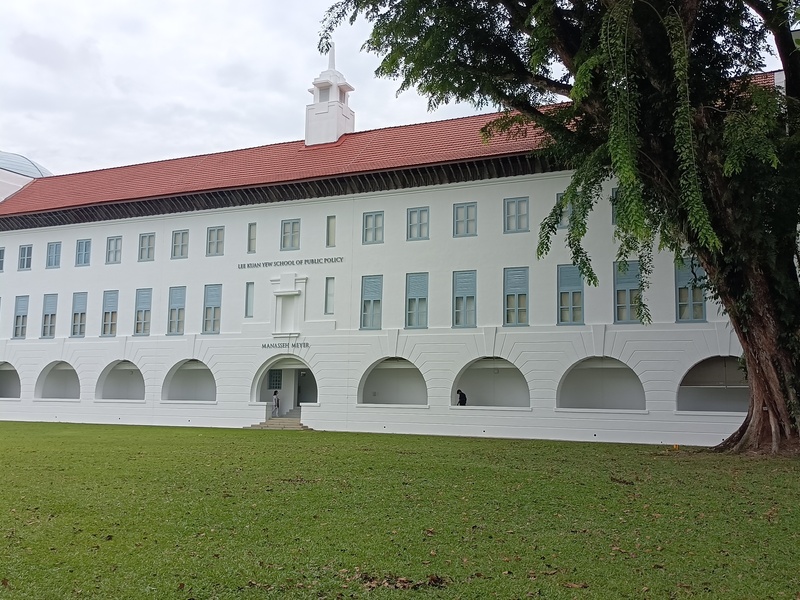
A postdoctoral fellow arriving to join an Institute of Higher Learning in Singapore earns, on average, a fixed monthly salary well under the S$30,000 threshold that unlocks the Overseas Networks & Expertise (ONE) Pass, yet well above the entry point for an Employment Pass. That gap is exactly where most confusion sits when a work pass for postdoctoral researchers in Singapore needs to be chosen: the wrong pick can mean a rejected application, a wasted month of processing, or a visiting academic stuck without legal authorisation to work while a paper deadline looms.
Singapore’s research ecosystem, from A*STAR’s research institutes to the autonomous universities and MOE-linked centres, hires a steady stream of postdoctoral researchers, visiting professors and short-term academic collaborators from overseas. Each of these profiles can sit under a different work pass depending on salary, contract length, and whether the individual is formally employed or merely attached for a defined training or research stint.
This guide sets out, with reference to the Ministry of Manpower’s (MOM) published rules as at 1 October 2026, which pass fits which academic profile: the standard Employment Pass, the achievement-based ONE Pass, and the short-term Training Employment Pass, along with how academic qualifications are scored under the COMPASS framework.
Employment Pass: The Default Route for Most Postdocs and Visiting Academics
For the majority of postdoctoral researchers on a fixed-term contract with a university, research institute or A*STAR-linked entity, the Employment Pass (EP) remains the standard route. As at 1 October 2026, MOM’s published EP qualifying salary starts at S$5,600 a month for candidates aged 23 and below, rising progressively with age to S$10,700 a month for candidates aged 45 and above, for all sectors except financial services (MOM, Eligibility for Employment Pass, as at 1 October 2026). Financial services roles sit on a higher scale, starting at S$6,200 and rising to S$11,800.
From 1 January 2027, MOM has already announced that the minimum qualifying salary will rise to S$6,000 (up to S$11,500 at age 45 and above) for non-financial sectors, so institutions sponsoring a postdoc whose contract straddles the year-end should budget for the higher figure.
Clearing COMPASS: Where Academic Qualifications Score Points
Since September 2023, every EP application (bar a narrow exemption) must also clear the Complementarity Assessment Framework, better known as COMPASS. Candidates earning a fixed monthly salary of at least S$22,500 are exempt from COMPASS scoring altogether (MOM, COMPASS C1 Salary Benchmarks, as at 1 October 2026); most postdocs will sit below that figure and so must be assessed.
Two COMPASS criteria matter most for this profile. Criterion 1 (Salary) compares the candidate’s fixed monthly salary against the 65th percentile of local PMET salaries in the same sector; a postdoc paid at or above that benchmark earns points here. Criterion 2 (Qualifications) is where an academic background can work strongly in a candidate’s favour: MOM’s updated list (effective for applications from 1 January 2026) awards 20 points for a bachelor’s degree or higher from a top-tier institution on its published list, or 10 points where the qualification is a UK-equivalent degree or a recognised professional qualification. A PhD from a well-ranked overseas university, which describes most postdoctoral candidates, will typically clear this criterion comfortably, which is one reason the EP route works better for this profile than employers sometimes expect.
ONE Pass: A Realistic Option Only for a Narrow Slice of Academic Talent
The Overseas Networks & Expertise (ONE) Pass offers an “outstanding achievement” track for academia and research that does not require meeting the standard salary criterion. Under this track, MOM, together with agencies such as MCCY, MOE, the National Research Foundation and A*STAR, holistically reviews the candidate’s professional record and key achievements, and requires a letter of endorsement from a local host research institution, meaning an autonomous university or an A*STAR entity (MOM, Eligibility for Overseas Networks & Expertise Pass, as at 1 October 2026).
In practice, this track is designed for established professors, laureates and research leaders with a substantial independent publication and grant record, not for early-career postdoctoral fellows a few years out of their PhD. A postdoc without an independent track record of major awards, named professorships or field-defining publications is unlikely to clear the achievement bar, and should expect to be assessed on the standard S$30,000 fixed monthly salary threshold instead, which very few postdoctoral contracts meet. For most visiting academics, the ONE Pass becomes realistic only once they progress to a principal investigator or tenured faculty role with an established international reputation.
When a Visiting Professorship Might Still Qualify
A distinguished visiting professor holding named chairs, an h-index built over a long career, or a record of major international research prizes, may well clear the achievement track even on a modest visiting stipend. The institution’s international office typically prepares the endorsement letter alongside the candidate’s CV and reference letters, so this route should be discussed with the sponsoring university’s HR or international faculty affairs office well before the visit is confirmed.
Training Employment Pass and Short-Term Options for Brief Visiting Stints
Not every visiting academic needs a multi-year work pass. For a genuinely short attachment, MOM’s Training Employment Pass (TEP) covers foreign trainees and foreign students undergoing training in Singapore for up to three months, and it is not renewable. A trainee attached from a foreign office or subsidiary must earn a fixed monthly salary of at least S$3,000, while a foreign student’s attachment must form part of their course of study at an acceptable institution, or similarly meet the S$3,000 threshold (MOM, Eligibility for Training Employment Pass, as at 1 October 2026).
This suits a visiting PhD candidate or junior researcher on a short laboratory attachment, a conference-linked research visit, or a defined data-collection stint, where a full EP application would be disproportionate to the length of stay. Because the TEP cannot be renewed and cannot be used twice for the same type of training with the same candidate, institutions should plan the visit dates carefully and confirm at the outset whether a longer EP will eventually be needed if the relationship extends.
University Sponsorship Versus Private Company Sponsorship
Autonomous universities, A*STAR research institutes and most government-linked research centres are well accustomed to EP, ONE Pass and TEP applications and usually run this through a dedicated HR or international faculty affairs unit. A private company hiring a PhD-holding researcher for in-house R&D, for example an A*STAR spin-off or a corporate lab, follows exactly the same MOM framework but without the institutional support that universities provide in-house, so getting the true cost of hiring a foreign professional right, and understanding the employer’s obligations under the myMOM Portal, matters just as much as for any other foreign hire. Where the research entity itself still needs to be incorporated, for instance a new R&D subsidiary being set up to sponsor the pass, the corporate registration and compliance steps are worth mapping out early with a comprehensive guide to relocating a business to Singapore, since MOM will not approve a work pass sponsored by an entity that is not properly registered with ACRA.
Practical Steps Before Sponsoring an Academic Work Pass
Before submitting any application, confirm which track actually fits the researcher’s profile rather than defaulting to whichever pass a previous hire happened to use. A short checklist that research administrators find useful:
- Confirm the contract length and whether the researcher is formally employed (points to EP or ONE Pass) or merely attached for training (points to TEP).
- Check the candidate’s age-graduated EP qualifying salary against MOM’s published table, and confirm whether the S$22,500 COMPASS exemption applies.
- Verify whether the candidate’s PhD-granting institution appears on MOM’s COMPASS C2 top-tier list, since this materially affects the points score.
- For senior visiting academics, discuss the ONE Pass achievement track with the sponsoring institution’s international office at least two to three months ahead of the intended start date.
- For attachments under three months, confirm the TEP has not already been used for the same candidate and same type of training.
Institutions unsure which category their hire falls into, or renewing a researcher whose compliance calendar obligations are approaching, should also review why work pass appeals fail before assuming a rejected application can simply be re-submitted with the same facts.
Conclusion
Choosing the right work pass for postdoctoral researchers and visiting academics in Singapore comes down to three questions: how long is the stay, what is the fixed monthly salary, and does the candidate’s academic record meet an achievement bar that few early-career researchers will clear. For the great majority of postdoctoral hires, the Employment Pass, assessed through COMPASS with academic qualifications often scoring well under Criterion 2, remains the correct and most reliable route. The ONE Pass stays realistic mainly for established professors and research leaders, while the Training Employment Pass covers short, defined attachments cleanly.
If your institution or company needs help mapping a researcher’s profile to the right pass, or structuring a renewal before it lapses, Singapore Employment Agency can guide the sponsorship process end to end. Where a new research entity or subsidiary still needs to be incorporated to sponsor the pass, Raffles Corporate Services can handle the company registration and ongoing corporate compliance in parallel.
, The Editorial Team, Little Big Employment Agency
Real people. Right here in Singapore.