
Insights for work and life.
Singapore Healthcare for Expats 2026: Hospitals, MediShield Life and Integrated Plans Decoded
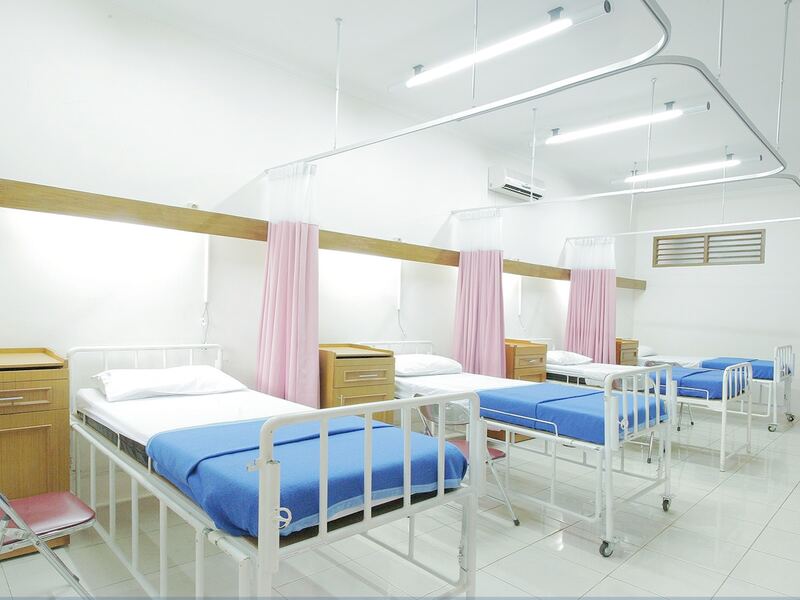
Singapore healthcare for expats is one of the better-functioning healthcare ecosystems in Asia, but it is also one of the most segmented. The MediShield Life floor that anchors Singaporean and PR coverage is unavailable to most pass holders, the Integrated Shield Plan ladder that PRs and citizens climb is only partially open to dependants, and the private hospital corridor where most expat families end up is the most expensive layer of the system. The Singapore healthcare for expats decision in 2026 therefore comes down to three questions: which hospitals will my family use, which insurance product covers them, and what does my employer’s group plan actually pay.
This guide walks through the public-private split, the MediShield Life and Integrated Shield Plan rules , including the April 2026 IP rider changes , the private hospital corridor, the typical employer cover, and the realistic cost stack for an expat family of four. It is written for the Employment Pass holder relocating with a family, the PR-track family planning the next two years, and the HR partner sizing the medical-insurance line for an expat package. Where regulations are quoted, they are stated as at 9 May 2026.
Singapore healthcare for expats: the public–private split
Singapore runs a dual-tier system. The public tier , anchored by the Ministry of Health (MOH), the public hospital clusters (SingHealth, NUHS, NHG) and the polyclinic network , delivers subsidised primary, secondary and tertiary care to citizens and PRs, with reduced subsidies for PRs and no subsidies for non-residents. The private tier , Mount Elizabeth, Gleneagles, Raffles Hospital, Parkway East, Farrer Park, Mount Alvernia and Thomson Medical , operates at full private-pay rates and is where most senior expat families end up for inpatient care.
For an Employment Pass holder, S Pass holder, ONE Pass holder or PEP holder , and their dependants on Dependant’s Pass or LTVP , public-hospital subsidies are not available. The pass holder pays the unsubsidised public-hospital rate, or chooses private care. Per the Ministry of Health’s Integrated Shield Plan page, government-administered insurance products are tied to MediShield Life eligibility, which itself is tied to citizenship and PR status. Foreign pass holders and their dependants must rely on employer group insurance or self-funded private cover.
MediShield Life: only for citizens and PRs
MediShield Life is the universal basic-tier government health insurance scheme for Singapore citizens and PRs. Per the CPF Board’s MediShield Life page, it provides lifetime coverage for large hospital bills and selected outpatient treatments at B2/C ward levels in public hospitals. Premiums are payable from MediSave, and subsidies are available based on age, income and household profile.
MediShield Life is structurally unavailable to foreign pass holders. The implication for expat families is that the floor of the Singapore healthcare system , the bit that protects against catastrophic costs , is not part of their default package. The private medical insurance the employer provides, or that the family buys directly, is doing the work that MediShield Life does for citizens and PRs.
For families on the PR track, MediShield Life kicks in the day PR is granted. Premiums then apply, and where the family also needs higher-ward or private-hospital coverage, the next layer is an Integrated Shield Plan. Our CPF for Singapore PRs and New Citizens 2026: Graduated Rates, Joint Election and Top-Up Strategy covers the broader CPF–MediSave architecture that PRs inherit.
Integrated Shield Plans: how the April 2026 rules change the maths
Integrated Shield Plans (IPs) are private medical-insurance products that sit on top of MediShield Life and provide higher-ward coverage in public hospitals or admission to private hospitals. There are seven approved IP insurers in Singapore: AIA, Great Eastern, HSBC Life, Income, Prudential, Raffles Health Insurance and Singlife.
From 1 April 2026, new IP riders sold can no longer cover the MOH-set minimum deductible, and the co-payment cap rises to a minimum of SGD 6,000. MOH’s published expectation is that new private-hospital riders will be approximately 30% lower in premium on average, reflecting the higher patient cost-share. For PR families buying a fresh IP package after April 2026, this means lower premiums but higher exposure on each hospitalisation.
The IP product ladder typically looks like this: the public-hospital B1 ward IP (cheapest), the public-hospital A ward IP (mid), the private-hospital “as-charged” IP (premium), and a top-up rider on any of those tiers. For an expat family converting from EP-stage employer cover to PR-stage IP cover, the typical landing point is a public-hospital A ward IP plus a moderated rider , the all-in cost is materially lower than full private-hospital cover, while keeping the family inside the public-hospital system most expat families actually use for routine care.
Private hospitals: where most expat families end up for inpatient care
Singapore’s private-hospital corridor is the practical default for expat-family inpatient care. Mount Elizabeth Orchard and Mount Elizabeth Novena (Parkway Pantai) are the two most commonly used private hospitals for senior expat care. Gleneagles Hospital, Raffles Hospital and Parkway East serve as alternatives by geography. Farrer Park Hospital, Mount Alvernia and Thomson Medical add specialist coverage for women’s health, paediatrics and oncology.
Approximate private-hospital inpatient room rates as at 9 May 2026 sit at SGD 700–1,500 per night for single rooms, with surgeon fees, anaesthetist fees and procedure costs layered on top. A routine appendectomy in a private hospital typically lands in the SGD 18,000–30,000 range; a normal childbirth in the SGD 10,000–15,000 range; a complex cardiac procedure can run into six figures.
For most EP-holder families, the private-hospital corridor is accessible only through employer-provided insurance or self-paid international private medical insurance. The thinness of the latter market for higher-grade expat plans is one of the reasons HR teams hold expat medical insurance as a separate negotiation line in compensation discussions , covered indirectly in The Real Cost of Hiring a Foreign Professional in Singapore (2026).
Public hospitals: when expats actually use them
Despite the private-hospital default, expat families do use Singapore public hospitals , and the experience is closer to private than most international comparisons assume. Singapore General Hospital (SGH), National University Hospital (NUH), Tan Tock Seng (TTSH), Khoo Teck Puat (KTPH), Ng Teng Fong (NTFGH), Changi General (CGH) and Sengkang General (SKH) cover the population. KK Women’s and Children’s (KKH) is the major women’s-and-children’s specialist centre.
For expats, public-hospital A and B1 wards are accessible at unsubsidised rates, and the clinical care quality is broadly comparable to private hospitals , most consultants split time across public and private practice. A 24-hour public-hospital A ward stay typically lands in the SGD 500–800 range room-only, against SGD 1,000+ at a private equivalent. For routine specialist outpatient care , cardiology follow-up, oncology infusions, chronic condition management , the public-hospital specialist outpatient clinics (SOCs) are increasingly the default for expat families who have integrated into the local system.
Primary care: GPs, polyclinics and the digital layer
Most expat families default to private GP networks for primary care , Raffles Medical, IHH Healthcare’s primary clinics, Healthway Medical, Parkway Shenton, and the family-clinic networks in Tanglin, Holland Village, Bukit Timah and Robertson Quay. A standard private GP consultation runs SGD 50–80 in 2026, with specialist consultations SGD 150–280 depending on discipline.
Polyclinics , the public primary-care network , are subsidised for citizens and PRs and unsubsidised for foreigners. They are where most local Singaporean families go, and a non-subsidised polyclinic visit at SGD 50–60 is broadly comparable to a private GP visit. Most expat families do not use polyclinics regularly, but they remain a useful fallback for vaccinations, child health and after-hours care.
The telehealth layer , Doctor Anywhere, MyDoc, Speedoc, WhiteCoat , has expanded quickly through 2025 and 2026. Most major employer plans now reimburse telehealth at the same rates as physical GP visits. For Singapore work-pass medical-examination requirements, our Singapore Work Pass Medical Examination 2026 guide sets out the exam-specific requirements.
Maternity, paediatrics and family planning
For expat families anticipating childbirth in Singapore, the main practical decision is private vs public maternity ward and the corresponding insurance coverage. KKH and NUH are the largest public maternity centres; Mount Elizabeth Novena, Gleneagles, Thomson Medical and Mount Alvernia dominate the private side. A private hospital normal vaginal delivery typically runs SGD 10,000–15,000 all-in, with caesareans landing 30–50% higher.
For the family unit applying for the Dependant’s Pass route, our Dependant’s Pass and LTVP Singapore 2026 guide covers the pass-side mechanics. For families with elderly parents on Long-Term Visit Passes, the LTVP+ healthcare-subsidy mechanics are covered in LTVP for Parents of Singapore PRs and Citizens (2026).
Cost benchmarks: what an expat family of four pays
For an expat family of four in 2026 , one EP holder spouse, one DP-holding spouse, two school-age children , typical annual healthcare cost benchmarks look like this: employer group medical insurance at SGD 4,000–8,000 per family (employer-paid for the EP holder, partly co-funded for spouse and children), private GP visits at SGD 1,200–2,500 per year for routine care, dental at SGD 1,500–3,000 per year, optical at SGD 800–1,500 per year, and an annual general health screening at SGD 600–1,200 per adult.
Where the employer group plan does not extend to family, families typically pay between SGD 6,000 and SGD 18,000 per year for a higher-tier private-hospital-eligible international medical insurance plan , Cigna, Pacific Prime, AIG, Aetna and BUPA dominate the higher-end of this market. Lower-cost local-only plans from AIA, Great Eastern and Prudential start at around SGD 2,500 per family per year for restricted-network coverage.
The wider cost-of-living context is in our Cost of Living in Singapore for Expats: 2026 Numbers. For families weighing PR conversion partly because of the MediShield Life floor and access to subsidised public care, our Complete Singapore PR Pathway Guide 2026 sets out the broader PR decision framework.
What the employer plan typically covers , and what it usually doesn’t
Most Singapore-based expat employer plans cover inpatient hospitalisation up to a private-hospital ceiling, outpatient care with co-pay, dental at a separate small annual cap, and outpatient specialist care subject to GP referral. The most common gaps are: maternity coverage capped well below actual private hospital costs; mental-health outpatient capped at a small per-year limit; chronic-disease coverage subject to “pre-existing condition” exclusions; and non-emergency overseas treatment.
HR partners structuring an expat package in 2026 should sense-check the employer plan against actual private-hospital costs , most policies underwritten before 2024 have not been re-priced against current Singapore private-hospital inflation, which has run at 9–11% per year through the past two cycles. The relocating-family lens on this is in our Relocating to Singapore: A Family Complete Guide (2026).
Singapore healthcare for expats: action checklist
Before relocation: confirm in writing what the employer’s group plan actually covers , inpatient ceiling, family extension, maternity sub-limit, chronic disease, and dental/optical. For families with known ongoing care (allergies, asthma, ADHD, mental-health support), pre-discuss continuity with the in-country provider before move.
Within 30 days of arrival: register with a private GP, set up Singpass to access HealthHub, confirm vaccination schedules with paediatricians, and complete the Singapore Work Pass Medical Examination if required. For a family planning to apply for PR within the first 24 months, factor in the MediSave/MediShield Life enrolment that will follow PR approval and the IP-rider decision that will need to be made shortly afterward , informed by the post-April 2026 rider rules.
Within the first six months: confirm whether the employer plan extends to the spouse and children at the level the family needs, and shortlist supplementary international or local IP-equivalent cover where it does not. For families on the citizenship track, the long-run lens in Singapore Citizenship 2026: Why the Budget 2026 TFR Disclosure Has Reset PR Application Strategy sets out the longer-arc decision.
For the licensed-agency support that takes a Singapore relocation from offer letter through to family pass set-up, healthcare onboarding and PR strategy, speak with us at Singapore Employment Agency, the consumer brand of Little Big Employment Agency Pte Ltd (MOM Licence 19C9790). Where the relocation involves setting up a Singapore-incorporated entity, securing a corporate bank account, or extending a Singapore group medical-insurance line to executives, our sister firm Raffles Corporate Services handles the corporate-side workstream.
, The Editorial Team, Little Big Employment Agency
Real people. Right here in Singapore.