
Insights for work and life.
Singapore Citizenship 2026: Why the Budget 2026 TFR Disclosure Has Reset PR Application Strategy
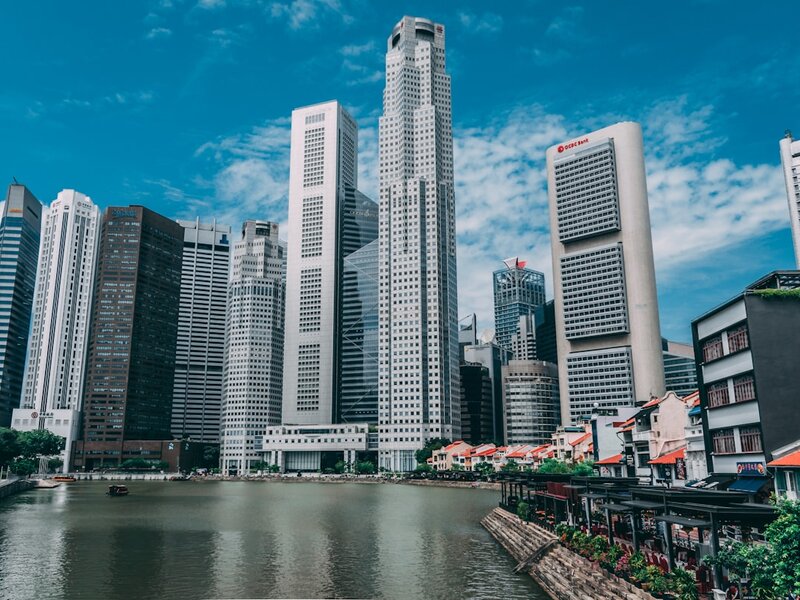
Singapore’s Total Fertility Rate fell to 0.87 in 2025, the lowest figure on record, and the Government has paired that disclosure with guidance that it intends to grant Singapore Citizenship 2026 applicants their pink ICs at a pace of about 30,000 new citizens per year for the next five years. For Permanent Residents who have been quietly weighing whether to file, this is the most strategically significant policy signal of the year. The intake is rising, but not by accident: ICA is widening the gate to keep the Singapore Core replenished, and the holistic-assessment bar is moving in real time.
This article sets out what the Budget 2026 disclosure actually changes, what realistic application timing looks like for PRs in 2026 and 2027, the document and integration evidence ICA expects, and the citizenship-versus-PR trade-off that even long-tenured PRs underestimate. Quoted figures are drawn from the National Population and Talent Division’s Population in Brief 2025 and from the Ministry of Manpower’s Committee of Supply 2026 statements.
What the 0.87 TFR figure actually means for Singapore Citizenship 2026 strategy
A Total Fertility Rate of 0.87 means an average Singaporean woman is on track to bear less than one child in her lifetime. The replacement rate , the level needed to keep the citizen population stable absent immigration , is 2.1. The Population in Brief 2025 reports approximately 27,500 resident births in 2025, the lowest in Singapore’s independent history. Without policy intervention, the citizen population is projected to begin shrinking in the early 2040s.
The Government’s formal response has two prongs. The first is pro-natalist (Marriage and Parenthood Package, parental leave, housing priority for families). The second , relevant to PRs reading this , is to maintain a calibrated, holistically assessed inflow of new citizens and PRs to keep the Singapore Core stable. The 30,000-per-year guidance, up from a recent run-rate around 22,000–25,000 (the 22,766 citizenships granted in 2024 are the latest published baseline), is the most concrete signal of that calibration in years.
For PRs, the practical reading is this: the gate is wider, but the holistic assessment is no looser. ICA still wants applicants who have demonstrably anchored themselves through employment continuity, tax-paying record, family ties, and integration. The strategic message is to file when your evidence is strongest, not to file because the cap has moved.
How the 30,000-citizens guidance reshapes timing for PRs
ICA has never published an approval rate for citizenship applications, and it never will. What it does publish is the actual annual grant. Comparing the 30,000-per-year guidance against the 22,766 grant in 2024 implies a meaningful expansion of headroom, but the application volume is also rising. The honest read is that well-prepared applications , from PRs of two to five years’ standing, with strong employment, tax, and integration records , have a better chance of approval in the 2026–2030 window than at any point in the past decade.
The poorly-prepared application, however, will still fail. Citizenship is the most discretionary status decision ICA makes, and the holistic-assessment criteria for PR , which we cover in our ICA holistic assessment article , are even more material at the citizenship stage. The wider intake does not lower the bar; it raises the importance of getting your evidence ordering right.
Realistic timing for the citizenship application
The minimum eligibility threshold is two continuous years as a Singapore PR before applying. In practice, ICA is rarely persuaded by a citizenship application filed at the two-year mark unless the applicant has unusually deep family ties (Singaporean spouse, Singaporean parents) and a strong integration record. The data we see at LBEA suggests the median successful applicant has held PR for four to seven years and can show:
- Continuous Singapore-based employment with at least three years at the same employer (or strong reason for any change),
- IRAS-filed personal income tax for every year of PR holding,
- CPF contributions consistent with declared earnings,
- Demonstrable integration markers (HDB or private residence in Singapore, children in local schools, community involvement),
- No NS deferment issues for sons of male applicants.
Our companion piece on the PR-to-Singapore-citizen 24-to-36-month journey walks through a realistic timeline once you decide to file.
The Singapore citizenship document and integration-evidence checklist
ICA’s online application is deceptively short. The strength of the application is in the supporting documents and the way you frame your integration story. As at May 2026, expect to assemble:
Identity, family, and PR
- Birth certificate, marriage certificate, divorce decree (if any), children’s birth certificates,
- PR Re-Entry Permit (must be valid throughout the application),
- Passport and any prior passports if there are name changes,
- Police clearance certificates from countries where you have lived for an extended period (some applicants are asked for these post-submission).
Employment, tax, and contributions
- Letter of employment from current employer setting out start date, position, salary, and confirmation of continuing engagement,
- CPF statement for the last three years,
- IRAS notice of assessment for the last three Years of Assessment,
- For business owners: ACRA bizfile, financial statements, IRAS Form C-S/C history.
Integration evidence
- HDB or private residence tenancy/ownership documents,
- Children’s school enrolment letters (local school enrolment is a meaningful signal),
- Records of voluntary work, community involvement, or grassroots participation,
- NS pre-enlistment registration acknowledgements for male family members aged 16.5 and above.
Our piece on why Singapore PR applications get rejected in 2026 identifies the most common evidence gaps; the same gap-analysis framework applies to citizenship, only with sharper teeth.
Common rejection reasons and how to remedy them before reapplying
ICA does not give detailed rejection reasons. From the volume of applications we work on, the patterns we consistently see in rejected citizenship cases include:
- Recent change of employer , especially within twelve months of filing, or a move that looks like a downward step,
- Material drop in declared income in the year of filing, raising substance concerns,
- Inconsistent residency record , long blocks spent overseas during the PR-holding period without strong employer-letter justification,
- Incomplete integration story , an HDB-resident PR with local-schooled children almost always reads stronger than a serviced-apartment-renting PR with international-schooled children, all else equal,
- NS exposure for male children , deferment patterns and any history of attempted exit can be decisive,
- Pending PR re-entry permit issues.
If your application is rejected, you can reapply after six months. The successful reapplications we have handled almost always involve a year of evidence-building between the two filings , not a re-submission of the same dossier with a cover letter.
Singapore citizenship versus continued PR: the real trade-off
The decision is not free. Singapore does not permit dual citizenship for adults, so accepting citizenship requires renunciation of your existing nationality. For some applicants , particularly those with non-renounceable foreign nationalities, foreign property holdings, or close family in jurisdictions where they may need to repatriate , staying as a PR may be the right answer. The variables that matter:
- Mobility: the Singapore passport is consistently top-three on the Henley Index (192 visa-free destinations in early 2026), better than most likely-renounced passports.
- National Service: male citizens (and male PRs of second-generation status) are liable for NS. Sons of new citizens are fully liable from 16.5. This is non-negotiable and has shaped many family decisions.
- Tax: Singapore taxes on a territorial basis and there is no further income-tax difference between PR and citizen at the personal level. Estate-tax exposure was abolished in 2008 and applies to neither status.
- Housing: citizens enjoy HDB-purchase eligibility on the same first-time grant scale as Singaporean households; PRs face the 5% PR ABSD for the first property and limited HDB resale eligibility. Our Singapore property buying guide for foreigners sets out the ABSD interaction.
- Reversibility: citizenship can be renounced but the friction is meaningful and the renunciation must be approved.
- Vote: only citizens vote.
The Government’s renunciation guidance is published by the Immigration and Checkpoints Authority; for foreign-citizenship renunciation procedure once Singapore citizenship is granted, our companion explainer on renouncing foreign citizenship to become Singaporean sets out the country-by-country mechanics.
Strategic Singapore Citizenship 2026 recommendations for PRs
Bringing the Budget 2026 signal and the practical mechanics together, our advice for PRs in 2026 falls into three brackets:
- If you have held PR for less than two years: do not file yet. Spend the next twelve months building your tax, CPF, and integration record. Look for an HDB resale or BTO qualifying window if eligibility opens. File when the evidence is mature.
- If you have held PR for two to five years and your record is strong: this is the most strategically attractive window of the past decade. The intake guidance is favourable and the evidence-building cost has already been paid. Build a clean dossier and file.
- If you have held PR for five-plus years and have not filed: revisit the cost-benefit. Many long-tenured PRs decide they prefer continued PR for personal or commercial reasons, and that is a defensible position. If you do choose to file, the intake guidance gives you reasonable confidence; the holistic-assessment evidence is what carries the application.
Whichever bracket you fall into, the Citizenship Journey programme , the integration sessions ICA invites successful applicants to attend , remains the final substantive step before the oath ceremony. Our piece on the Singapore citizenship oath ceremony and the post-grant period sets out what to expect when you reach the finish line.
Bottom line for PRs considering Singapore Citizenship 2026
The 0.87 TFR is a structural problem the Government is attempting to address with a calibrated citizenship intake. For PRs with a strong record, the Singapore Citizenship 2026 application window is more favourable than it has been in years. The key is to file when the evidence is mature, not to file just because the cap has moved. The application is still won on the integration story, and the trade-offs , renunciation, NS, irreversibility , deserve a sober assessment.
If you would like a licensed agency to assess your application strength, build the integration-evidence pack, or coordinate the family-level paperwork (spouse and children dual-application timing, NS pre-enlistment, renunciation logistics), the team at Singapore Employment Agency , the consumer brand of Little Big Employment Agency Pte Ltd (MOM Licence 19C9790) , works on PR and citizenship cases alongside our group company Raffles Corporate Services for clients whose move involves incorporation, family-office setup, or international tax planning.
, The Editorial Team, Little Big Employment Agency
Real people. Right here in Singapore.