
Insights for work and life.
Singapore Citizenship in 2026: Why the TFR 0.87 Disclosure Has Reset Strategic Timing for PRs
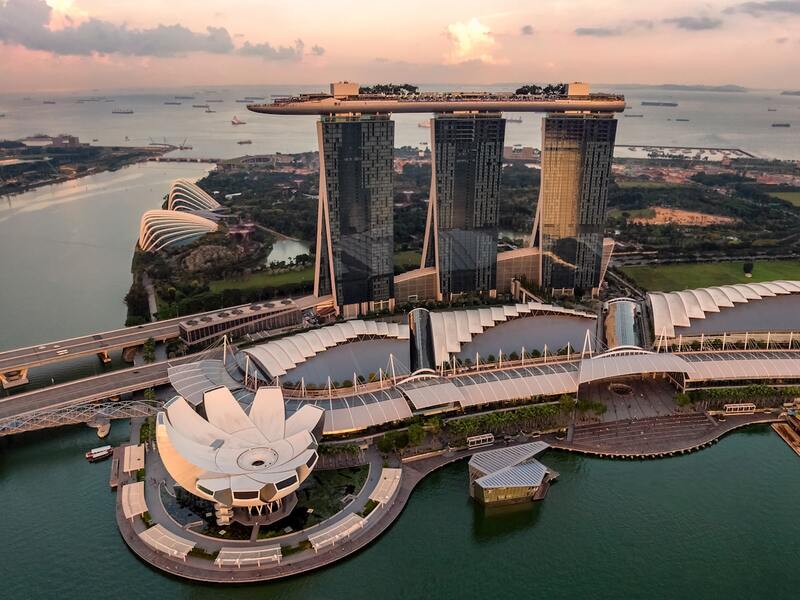
Singapore’s Total Fertility Rate fell to 0.87 in 2025 , a historic low, down from 0.97 the year before and far below the replacement rate of 2.1. Announced during the Budget 2026 debates in February 2026, the figure has reshaped the government’s immigration calculus in ways that matter directly to permanent residents weighing the timing of a Singapore citizenship application. Minister for Social and Family Development and Second Minister for Home Affairs also disclosed a target of granting approximately 25,000 to 30,000 new citizenships per year over the next five years , a meaningful step up from the 22,766 citizenships granted in 2024.
If you are a permanent resident who has been deferring a Singapore citizenship application, the 2026 population disclosure changes the strategic calculus. This article explains what the TFR figure means for ICA’s intake policy, sets out realistic timing considerations for PRs seeking citizenship, and walks through the documentation and integration evidence that ICA weighs in its holistic assessment.
Singapore Citizenship 2026: What TFR 0.87 Means for Immigration Policy
Singapore’s citizenship policy has always balanced the “Singapore Core” , the citizen population , against economic needs and social cohesion. At TFR 0.87, the citizen population faces natural decline within two decades without compensating immigration. The government’s response, as articulated in Budget 2026, is to accelerate the granting of citizenship to long-resident, well-integrated permanent residents, particularly those in working age, those raising families, and those in fields aligned with Singapore’s Research, Innovation and Enterprise (RIE) 2030 priorities.
The practical implication is that ICA’s citizenship intake is likely to be more receptive to applications from PRs who meet the traditional markers of integration , employment continuity, residential stability, family ties, community participation, and contributions to CPF and taxes , than at any point in the past decade. Per the Immigration and Checkpoints Authority, Singapore citizenship is granted through a holistic assessment that weighs economic contribution, family ties, community integration, and intent to make Singapore a permanent home.
The 30,000-Per-Year Citizenship Target: What It Means in Practice
The jump from roughly 22,766 citizenships in 2024 to a target band of 25,000–30,000 per year over five years represents a roughly 10–30% increase in annual intake. This does not mean ICA will loosen its standards. It means ICA will be processing a higher volume of files and is signalling receptivity to a broader pool of applicants , particularly those who have been PRs for two to five years and have strong integration evidence but have been hesitant to apply given perceived low approval odds.
PRs who have previously delayed applications due to incomplete integration markers should re-evaluate their readiness. The ICA’s holistic assessment is not a points-based system; there is no published formula. However, ICA has consistently indicated that the following factors carry weight:
- Length of PR status (a minimum of two years is typically required; five or more years strengthens the case)
- Continuous, stable employment in Singapore , a current, valid Employment Pass, S Pass, or equivalent is expected
- CPF contribution history consistent with the declared employment record
- Family integration: Singaporean or PR spouse, Singapore citizen children, or parents who are Singapore citizens
- Community participation: grassroots involvement, professional associations, volunteering
- Residential stability: consistent Singapore address history, not frequent overseas relocations
- Children enrolled in Singapore schools, particularly local schools or hybrid programmes
For those considering PR before citizenship, read our detailed guide on the Singapore permanent residency application process and the Family Ties Scheme PR application pathway for those with Singaporean family members.
Realistic Timing for PRs Considering Singapore Citizenship
Most PRs can apply for Singapore citizenship after holding PR status for at least two years. However, a two-year PR who applies immediately after becoming eligible will typically have a weaker file than a five-year PR with deep integration evidence. The strategic question is not just “can I apply?” but “is my file ready?”
The Two-Year Minimum Window
The two-year minimum is a hard floor, not a target. PRs who apply at the two-year mark should be able to demonstrate strong, consistent integration across all dimensions: unbroken employment, full CPF contributions, Singapore residential address throughout, and a clear narrative of intent to remain. Applicants who cannot demonstrate these markers consistently should continue building their file rather than applying and receiving a rejection that resets the clock.
The Optimal Window: Three to Five Years PR
Based on observed approval patterns, PRs with three to five years of PR status, stable employment in a field relevant to Singapore’s economic priorities, and strong family integration tend to have the highest success rates. This window aligns with the period in which CPF contribution history becomes substantial, children have typically moved into the local or hybrid school system, and the applicant has had time to develop community connections.
Sector and Salary Considerations
ICA’s holistic assessment takes into account an applicant’s economic contribution and career profile. PRs in fields aligned with Singapore’s strategic priorities , artificial intelligence, biomedical sciences, fintech, green energy, and advanced manufacturing , are more favourably positioned. Salary level is one proxy for economic contribution, though ICA does not publish a qualifying salary floor for citizenship as MOM does for work passes. As a practical matter, Employment Pass holders at the S$5,600–S$8,000 range who have maintained continuous employment have a stronger file than those on the minimum EP qualifying salary with no track record of progression.
National Service: What PR Families Need to Plan For
One factor that deters some PR families from applying for citizenship is National Service (NS) liability for sons. Under Singapore law, male Singapore citizens and PRs are liable for NS upon reaching 16.5 years of age (or when they first arrive in Singapore if older). Upon becoming a Singapore citizen, the NS liability follows.
Families should take note:
- Sons who are PRs are already NS-liable , citizenship does not create a new liability but does reinforce it
- Male PRs who deferred NS before the age cut-off remain liable and must fulfil NS before renouncing PR status
- Citizenship for a son who has completed NS (or is mid-NS) is typically straightforward from the NS-liability perspective
- The citizenship journey programme includes sessions on NS obligations and the support ecosystem for NS families
For new citizens navigating the post-citizenship steps, see our article on the Singapore Citizenship Oath Ceremony and what new citizens need to know in 2026.
Common Rejection Reasons , and How to Address Them Before Applying
ICA does not provide reasons for citizenship application rejections. However, patterns observed across the PR and citizenship advisory community point to several recurring issues:
- Insufficient residential continuity: Frequent or prolonged absences from Singapore during the PR holding period signal weak commitment to making Singapore a permanent home. Applicants should document that absences were work-related and temporary.
- Weak CPF history: Gaps in CPF contributions , often caused by a period of self-employment, a gap between jobs, or a period working overseas , raise questions about employment continuity. Address gaps proactively in the application narrative.
- No family integration: Single applicants without Singaporean family ties, no community involvement, and no children in Singapore schools face a harder path. Building community connections before applying is not cynical , it is genuine integration.
- Pending PR rejection on record: PRs who had a citizenship application rejected are not permanently barred from reapplying, but ICA expects to see substantive changes in the integration profile between applications , not merely the passage of time.
- Employment instability at time of application: Applying during a gap between jobs, during probation at a new employer, or in the middle of a company restructuring creates uncertainty in the file. Where possible, apply from a position of employment stability.
Our detailed breakdown of ICA’s patterns is available in our Singapore PR rejection pattern analysis, which covers many of the same holistic-assessment factors relevant to citizenship.
Renunciation of Foreign Citizenship: The Practical Steps
Singapore does not permit dual citizenship. Upon taking the Singapore Citizenship Oath, new citizens are required to renounce their foreign citizenship within one year. The renunciation process varies by country of origin:
- Indian nationals: Must renounce through the Indian High Commission in Singapore. The process typically takes 6–12 months. An Overseas Citizen of India (OCI) card can be held alongside Singapore citizenship.
- Chinese nationals: Renunciation through the Chinese Embassy. Chinese law does not recognise dual citizenship; renunciation takes effect automatically upon naturalisation in Singapore, though formal notification is recommended.
- Malaysian nationals: Renunciation of Malaysian citizenship is required and must be completed through the National Registration Department. Cross-border banking and property arrangements need to be reviewed ahead of renunciation.
- Western nationals (US, UK, Australia): Each country has its own renunciation procedures and fees, some of which can take 12–18 months. US renunciation also triggers potential exit-tax obligations; US citizens should seek tax advice before proceeding.
Conclusion
Budget 2026’s TFR 0.87 disclosure and the government’s commitment to 25,000–30,000 new citizenships per year represent a genuine policy shift in favour of well-integrated permanent residents. If you are a PR who has been building your integration profile and waiting for the right moment, that moment is now well-signalled. The application process is discretionary, holistic, and does not reward delay for its own sake.
If you would like professional guidance on your Singapore citizenship application , including a file readiness review, document preparation, and submission strategy , the licensed immigration specialists at Singapore Employment Agency (Little Big Employment Agency Pte Ltd, MOM Licence 19C9790) are available to assist. For business structuring and relocation planning alongside your citizenship journey, speak with Raffles Corporate Services.
, The Editorial Team, Little Big Employment Agency
Real people. Right here in Singapore.