
Insights for work and life.
Renewable Energy Sector Hiring in Singapore 2026: Solar and Offshore Wind Work Pass Strategy
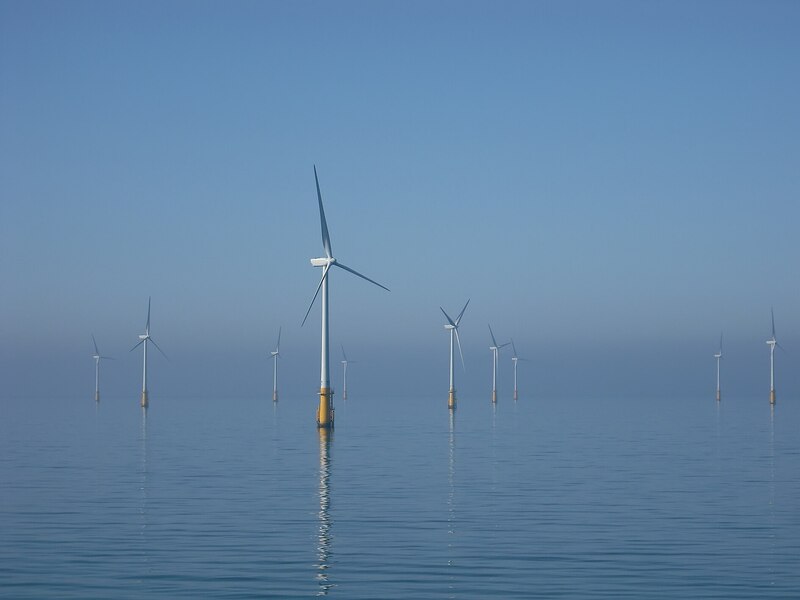
Singapore’s solar target jumped from 2 gigawatt-peak (GWp) of installed capacity in 2025 to a new 3 GWp goal by 2030, and the Republic is separately locking in 1.4 GW of offshore wind power imported from Vietnam by 2033 (Energy Market Authority, media release, 2 March 2026, as at 24 September 2026). Neither figure is achievable without people: engineers who can stamp structural drawings for a floating solar farm, electricians licensed to connect a rooftop array to the grid, and project managers who understand subsea cable logistics. Renewable energy sector hiring in Singapore has therefore become a live COMPASS and work-pass planning question for employers who, a year ago, had never needed to think about EMA licensing at all.
This guide sets out where solar and offshore wind roles sit in the Ministry of Manpower’s (MOM) work-pass framework, which posts trigger a Professional Engineers Board (PEB) or Licensed Electrical Worker (LEW) registration before a pass application even goes in, and how the foreign worker quota and levy work for an energy employer hiring across the Employment Pass (EP), S Pass and Work Permit tiers.
Why Renewable Energy Sector Hiring in Singapore Is Now a Distinct Planning Problem
Three developments have converged. First, the EMA’s 3 GWp solar target for 2030 means the Government is now pushing overhang solar, floating installations on reservoirs, and industrial rooftop deployment through JTC’s SolarLand and SolarRoof programmes, on top of HDB’s SolarNova scheme (EMA, 2 March 2026, as at 24 September 2026). Second, Singapore’s commitment to import 1.4 GW of offshore wind energy from Vietnam by 2033 via subsea cable brings marine, cable-laying and offshore construction demand onshore, largely routed through Singapore-based project developers and engineering firms. Third, the Singapore Economic Development Board (EDB) has flagged renewable energy and the wider green economy, including carbon services and green finance, as a targeted growth industry, which means more entities incorporating locally specifically to bid for solar EPC contracts, offshore wind feasibility studies or grid-storage projects (EDB, Renewable Energy industry page, as at 24 September 2026).
None of this sits inside a single MOM sector code. A solar EPC contractor doing structural and electrical installation work is typically classified under Construction; an offshore wind project developer running engineering and commercial functions from a Singapore office often sits under Services; and a company operating power generation assets, including waste-to-energy or gas-fired plants that increasingly integrate solar, falls under the Process sector alongside petrochemicals. Getting the sector classification right at the point your company declares its business activity to MOM determines your dependency ratio ceiling (DRC) and S Pass sub-quota, so it is worth confirming before any pass application is lodged.
Registration Gates: PEB, LEW and the Roles That Need Them Before a Work Pass Application
Professional Engineer (PEB) Registration for Structural and Electrical Sign-Off
Under the Professional Engineers Board’s framework, a Qualified Person for a solar installation project must be registered as either an Architect with the Board of Architects or a Professional Engineer with the PEB, and must hold a valid practising certificate (PEB, Professional Engineer registration page, last updated 21 September 2026, as at 24 September 2026). The PEB registers engineers in four branches, civil, electrical, mechanical and chemical, and critically, only a PE registered in the civil or structural discipline can stamp structural drawings for submission to the Building and Construction Authority (BCA) via CORENET; a PE registered in electrical or mechanical engineering cannot do so. For a foreign hire, this means the candidate needs an approved engineering degree, a pass in the Board’s examinations (or an oral examination route for experienced applicants), and a professional interview, all of which should be mapped against the person’s actual scope of work before an Employment Pass application is filed, not after.
Licensed Electrical Worker (LEW) Status for Grid Connection Work
Separately, any work connecting a solar installation to SP Group’s grid, or carrying out electrical installation work more broadly, requires an EMA Licensed Electrical Worker of the appropriate grade (EMA, Worker Licences, as at 24 September 2026). This is a distinct licence from PEB registration and applies to site-level electrical tradespeople rather than the engineer who signs off the design. Employers hiring foreign LEW-grade electricians for solar or grid-storage projects should treat the licence as a pre-condition of the role, verified before onboarding, in the same way a healthcare employer verifies Allied Health Professions Council registration before a foreign physiotherapist starts work.
Work Pass Strategy by Role: EP, S Pass and Work Permit
Renewable energy hiring in Singapore spans the full pass spectrum, and the right pass depends on function, not job title.
| Role | Typical pass | 2026 qualifying salary / notes |
|---|---|---|
| Registered PE (civil/structural, electrical) for solar or offshore wind design | Employment Pass | EP qualifying salary is SGD 5,600/month for most sectors, rising to SGD 6,000 from 1 January 2027; also assessed under COMPASS (40-point pass mark) |
| Offshore wind project manager / commercial lead | Employment Pass | Salary benchmarked against the relevant COMPASS occupation-salary reference; senior roles typically clear SGD 7,000 to SGD 12,000 |
| LEW-grade electrician / solar technician (supervisory) | S Pass | SGD 3,300/month minimum in 2026, rising with age to SGD 4,800 at 45; rises to SGD 3,600 from 1 January 2027 |
| Site installation crew, cable-laying labour | Work Permit | Subject to sector DRC (Construction/Process 83.3%, Marine shipyard 75%) and source-country rules |
The COMPASS framework applies to every Employment Pass application regardless of sector, assessing salary relative to the local 65th percentile for the occupation, candidate qualifications, workforce diversity and support for local employment, alongside the flat qualifying salary floor. Employers can benchmark a proposed hire against the published table in our COMPASS C1 salary benchmarks (August 2026) guide before submitting.
Foreign Worker Quota and Levy for Energy Sector Employers
MOM’s dependency ratio ceiling table, last updated 19 February 2026, sets the Process sector DRC at 83.3%, the same as Construction, while Marine shipyard sits at 75% and Manufacturing at 60% (MOM, S Pass quota and levy requirements, as at 24 September 2026). Within whichever DRC applies, S Pass holders are capped at a 15% sub-quota in Construction, Manufacturing, Marine shipyard and Process, versus 10% for Services. Since 1 September 2025 the S Pass levy has been harmonised to a flat SGD 650 per month across all sectors and tiers, which simplifies budgeting for an energy employer running a mixed EP, S Pass and Work Permit headcount, but the levy is still payable from the day the pass is issued.
A subsea-cable or offshore installation contractor working through the Marine shipyard sector classification should also check our Marine Shipyard Sector Work Permit Guide, since much offshore wind construction and vessel-based work is levied and quota-capped under that sector rather than Construction or Process.
Incorporation and Grant Considerations for a New Renewable Energy Entity
A foreign renewable energy developer setting up a Singapore entity for the first time should note that SSIC 2025 introduced dedicated business activity codes covering solar energy installation, energy efficiency consulting, carbon services and green energy installation more broadly, replacing the generic codes many earlier entrants defaulted to (Singapore Secretary Services, SSIC 2025 migration guide, as at 24 September 2026). Declaring the correct SSIC code matters for two reasons beyond ACRA compliance: it feeds directly into MOM’s sector determination for DRC purposes, and it affects eligibility for grants such as the unified EDGE grant that replaced the earlier EDG/PSG/MRA schemes from 29 September 2026. Employers incorporating a new entity to bid for solar EPC or offshore wind feasibility contracts should align the SSIC declaration with the actual work pass sector they intend to operate under before hiring begins, since a mismatch discovered later can force a costly quota recalculation.
Where the same group also needs a fresh Singapore company vehicle for the project, Raffles Corporate Services can advise on incorporation structuring and the SSIC classification alongside the work-pass strategy set out here.
A Practical Sequence for Renewable Energy Sector Hiring in Singapore
- Confirm the correct MOM sector classification (Construction, Process, Marine shipyard or Services) based on the entity’s actual declared business activity, since this sets the DRC and S Pass sub-quota for every subsequent hire.
- Map each role against its registration gate: PEB for structural or electrical design sign-off, EMA Licensed Electrical Worker status for grid-connection tradespeople, before deciding the pass type.
- Benchmark EP candidates against the current COMPASS qualifying salary and points framework, and S Pass candidates against the 2026 age-graduated salary floor.
- Budget the flat SGD 650 S Pass levy and the applicable Work Permit levy tier for the sector, alongside any NTS source-country considerations for site labour.
- If incorporating a new entity for the project, align the SSIC 2025 code with the intended work-pass sector before the first hire is lodged.
For sector-specific comparisons, our Singapore Sector Hiring Guide 2026 sets out how work-pass strategy differs across tech, F&B, healthcare and other verticals, and our Foreign Worker Levy 2026 by Sector guide breaks down levy tiers in more depth. Employers who need a full walkthrough of the S Pass route for supervisory or technical hires can also refer to our Singapore S Pass 2026 Complete Employer Guide.
Conclusion
Renewable energy sector hiring in Singapore rewards employers who treat regulatory sequencing, sector classification, professional registration, then pass application, as a single planning exercise rather than three separate ones. With EMA’s 3 GWp solar target and the Vietnam offshore wind import programme both scaling through the rest of this decade, the employers who get the COMPASS, DRC and PEB or LEW steps right early will spend far less time correcting quota or registration mismatches later.
Singapore Employment Agency works with renewable energy employers on Employment Pass, S Pass and Work Permit strategy across solar and offshore wind hiring. Get in touch via Singapore Employment Agency, and if you are incorporating a new entity for the project, Raffles Corporate Services can support the company setup and SSIC classification in parallel.
The Editorial Team, Little Big Employment Agency
Real people. Right here in Singapore.