
Insights for work and life.
Hiring a Foreign Early Childhood Educator in Singapore: ECDA Certification and Work Pass Strategy (2026)
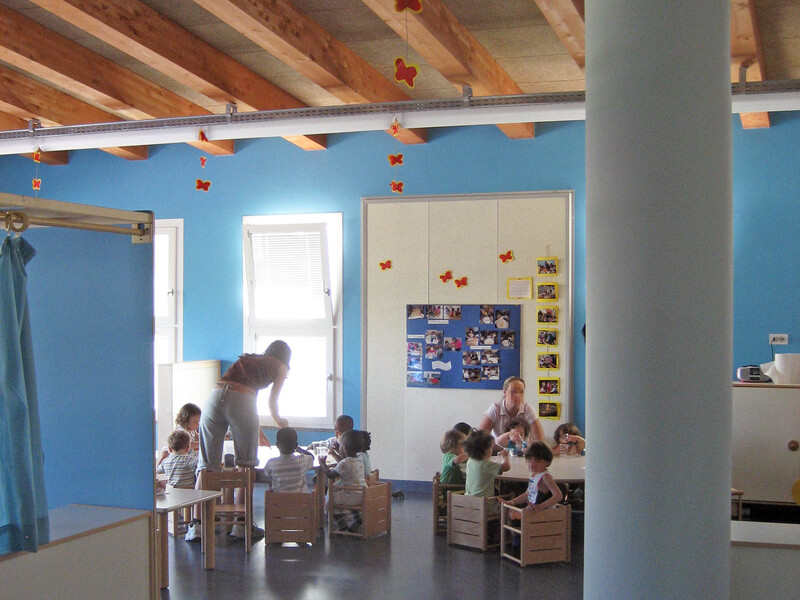
Singapore’s preschool sector employs roughly 20,000 early childhood educators across more than 1,700 childcare centres and kindergartens, and centre operators routinely say they cannot fill vacancies from the local pool alone. For an employer weighing whether to sponsor a foreign early childhood educator in Singapore, the honest answer is that it is possible, but only within a narrow band of roles and salaries, because the sector’s own local pay structure sits close to, or below, the Ministry of Manpower’s (MOM) work pass qualifying salaries.
This is a genuinely different hiring problem from sponsoring an engineer or an accountant. The gatekeeper is not MOM alone: it is the Early Childhood Development Agency (ECDA), the statutory board that certifies every individual who teaches in a licensed childcare centre or kindergarten, foreign or local. No educator certification, no legal deployment in a classroom, regardless of what work pass the person holds.
This guide sets out, in order, how ECDA certification works for foreign qualifications, which work pass actually fits an early childhood educator’s likely salary, what it costs an employer to sponsor one, and where the realistic ceiling sits for this niche as at 17 September 2026.
Why hiring a foreign early childhood educator in Singapore is a two-gate process
Every other work pass sector in this series, from pharmacists to physiotherapists, involves one professional licensing board plus MOM. Early childhood hiring involves the same two-gate structure, but the ECDA gate is unusually document-heavy for foreign applicants, and it is common for employers to underestimate the timeline.
Gate one: ECDA educator certification
Under ECDA’s Educator Certification framework (accessed 17 September 2026), anyone deployed to teach in a childcare centre or kindergarten must hold a Letter of Notification (LON) stating their certification level, which in turn determines the age group they may be assigned to (infant, playgroup, nursery, or kindergarten). The application is filed through the employing centre via the ONE@ECDA portal, not by the individual alone.
For candidates with a foreign early childhood qualification, ECDA’s foreign qualifications page (accessed 17 September 2026) requires a substantial document set: the graduation certificate, an academic transcript with grading system, medium-of-instruction confirmation, and a detailed practicum breakdown showing hours logged against each age band from birth to six years. Qualifications from the People’s Republic of China additionally require notarised verification through China’s Notary Public Office or the CHSI online verification system. ECDA states it will only accept foreign qualifications where the practicum component was assessed in-person and on-site by the awarding institution, a condition that has tightened since mid-2026 and rules out several distance-learning early childhood diplomas that were previously accepted.
Processing for foreign qualifications takes up to 14 working days once a complete file is submitted, against 7 working days for local qualifications, and incomplete or unnotarised documents are a routine cause of rejection or delay. Employers should build this into the offer timeline before assuming a start date.
Gate two: the right MOM work pass
This is where the early childhood educator work pass question gets genuinely tricky, because it is a salary problem, not a paperwork problem. Under MOM’s S Pass eligibility rules (accessed 17 September 2026), the current minimum qualifying salary is SGD 3,300 a month at age 23 or below, rising progressively with age to SGD 4,800 at 45 and above; from 1 January 2027 these floors rise again to SGD 3,600 and SGD 5,100 respectively. The Employment Pass (EP) route requires a minimum fixed monthly salary of SGD 5,600 for younger applicants, rising with age, plus a passing score under the COMPASS points framework.
The problem is that entry- and mid-level early childhood educator pay in Singapore’s anchor-operator and partner-operator preschools commonly sits in the SGD 2,900 to SGD 4,000 range, meaning a large share of frontline educators simply do not clear the S Pass floor, let alone the EP floor. Sponsorship becomes realistic mainly for two groups: educators with several years of specialised experience (bilingual, special needs, or infant-care specialisation) who can be paid above SGD 3,300 to SGD 3,800, and senior roles such as Centre Leader, Curriculum Lead, or Early Intervention Lead, where salaries of SGD 6,000 and above clear the EP threshold comfortably and make the COMPASS framework assessment worth running.
Indicative salary bands and pass fit for early childhood roles
The figures below are indicative market bands drawn from public early childhood salary reporting as at September 2026, not government-mandated rates, and employers should benchmark against actual centre payroll before setting an offer.
| Role | Typical monthly salary (SGD) | Likely work pass fit |
|---|---|---|
| Entry-level Preschool Teacher (anchor/partner operator) | 2,900 to 3,550 | Usually below S Pass floor; PR/citizen hires only in practice |
| Experienced Early Childhood Educator (3 to 8 years, specialisation) | 3,300 to 4,500 | S Pass, age-dependent |
| Senior Teacher / Lead Educator (bilingual, special needs) | 4,000 to 6,000 | S Pass or entry-level EP |
| Centre Leader / Curriculum Lead / Early Intervention Lead | 6,300 to 9,700 | Employment Pass, COMPASS assessment applies |
In practice, this means an employer’s realistic preschool teacher Employment Pass Singapore pathway is concentrated at the leadership and specialist end of the sector, while frontline hiring at anchor-operator rates rarely clears even the S Pass bar. This mirrors the pattern seen in the 2026 S Pass employer guide: sectors with compressed local pay scales, such as early childhood and parts of eldercare, have structurally fewer sponsorable roles than sectors like finance or engineering.
Costs an employer should budget for
Beyond salary, an employer sponsoring a foreign early childhood educator carries several recurring costs. S Pass holders attract a monthly foreign worker levy, harmonised by MOM to a flat SGD 650 as at 1 January 2026, and the centre must also stay within its sector’s S Pass quota. Employment Pass holders do not attract a levy but are subject to the COMPASS scoring exercise at both application and renewal.
On the tax side, the Inland Revenue Authority of Singapore (IRAS) business expenses guidance (accessed 17 September 2026) confirms that the foreign worker levy is a deductible business expense for corporate income tax purposes, net of any levy rebate received, so the levy is a genuine cost but not one that permanently erodes the centre’s tax position. Employers should still model it as a real monthly cash outflow when comparing a foreign hire against a local one, because unlike salary it delivers no direct benefit to the educator or the centre’s programming.
Where the hire also needs to bring family, an EP holder earning at least SGD 6,000 a month may sponsor a Dependant’s Pass for a spouse and children; S Pass holders generally cannot sponsor dependants on the same basis, which is worth flagging early in an offer discussion, particularly for a relocating educator with school-age children.
A realistic hiring sequence
Employers who get this right tend to follow a consistent order: confirm the role’s true salary band and, therefore, its likely pass fit, before making an offer; run MOM’s Self-Assessment Tool for S Pass or the COMPASS pre-check for EP; only then invite the candidate to assemble the ECDA foreign-qualification document set, since notarisation and verification can take several weeks for documents originating outside Singapore. Running the ECDA and MOM tracks in parallel, rather than sequentially, is the single biggest time saver, because ECDA processing and MOM pass processing do not depend on each other.
It is also worth checking the Fair Consideration Framework job advertising requirement before filing an S Pass or EP application, since most centres above the FCF’s employee-count threshold must advertise the vacancy on MyCareersFuture for at least 14 days and fairly consider local applicants first. For centres that also intend to convert a promising S Pass educator into an Employment Pass once they reach a leadership salary, the general upgrade mechanics are covered in the COMPASS points guide.
For employers who are also incorporating a new preschool operating entity, appointing a local nominee director, or setting up payroll and CPF administration for the first time, that groundwork is a corporate services task rather than an employment pass task; the Sponsored Employment Pass overview from our sister firm Raffles Corporate Services and its related guide to S Pass quota and levy management are useful companion reading before the centre’s first foreign hire.
Getting the ECDA and work pass sequencing right
Hiring a foreign early childhood educator in Singapore is achievable, but it rewards employers who treat ECDA certification and the MOM work pass as two separate, parallel workstreams rather than a single application. Get the salary-to-pass fit right first, because no amount of ECDA paperwork rescues a role that was never going to clear the S Pass or EP floor, and build in realistic lead time for document notarisation on foreign qualifications.
Little Big Employment Agency works with preschool and childcare operators on exactly this sequencing, from the initial pass eligibility check through to ECDA document preparation and MOM submission. Visit Singapore Employment Agency to discuss a specific hire, or speak to Raffles Corporate Services if you are also setting up or restructuring the entity that will employ the educator.
The Editorial Team, Little Big Employment Agency
Real people. Right here in Singapore.