
Insights for work and life.
Additional Buyer’s Stamp Duty (ABSD) for foreigners , Step-by-step walkthrough
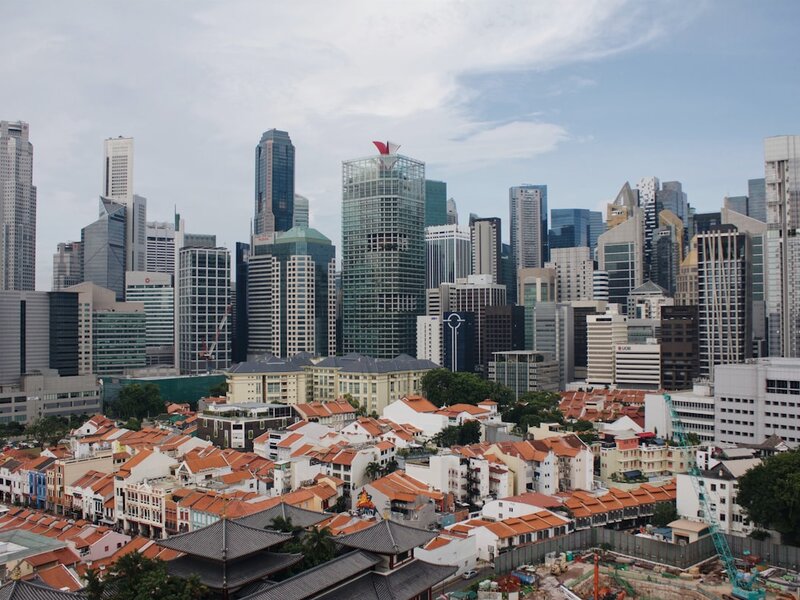
Additional Buyer’s Stamp Duty is a surcharge layered on top of ordinary Buyer’s Stamp Duty when you acquire residential property in Singapore. For foreigners it is charged at 60 percent of the purchase price or market value, whichever is higher, making it the single largest cost most relocating buyers will face beyond the price of the home itself.
Little Big Employment Agency (EA Licence 19C9790) works with a panel of corporate and employment law firms; this article is general information, not legal advice.
What Additional Buyer’s Stamp Duty is
Singapore charges two stamp duties when you buy a home. The first is Buyer’s Stamp Duty (BSD), which everyone pays on a tiered scale. The second is Additional Buyer’s Stamp Duty (ABSD), a cooling measure introduced to moderate residential demand, particularly from foreign buyers and those acquiring additional properties. Both are administered under the Stamp Duties Act 1929 and collected by the Inland Revenue Authority of Singapore.
ABSD is not a flat fee. The rate depends on the buyer’s profile: nationality and residency status, and how many residential properties the buyer already owns. The Government has revised these rates several times, and the 60 percent foreigner rate that applies in 2026 is the steepest band in the structure. It is a deliberate policy lever, and the surcharge framework continues to sit within the Stamp Duties Act 1929, so the figures here reflect current practice and should always be re-checked before completion.
Who pays ABSD, and at what rate
The rate hierarchy runs broadly as follows. A Singapore Citizen pays no ABSD on a first residential property, 20 percent on a second and 30 percent on a third and beyond. A Permanent Resident pays 5 percent on a first property, 30 percent on a second, and 35 percent on a third and subsequent. A foreigner pays 60 percent on any residential property, whether it is their first or their tenth. Entities and trustees generally pay 65 percent, with limited reliefs available to qualifying housing developers.
So the foreigner rate is uniform regardless of how many homes you own: there is no “first property” concession for a pure foreigner. This is the point relocating families most often misjudge, because property markets in many home countries treat a first home gently.
It also matters how a property is held. Where residential property is bought by a company, a trustee or an association, the entity rate of 65 percent generally applies, which is even steeper than the individual foreigner rate. Buyers who reach instinctively for a corporate vehicle, perhaps for asset-protection or estate-planning reasons familiar from their home jurisdiction, can therefore find themselves worse off rather than better. The structure that minimises tax in one country can be the most expensive option in Singapore, which is why the holding decision deserves careful, advised thought before any commitment.
Who this walkthrough is for
This guide is aimed at individuals and families relocating to Singapore who are deciding whether to buy. It is equally relevant for foreign investors and for new Permanent Residents stepping out of the rental market. Because ABSD is fundamentally a tax question, it sits alongside other residency-driven tax issues you will encounter on arrival, including income tax matters governed by the Income Tax Act 1947. If you are also weighing where your tax residency falls, our explainer on the Singapore tax residency and control-and-management test for 2026 is a useful parallel read, since residency status affects both your income tax and your property surcharge profile.
The guide is less relevant to those buying commercial or industrial property, which falls outside the ABSD regime entirely, and to short-stay visitors who have no intention of acquiring a home. For everyone else, the central message is that ABSD reshapes the entire economics of a Singapore property purchase, and it deserves to be modelled before, not after, you start viewing.
Cost and timeline with real numbers
The arithmetic is best shown by example. Take a S$2,000,000 condominium bought by a foreigner.
First, Buyer’s Stamp Duty on the tiered scale: 1 percent on the first S$180,000 (S$1,800), 2 percent on the next S$180,000 (S$3,600), 3 percent on the next S$640,000 (S$19,200), 4 percent on the next S$500,000 (S$20,000), and 5 percent on the remaining S$500,000 (S$25,000). That totals S$69,600 in BSD.
Then ABSD at 60 percent of S$2,000,000 is S$1,200,000. Combined stamp duty is therefore S$1,269,600, meaning the buyer must find more than 63 percent of the purchase price again in tax. For a PR buying their first home at the same price, ABSD would be 5 percent, or S$100,000, a dramatically smaller figure that illustrates why residency status matters so much.
On timing, ABSD is ordinarily payable within 14 days of the date of the document that effects the purchase, such as the exercised Option to Purchase, where the document is signed in Singapore. Late payment attracts penalties, so this short window is critical. The wider purchase itself typically completes around 8 to 12 weeks after the OTP is exercised.
It is worth stressing that ABSD is a cash outlay, not something a mortgage covers. Banks lend against the value of the property, but stamp duty is a tax obligation that the buyer funds separately and up front. On our S$2,000,000 example, the foreign buyer needs S$1,200,000 of ABSD in cleared funds within the deadline, in addition to the cash down-payment and BSD. Liquidity, not just net worth, is therefore the practical constraint, and buyers should confirm the funds are available and remittable to Singapore well before exercising the option.
By way of comparison, the same purchase by a Singapore Citizen buying a first home would attract no ABSD at all, and by a PR first-time buyer only S$100,000. The 60 percent foreigner figure is not a marginal premium; it can exceed the entire cash down-payment several times over and is frequently the factor that tips a relocating family towards renting instead.
Additional Buyer’s Stamp Duty: step-by-step process
Step 1: Determine your buyer profile. Confirm in writing whether you are buying as a citizen, PR, foreigner or entity, and count your existing residential properties worldwide where relevant.
Step 2: Identify the applicable rate. Match your profile to the rate table. For a foreigner this is 60 percent, full stop.
Step 3: Calculate on the higher of price or value. ABSD is charged on the higher of the purchase price and the market valuation, so obtain a realistic valuation early.
Step 4: Check for treaty relief. Nationals of certain countries that have free trade agreements with Singapore (currently the United States, and nationals of Iceland, Liechtenstein, Norway and Switzerland) may be accorded the same ABSD treatment as Singapore Citizens. This is a narrow but valuable exception.
Step 5: Pay within the deadline. Your conveyancing lawyer will usually handle the e-Stamping and payment to IRAS within the 14-day window.
Step 6: Retain evidence. Keep the stamp certificate, as you will need it for completion and for any future remission claim. The documentation discipline here resembles the care needed with corporate paperwork, which we set out in our guide to ordinary versus special resolutions in Singapore companies if you are buying through a corporate structure.
How ABSD interacts with the rest of your purchase
ABSD does not sit in isolation. It compounds with Buyer’s Stamp Duty, with the cash down-payment required under loan-to-value limits, and with the legal and valuation fees of completing a purchase. Because ABSD is based on the higher of price or value, an over-priced purchase or an aggressive valuation can push the surcharge up unexpectedly, which is why a sober independent valuation is worth obtaining before you commit.
The surcharge also shapes exit economics. A foreigner who buys, then sells within a few years, may additionally face Seller’s Stamp Duty if the holding period is short, layering another cost on top of the 60 percent paid at entry. Taken together, these duties mean a Singapore home is best approached as a long-term hold for a foreign owner, not a short-term trade. Where the plan is genuinely long-term and the family expects to obtain Permanent Residency, the calculus can change, but only once the lower PR rate actually applies, which it does not retrospectively to a purchase already completed as a foreigner.
Finally, ABSD interacts with how the property is to be used and financed over time. An owner-occupier and an investor face the same ABSD at purchase, but diverge afterwards on property tax, which is levied at higher rates on non-owner-occupied homes. None of this changes the entry surcharge, but it underscores that the 60 percent figure is the start of the cost picture, not the whole of it.
Common mistakes and gotchas
The dominant mistake is budgeting on the wrong rate. A foreigner who assumes a citizen’s or PR’s rate can be more than a million dollars short. Always model 60 percent.
A second trap is the FTA exception. Eligible nationals frequently fail to claim equal treatment and overpay, while others wrongly assume their country qualifies when it does not. Confirm the current list before relying on it.
Third, joint purchases are assessed on the profile that attracts the highest rate among the buyers, so a foreigner co-buying with a citizen will usually pull the whole transaction up to the foreigner rate unless a remission applies. Fourth, married couples should understand the ABSD remission rules available where a citizen spouse is involved and a matrimonial home is being bought jointly, since a remission can be claimed in specific circumstances and missing it means overpaying substantially. Fifth, do not miss the 14-day payment deadline, as penalties accrue quickly.
A sixth and underrated mistake is treating ABSD as financeable. Because banks lend against the property and not against the tax, a buyer who has the net worth but not the liquid cash can find themselves unable to complete. Confirming that the full ABSD sum is liquid, remittable to Singapore and free of any cross-border transfer delay, well before exercising the option, is one of the most important practical steps a foreign buyer can take.
Related guides and official sources
ABSD rarely arrives alone. Relocating buyers usually face immigration, housing and transport questions at the same moment. The Immigration & Checkpoints Authority is the authority for pass and PR status that underpins your ABSD profile, while the Housing & Development Board sets the public-housing eligibility rules that interact with PR timing. For a fuller treatment of rates, exceptions and worked numbers, see our complete 2026 guide to Additional Buyer’s Stamp Duty for foreigners.
FAQs
What is the ABSD rate for foreigners in 2026? A foreigner pays Additional Buyer’s Stamp Duty at 60 percent of the purchase price or market value, whichever is higher, on any residential property, regardless of how many properties they already own.
Do PRs pay less ABSD than foreigners? Yes, considerably. A PR pays 5 percent on a first residential property and 30 percent on a second, against the flat 60 percent a foreigner pays. This is one of the most significant financial advantages of PR status.
Can ABSD be avoided or reduced? Legitimately, only in narrow ways: nationals of certain free trade agreement countries may be treated as citizens, and remission is available to qualifying married couples buying a matrimonial home. There is no general way for a pure foreigner to avoid the 60 percent rate.
When is ABSD payable? Ordinarily within 14 days of the relevant document where signed in Singapore. Your conveyancing lawyer usually e-Stamps and pays it to IRAS within this window, and late payment attracts penalties.
Is ABSD charged on commercial property? No. ABSD applies to residential property. Commercial and industrial properties are not subject to ABSD, though other duties and taxes may apply.
Need help with this? Call, SMS or WhatsApp +65 8501 7133, or email [email protected]. Little Big Employment Agency (EA Licence 19C9790) works with a panel of corporate and employment law firms; this article is general information, not legal advice.
Real people. Right here in Singapore.